
10 Essential Questions to Ask When Buying a Used Car
When buying a used car, it’s super important to ask about its accident and ownership history. This helps you avoid any unexpected surprises down the road.
Also, make sure to check the maintenance records to see if the car has had regular service and if there are any known mechanical issues.
Don’t forget to confirm that all the safety and convenience features work properly. You’ll want to know if you’re allowed to have an independent inspection before making your purchase.
It’s a good way to get an unbiased opinion on the car’s condition.
Understanding the warranty coverage is key, and keep an eye out for any extra dealer costs that might pop up.
Make sure you clarify the payment options available to you, and know the return and dispute policies ahead of time.
Getting these answers first will help you make a confident, informed choice—and there’s more to uncover.
Key Takeaways
– Can you provide a detailed vehicle history report showing accidents, ownership, and title status?
It really helps to know the full background before making a decision.
– Has the car been inspected by a qualified mechanic, and can I review the inspection report?
Getting a professional opinion can save you from surprises later.
– What are the recent maintenance records and are there any recurring mechanical issues?
Knowing this gives you a clearer picture of the car’s condition and reliability.
– What safety and convenience features does the car include, and do they all function properly?
It’s important to make sure everything works as expected for your peace of mind.
– What warranty coverage is offered, and are there any additional dealer fees or optional add-ons?
This helps you understand the total cost and any protections you might have.
What’s the Car’s Accident and Ownership History?
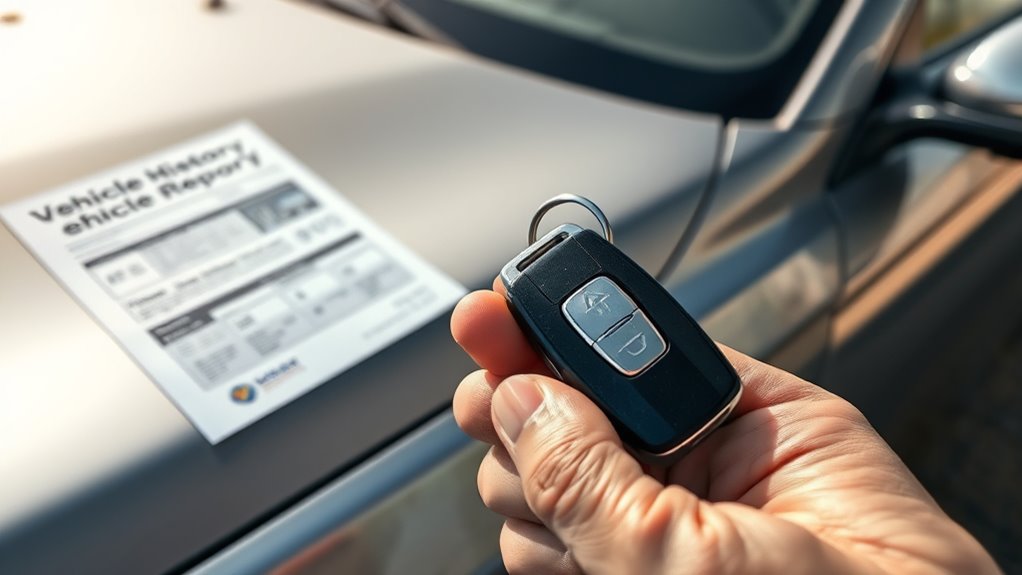
Before you commit to buying a used car, ask for a detailed vehicle history report to uncover any past accidents, insurance claims, or title issues. This report helps you verify if the car has a clean title, meaning it hasn’t been salvaged, rebuilt, or declared a total loss.
Request a detailed vehicle history report to check for accidents, insurance claims, and ensure a clean title before buying.
You don’t want to end up with a vehicle that has serious hidden damage or legal problems. Also, check the ownership transfer records to confirm how many previous owners the car has had and that each transfer was properly documented.
A clear ownership transfer history indicates the vehicle’s background is transparent and trustworthy. Additionally, inquire if the car has ever been stolen or recovered.
These details, all found in the vehicle history report, give you a clearer picture of the car’s past, helping you make a safer, smarter purchase decision without surprises down the road.
Can You Review the Vehicle’s Maintenance Records?
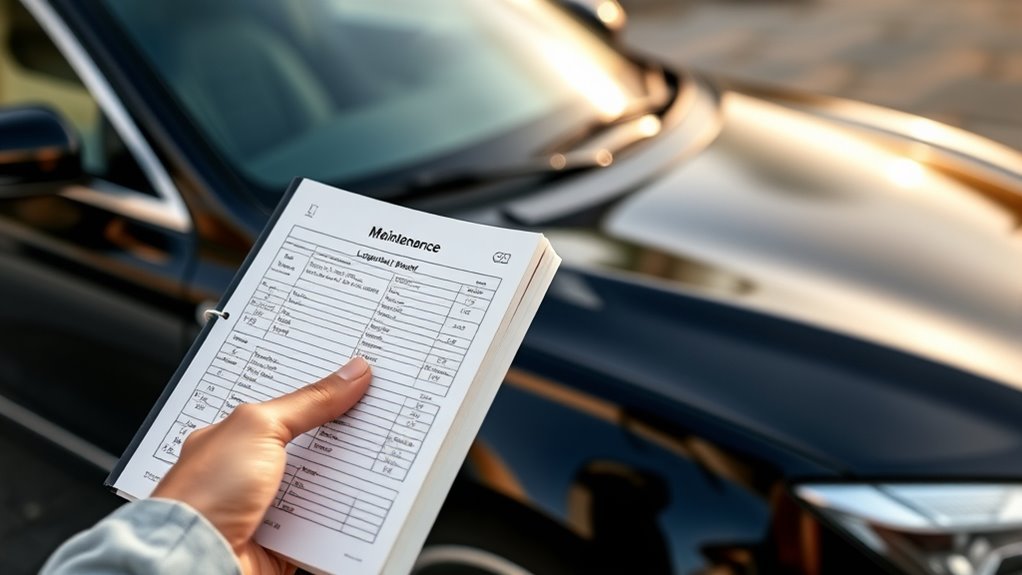
When you’re considering a used car, reviewing its maintenance records can reveal how well the previous owner cared for it. Ask to see detailed maintenance records that confirm regular servicing by certified mechanics and follow the manufacturer’s recommended schedule.
Check if the records include recent repairs like oil changes, tire rotations, brake services, and any major component replacements. Consistent maintenance history generally points to better reliability and fewer future problems.
Make sure these records come from reputable sources or authorized service centers to guarantee their accuracy. As you review the documents, watch for any recurring issues or patterns that might indicate underlying mechanical concerns.
Thoroughly examining the maintenance records helps you understand the vehicle’s condition beyond its appearance. This gives you confidence in your purchase and can potentially save you from unexpected repairs down the road.
Don’t skip this step when buying a used car—it’s a key to making a smart investment.
What Safety and Convenience Features Does the Car Offer?

After confirming the car’s maintenance history, take a close look at the safety and convenience features it offers. Ask for a list of safety features like airbags, anti-lock brakes, electronic stability control, and backup cameras.
Check if the used car includes driver-assist technologies such as lane departure warning or blind-spot monitoring. These features really boost your protection on the road.
Don’t forget to verify convenience features like keyless entry, push-button start, and automatic climate control. They make daily driving easier and more comfortable.
Also, confirm the presence of infotainment options, including Bluetooth connectivity, touchscreen displays, and navigation systems. These keep you connected and entertained.
Finally, make sure all these safety features and convenience features function properly by conducting a thorough inspection or test drive. This step guarantees that the car not only meets your needs but also supports your safety and comfort from day one.
What Known Mechanical Problems Affect This Car?
You’ll want to ask the seller about any common mechanical issues the car might have, like engine or transmission problems.
Make sure to find out if a mechanic has inspected the vehicle and what their diagnosis was.
Knowing the repair and maintenance history can help you avoid costly surprises down the road.
It’s always better to be safe than sorry, right? So, don’t hesitate to dig a little deeper before making your decision.
Common Mechanical Issues
Since mechanical problems can quickly turn a good deal sour, it’s essential to ask the seller about any recurring issues like engine misfires, transmission slipping, or brake troubles.
When you buy a car, understanding common mechanical issues helps you avoid unexpected repairs that make owning a car costly.
Don’t forget to inquire about past major repairs, such as timing belt or water pump replacements, and if the vehicle has electrical problems like faulty sensors or dead batteries.
Also, ask about oil leaks, overheating, or cooling system failures.
While you won’t inspect the car yourself yet, knowing these common issues upfront lets you make a smarter decision and avoid surprises down the road when owning a car.
Inspection and Diagnosis
How can you be certain the used car you’re considering doesn’t hide costly mechanical problems? Start by asking the seller if they know of any existing mechanical issues, like engine misfires, transmission slips, or brake problems.
Request a recent inspection report from a certified mechanic that outlines any known defects or needed repairs. Don’t forget to inquire about recurring problems, such as electrical failures or suspension troubles, which can affect reliability.
Review the vehicle’s maintenance history, focusing on major repairs or parts replacements related to mechanical performance. Finally, consider having an independent mechanic perform a thorough inspection to uncover hidden issues that might not be obvious.
This step helps you avoid surprises and guarantees the car’s condition matches its asking price.
Repair and Maintenance
When considering a used car, ask the seller about any current mechanical issues, such as engine misfires, brake defects, or transmission slips. Knowing these helps you gauge the car’s condition and potential repair costs.
Next, inquire about the vehicle’s maintenance and repair history to see if regular servicing and timely repairs have been done, especially on vital components like the timing belt or suspension. Don’t hesitate to request a third-party mechanic inspection to uncover hidden mechanical issues that might not show in a simple visual check.
Also, check for any recent warning lights or dashboard indicators, as these often signal ongoing problems. Being thorough about repair and maintenance details guarantees you avoid costly surprises after buying your used car.
Is an Independent Inspection Available Before Buying the Car?
You should always ask if an independent inspection is available before buying the car. Hiring a qualified mechanic guarantees you get an unbiased report on the vehicle’s condition.
This inspection report gives you detailed facts to negotiate better and avoid costly surprises later. It’s definitely worth taking the time to get this done before making a decision.
Importance Of Independent Inspections
Although the car may look fine at first glance, an independent inspection can uncover hidden mechanical issues that you might miss. Having a qualified mechanic examine the vehicle is essential, even if the car comes certified or under warranty.
Vehicle history reports provide background but don’t replace a hands-on inspection. Many dealers limit off-lot inspections, so arranging a mobile mechanic or dealer-approved check ensures a thorough evaluation. The written report you get can help negotiate price or repairs.
| Benefit | Explanation |
|---|---|
| Unbiased Assessment | Independent inspection reveals true condition |
| Prevent Costly Repairs | Early detection avoids expensive fixes |
| Negotiation Tool | Use report findings to lower price |
| Complements History Reports | Confirms mechanical and safety status |
Finding Qualified Mechanics
Since many dealerships limit off-lot inspections, confirming whether an independent mechanic can evaluate the car before you buy is essential. Finding qualified mechanics who offer independent inspection services guarantees you get an accurate assessment of the vehicle condition.
These experts can uncover hidden mechanical issues that aren’t visible during a simple visual check. A qualified mechanic will thoroughly examine key components like the engine, transmission, brakes, and suspension. This detailed evaluation helps you avoid costly surprises down the road.
Before committing, ask if you can bring a trusted mechanic or if the dealership allows third-party inspections. Investing in an independent inspection might cost a bit upfront, but it’s a smart move that protects your investment and empowers you to make an informed purchase decision.
Inspection Report Benefits
When you arrange an independent inspection before buying a used car, you gain an unbiased report on its mechanical condition that sellers might not reveal. An independent mechanic thoroughly evaluates the vehicle condition, identifying hidden issues like costly repairs or safety concerns.
This inspection report helps you verify the car’s history and confirms its current state, giving you peace of mind. Many dealers limit access for independent mechanics, so you might need to schedule a mobile inspection or visit an authorized service center to guarantee a thorough assessment.
With a detailed inspection report in hand, you can negotiate a better price or decide if the car is worth purchasing. This way, you ultimately save money and avoid unexpected problems down the road.
Can You Take the Car for a Test Drive?
Before you commit to buying a used car, you should always take it for a test drive to evaluate its performance and comfort firsthand. A test drive helps you spot potential mechanical issues and see how the vehicle performs in real conditions.
Here’s what to focus on during your test drive:
- Listen for unusual noises or vibrations that might signal underlying mechanical issues.
- Drive at various speeds—try both highway and city driving—to assess handling, braking, and acceleration.
- Check that all features and electronics, including airbags and infotainment, work properly.
- Pay attention to steering response and any rattles or squeaks that could indicate wear.
Taking these steps during your test drive ensures you understand the vehicle’s condition and how it feels behind the wheel. This way, you’ll be able to make a confident purchase decision.
What Warranty Coverage Will You Get?
Understanding the warranty coverage is vital because it protects you from unexpected repair costs after buying a used car. First, confirm if the warranty is full or limited and which parts it covers.
Always ask for a copy of the warranty document to check expiration, coverage, and exclusions. It’s important to know exactly what you’re getting.
Find out if the warranty is manufacturer-backed or dealer-provided, and if it covers free repairs or just partial costs. Also, clarify the warranty duration and whether it applies only to you or future owners.
Finally, make sure you understand the claim process and any repair costs you might need to pay. That way, there won’t be any surprises down the road.
| Warranty Type | Coverage Details |
|---|---|
| Full | Most parts covered, free repairs |
| Limited | Specific parts, partial coverage |
| Manufacturer-Backed | Often longer, more extensive |
What Dealer Add-Ons and Extra Costs Should You Watch For?
Although dealer add-ons can enhance your purchase, they often come with extra costs that can inflate the final price considerably. To avoid surprises, stay alert to these common pitfalls when buying a used car:
Dealer add-ons may improve your purchase but often add significant extra costs—be vigilant to avoid surprises.
Gap insurance, VIN etching, and rustproofing are typical dealer add-ons that can boost your bill. Many of these add-ons are available cheaper from independent retailers, so compare prices before committing.
Watch out for last-minute add-ons dealers may introduce during the sale. Always request a written list of all extras and their prices.
Remember, most add-ons are optional and declining them usually won’t affect your purchase. Don’t fall prey to high-pressure tactics pushing unnecessary add-ons.
Always verify the necessity and cost of each item before agreeing. This way, you’ll keep extra costs in check and make a smarter, more confident used car purchase.
What Are the Car Financing and Payment Options?
Once you’ve decided on the final price and any add-ons, it’s time to figure out how you’ll pay for the car. You can pay in full upfront or explore car financing to spread payments over time.
When financing, it’s smart to compare interest rates and loan terms from different lenders. That way, you can secure the best deal possible. Always make sure you understand the total financed amount, including any fees, before you sign anything.
Reviewing the repayment schedule and monthly payments is key. You want to be sure those payments fit comfortably within your budget.
| Payment Option | Key Point |
|---|---|
| Pay in Full | No interest, simpler process |
| Dealer Financing | Convenient but may cost more |
| Bank/ Credit Union | Often lower interest rates |
| Online Lenders | Flexible terms and options |
| Monthly Payments | Must fit within your budget |
Knowing your payment options helps you make a smart, affordable choice when buying a used car.
What Is the Dealer’s Return and Dispute Policy?
Before finalizing your purchase, ask the dealer if they have a clear return policy and how long you have to return the car if needed. Understanding their return policy and dispute resolution process protects you from unexpected issues.
Always clarify the dealer’s return policy and timeframe before finalizing your car purchase to avoid surprises.
Make sure to get everything in a written agreement. Here’s what to clarify:
- Ask if the dealer has a written return policy and know the exact time frame and conditions for returns.
- Inquire about dispute resolution options, including warranties or satisfaction guarantees.
- Confirm whether any fees or penalties apply if you return the car or cancel the sale.
- Check if the dealer participates in third-party mediation or other dispute resolution programs.
Frequently Asked Questions
What Is the $3000 Rule for Cars?
The $3000 rule means if you buy a car under $3,000, you should expect possible major repairs or hidden issues.
You’ll want to inspect carefully and budget for extra costs beyond the price you pay.
Basically, it’s a heads-up that cheaper cars might come with some surprises.
What Is a Red Flag When Buying a Used Car?
A red flag is finding a history report with multiple accidents or title issues.
If the seller avoids independent inspections or shows inconsistent maintenance records, you should be cautious.
These often hide serious problems or prior damage, so it’s better to be safe than sorry.
What Is the 30 60 90 Rule for Cars?
The 30-60-90 rule for cars is like a checklist timeline: you inspect within 30 days, fix any issues by 60 days, and guarantee all repairs finish by 90 days.
This helps protect your rights and avoid any surprises down the road. It’s a simple way to keep everything on track when you’re dealing with car repairs.
What Is the 20/3/8 Rule for Buying a Car?
The 20/3/8 rule means you should put at least 20% down, finance your car for no more than 3 years, and keep monthly payments under 8% of your gross income to avoid financial strain and high interest costs.
Basically, this helps you avoid paying too much interest or stretching your budget too thin. It’s a simple way to keep your car purchase manageable and affordable.
Conclusion
When you ask about the car’s history, maintenance, and features, it’s like piecing together a puzzle—each answer fitting perfectly to reveal the whole picture. Checking for mechanical issues and warranties adds layers of protection, giving you peace of mind.
Just like that, financing options and return policies form a safety net beneath your decision. It’s all about making sure you’re covered from every angle before you commit.
By covering these essential questions, you’re not just buying a car; you’re steering confidently into your next journey. Knowing every detail aligns just right means you can drive away with confidence, fully informed and ready for the road ahead. Asking the right questions is the key to a smart used car purchase.




One Comment