How Many Gallons Does a Tanker Truck Hold?
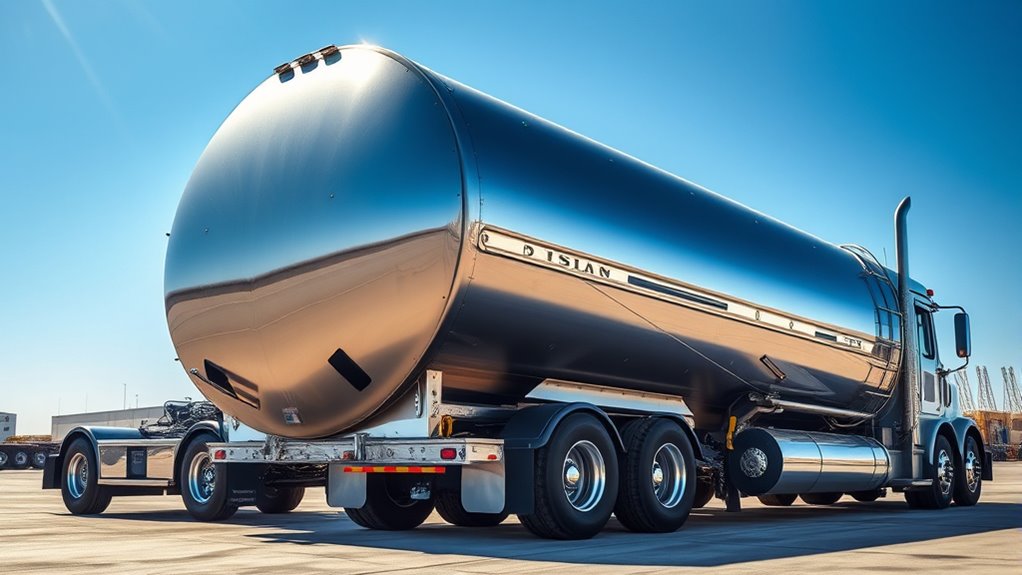
A tanker truck can hold anywhere from around 1,000 to over 11,000 gallons, depending on its size and design. These trucks are built to transport large quantities of liquids like fuel, chemicals, or water safely and efficiently.
The capacity varies a lot, so knowing how many gallons a tanker truck holds is pretty important if you’re dealing with logistics or transportation.
Small tankers usually carry up to 3,000 gallons and are perfect for local deliveries. On the other hand, larger tanker trucks can haul bulk amounts, sometimes exceeding 11,000 gallons.
But keep in mind, weight limits and the density of the liquid you’re moving play a big role in how much you can safely transport.
If you want to understand how these factors affect tanker capacities and their common uses, there’s definitely more to explore.
Key Takeaways
- Tanker trucks typically hold between 1,000 and 11,600 gallons, depending on size and design. Small tankers usually carry up to 3,000 gallons for local deliveries.
- Large long-haul tankers can exceed 11,000 gallons capacity for bulk transport. But keep in mind, weight regulations limit the total cargo, which affects how many gallons can be safely transported.
- Also, the type of liquid matters. Denser liquids take up less volume, so the actual gallons carried can change depending on the liquid’s density.
Tanker Truck Capacities and Common Uses
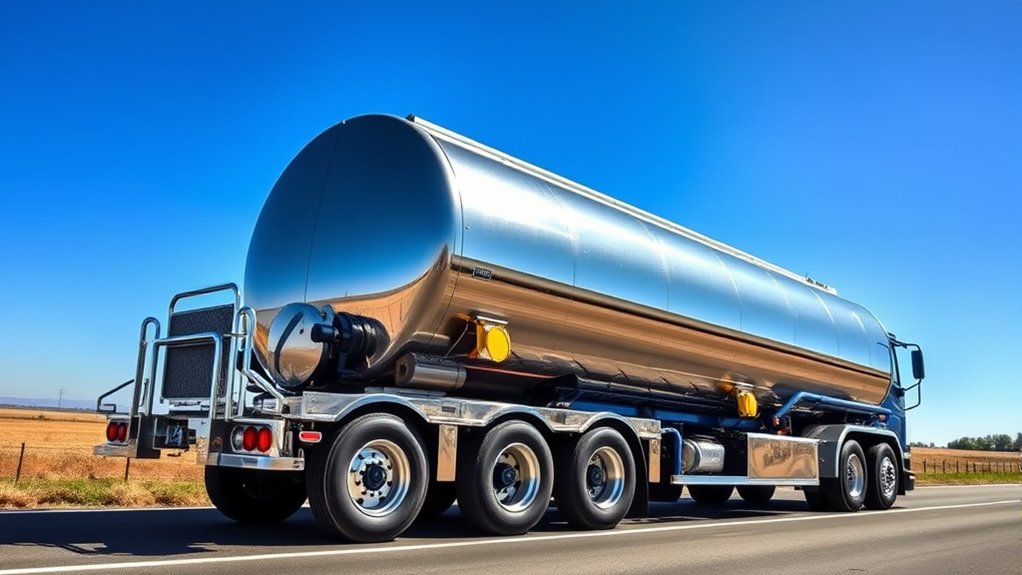
Although tanker trucks vary widely in size, they typically hold between 1,000 and 11,600 gallons depending on their design and purpose.
Tanker trucks vary widely, holding from 1,000 to 11,600 gallons based on their design and purpose.
When you consider tanker truck capacities, small tankers usually carry up to 3,000 gallons. These are ideal for local delivery of liquids like water or fuel.
Larger tankers, designed for long-haul routes, can exceed 11,000 gallons in maximum capacity. They often transport fuel or chemicals in bulk.
The size and type of the storage tank directly affect what liquid it can hold and how much. For example, chemical tankers are specially constructed to safely handle corrosive liquids.
Water tankers, on the other hand, support firefighting or agricultural needs. Understanding these variations helps you appreciate how tanker trucks serve different industries.
They do this by efficiently delivering the right volume of liquid. Whether it’s fuel to gas stations or water to construction sites, the tanker’s capacity and design are key to reliable and safe liquid transport.
Weight and Regulations Limiting Tanker Truck Capacity

Because tanker trucks must comply with strict weight limits, their carrying capacity often depends more on weight regulations than tank size. In the U.S., the maximum gross vehicle weight on interstate highways is 80,000 pounds, which includes the weight of the tank, cargo weight, and fuel.
The tank’s material impacts payload capacity—heavier steel tanks reduce how much you can carry. Axle weight restrictions also play a vital role; each axle has legal weight limits to prevent damage to roads and bridges.
Regional laws and bridge laws can impose stricter limits, further reducing capacity beyond federal regulatory limits. Fuel density is another factor; denser liquids like sulfuric acid weigh more, forcing you to carry fewer gallons without exceeding weight limits.
Frequently Asked Questions
What Is the Capacity of a 53 Foot Tanker Truck?
A 53-foot tanker truck typically holds between 5,000 and 11,600 gallons. You’ll find capacities vary based on design, cargo type, and regulations.
But most long-haul fuel tankers carry around 9,000 to 11,600 gallons. It really depends on what they’re hauling and how they’re built.
How Many Gallons Does an 18 Wheeler Tanker Truck Hold?
An 18-wheeler tanker truck usually holds between 5,000 and 11,600 gallons. You’ll find most standard fuel tankers carry around 9,000 to 11,600 gallons, depending on design, purpose, and legal weight limits.
It really depends on what the truck is made for and the laws it has to follow. So, the capacity can vary quite a bit!
How Big Is a 30000 Gallon Fuel Tank?
Imagine a massive steel cylinder stretching 50 to 70 feet long—that’s your 30,000-gallon fuel tank.
You’ll see it towering like a small building. It’s built tough to safely hold and transport huge fuel quantities with ease.
How Much Does a 3,000 Gallon Tanker Weigh?
A 3,000-gallon tanker weighs about 12,000 to 15,000 pounds empty.
When filled with gasoline, expect around 18,600 pounds more. That adds up to roughly 30,600 to 33,600 pounds in total.
Of course, this can vary depending on the type of liquid and the materials used in the tanker.
Conclusion
Now that you know tanker trucks usually hold between 5,000 to 9,000 gallons, imagine a fuel delivery for a busy airport. One truck can refuel dozens of planes in a single trip, saving time and costs.
Understanding these capacities helps you appreciate the logistics behind everyday essentials. Next time you see a tanker on the road, you’ll realize just how much it’s carrying and the careful planning involved in every delivery.
Knowing how many gallons a tanker truck holds gives you insight into the massive scale of fuel transportation. Whether for airports, gas stations, or industrial use, these trucks play a crucial role in keeping things running smoothly. So, the next time you spot a tanker truck, remember it’s not just a big vehicle—it’s a vital part of the supply chain, carrying thousands of gallons of fuel with precision and safety.