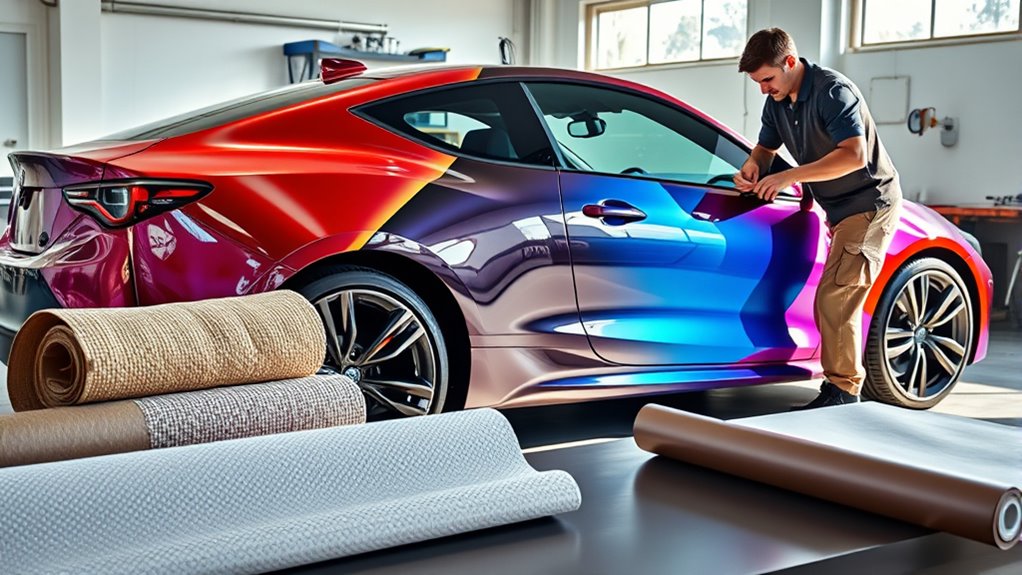
3 Factors That Affect How Much It Does Cost to Wrap Your Car
The cost to wrap your car mainly depends on its size and shape since larger, more complex vehicles need more vinyl and careful installation. These factors play a big role in determining the final price because bigger cars require more material and time. So, if you’ve got an SUV or a truck, expect to pay more than for a compact car.
Next, the quality and finish of the vinyl you pick impact price—premium or specialty finishes cost more but last longer. Choosing a high-end vinyl means better durability and a nicer look, but it will add to your budget.
It’s all about balancing cost with how long you want the wrap to last and how it will look.
Finally, intricate designs with multiple colors take extra time and skill, raising labor expenses. Complex patterns need more precision, so installers charge more for the extra work.
Understanding these factors helps you gauge expenses, and there’s more to explore about how each detail affects your total cost.
Key Takeaways
- Vehicle size and shape impact cost by increasing material needs and installation complexity. Bigger or oddly shaped vehicles usually cost more to wrap.
- Vinyl quality and finish affect price due to durability and application difficulty. Higher-quality vinyl tends to last longer but can be pricier.
- Design complexity raises labor time and costs, especially with detailed or multi-colored wraps. So, if your wrap has lots of details, expect to pay more.
- Smooth, simple surfaces reduce installation time, lowering overall expenses. It’s easier and quicker to work on these kinds of vehicles.
- Premium materials and specialty finishes require skilled labor, increasing total wrap cost. Experts charge more because these wraps take extra care to apply.
How Vehicle Size and Shape Affect Car Wrap Costs
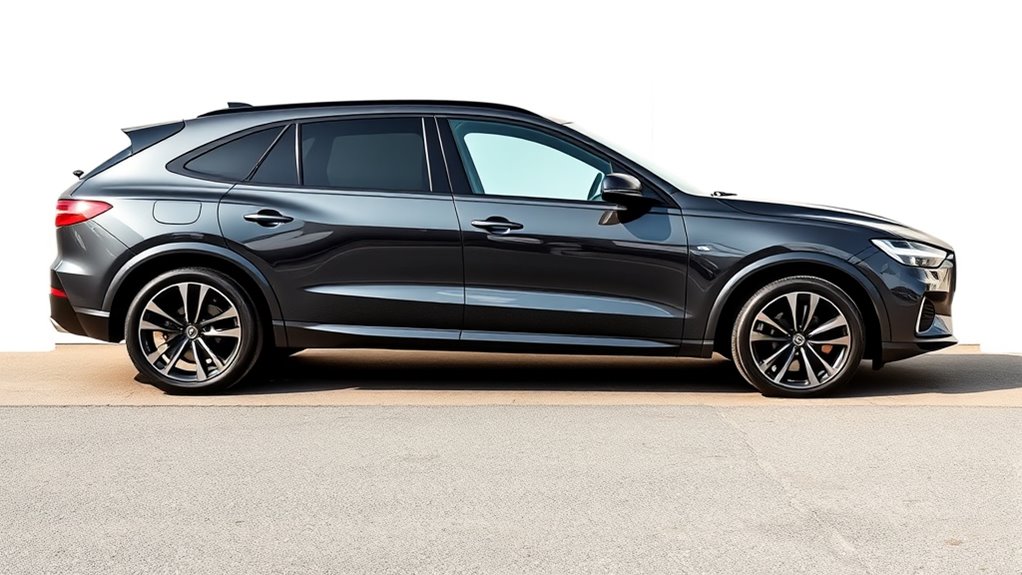
Since larger vehicles like trucks and SUVs need more vinyl, wrapping them costs you more than compact cars. Vehicle size directly impacts the amount of vinyl material required, increasing the wrapping cost as surface area expands.
Beyond size, the vehicle’s shape plays a vital role. Complex designs with curves, contours, and features such as spoilers add difficulty to the installation process. This extends installation time and raises labor expenses.
When you wrap a vehicle with smoother, simpler surfaces, you typically spend less because the vinyl applies faster and more easily. In contrast, intricate shapes demand extra care to avoid bubbles or wrinkles, pushing up cost factors.
How Vinyl Quality and Finish Influence Vehicle Wrap Pricing
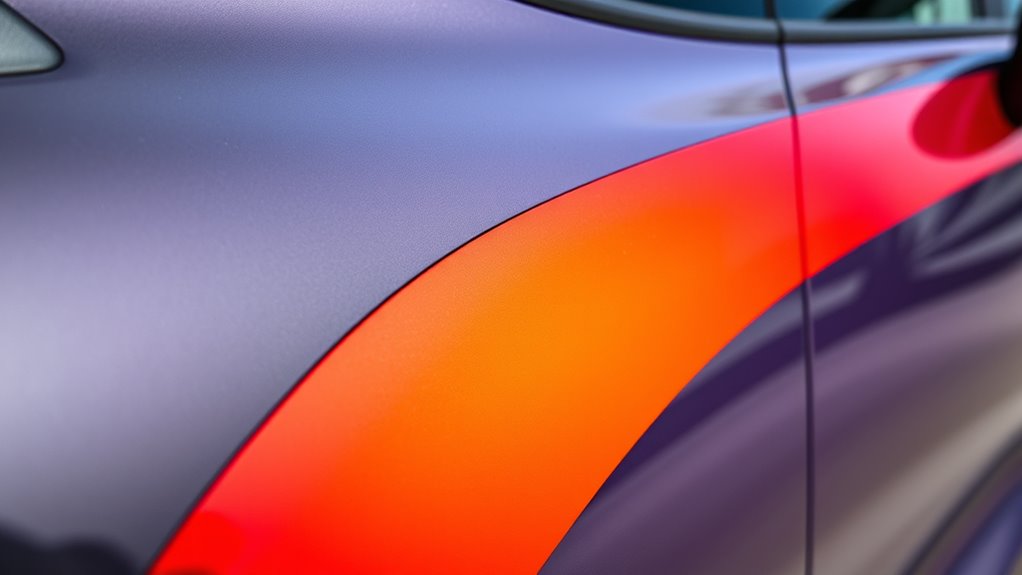
Vehicle size and shape aren’t the only factors that influence the cost of a car wrap—vinyl quality and finish play a significant role as well. When choosing vinyl, keep these points in mind:
Vinyl quality and finish significantly impact car wrap costs beyond just vehicle size and shape.
- Vinyl Quality: Premium brands like 3M or Avery charge more because their materials offer superior durability. They resist fading, cracking, and shrinking over time, which is a big plus.
- Finish Options: Metallic vinyl, chrome, and textured vinyl finishes usually cost more than standard gloss or matte finishes. That’s because they have a more specialized appearance.
- Material Price: Higher-quality vinyl comes with a higher material price, but it offers a longer lifespan and a professional look. So, it’s often a smart investment.
- Installation Complexity: Some finishes, especially textured vinyl, can make installation trickier. This might increase labor costs a bit.
How Design Complexity Impacts Labor Time and Total Wrap Cost
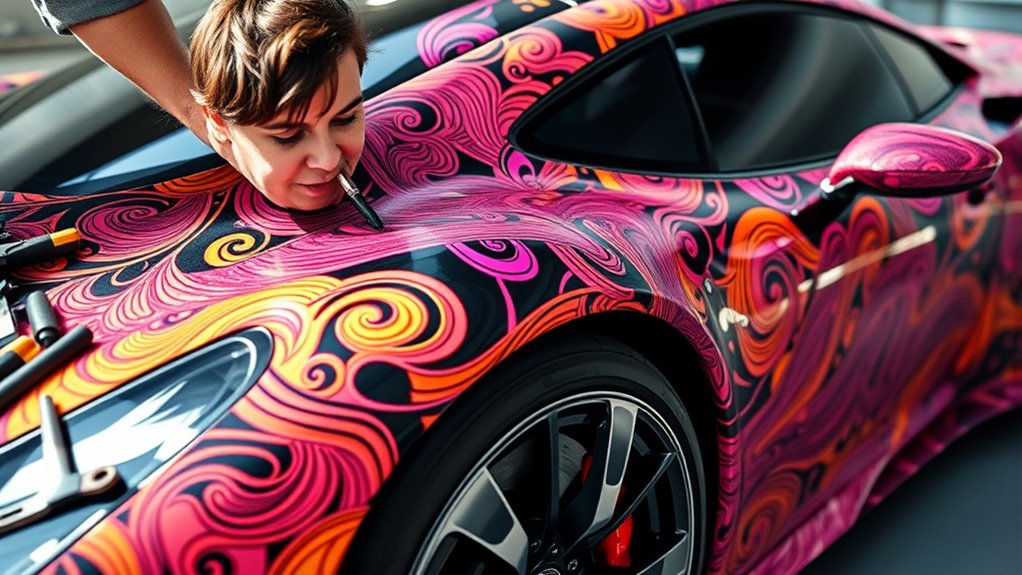
When you opt for a complex design with intricate graphics or multiple colors, expect the labor time and total wrap cost to rise noticeably. Design complexity directly impacts installation cost because detailed logos, pattern textures, and custom artwork demand extra precision and care.
Applying multiple colors or layered elements requires skilled application skills and often extends labor time by several hours. The revision process for complex wraps can also add time and cost, as proofs and adjustments ensure perfect alignment and quality.
Wraps featuring intricate patterns need specialized tools and expertise, further increasing labor effort. Overall, you can expect total wrap costs to climb by 20-50% compared to simpler, single-color designs.
Frequently Asked Questions
Why Does It Cost so Much to Wrap Your Car?
It costs so much to wrap your car because you need high-quality materials, expert skills, and time to handle complex designs.
Plus, larger vehicles and special finishes require extra work, making the process more expensive overall.
Basically, it’s not just about slapping on some vinyl—it’s a detailed job that takes patience and precision.
That’s why the price can add up quickly!
How Long Will a Car Wrap Last?
A car wrap lasts like a well-cared-for plant—usually 3 to 7 years. If you treat it gently, avoid harsh weather, and clean it carefully, your wrap will stay vibrant and protective for a long time.
Think of it like giving your car a little TLC. Keep up with the care, and it’ll look great for years!
Is There a Downside to Wrapping a Car?
Yes, there’s a downside to wrapping your car. You might face peeling, bubbling, or paint damage if it’s poorly installed.
Removing wraps can be costly and risky. Plus, wraps may interfere with sensors or trim if applied carelessly.
Does Wrapping a Car Decrease Its Value?
Wrapping your car doesn’t usually decrease its value if done professionally and maintained well. You’ll actually protect the original paint.
But poor installation or neglect might cause damage, which could lower your vehicle’s resale appeal. So, it really pays to choose a skilled installer and keep up with care.
Conclusion
When wrapping your car, remember that size, vinyl quality, and design complexity all play a big role in the final cost. Did you know that intricate designs can increase labor time by up to 30%, raising your overall expenses?
By understanding these factors, you can make smarter choices that fit your budget and style. So, take your time planning—your wallet and ride will thank you for it!
Knowing how size impacts the amount of vinyl needed helps avoid surprises. Plus, choosing high-quality vinyl might cost more upfront but lasts longer, saving money down the road. And don’t forget, complex designs often mean more labor, which adds to the price.
By keeping size, vinyl quality, and design complexity in mind, you’ll get a car wrap that looks great and works with your budget. Smart planning means you get the style you want without overspending on your car wrap costs.



11 Comments