
What Kind of Gas Does My Car Take?
To know what kind of gas your car takes, start by checking your owner’s manual. You can also look for fuel type stickers near the fuel cap or inside the fuel door. These are easy ways to find the right gas for your vehicle.
Sometimes, you might find fuel info on the dashboard or the manufacturer’s website. Using the wrong fuel can cause engine problems and costly repairs, so it’s really important to confirm before filling up.
If you want to understand the risks of using the wrong gas and how to prevent mistakes, there’s more important information ahead.
Don’t worry—it’s easier than you think to make sure your car runs smoothly!
Key Takeaways
- Check your owner’s manual for the recommended fuel type and octane rating for your car.
- Look for fuel type labels on or near the fuel cap and inside the fuel door.
- Some cars display fuel requirements on the dashboard or onboard computer during refueling.
- If you’re still unsure, visit the manufacturer’s website or ask a mechanic for advice.
- Using the correct fuel helps prevent engine damage and keeps your vehicle’s warranty intact.
- So, it’s definitely worth double-checking before you fill up!
How to Find What Kind of Gas Your Car Takes
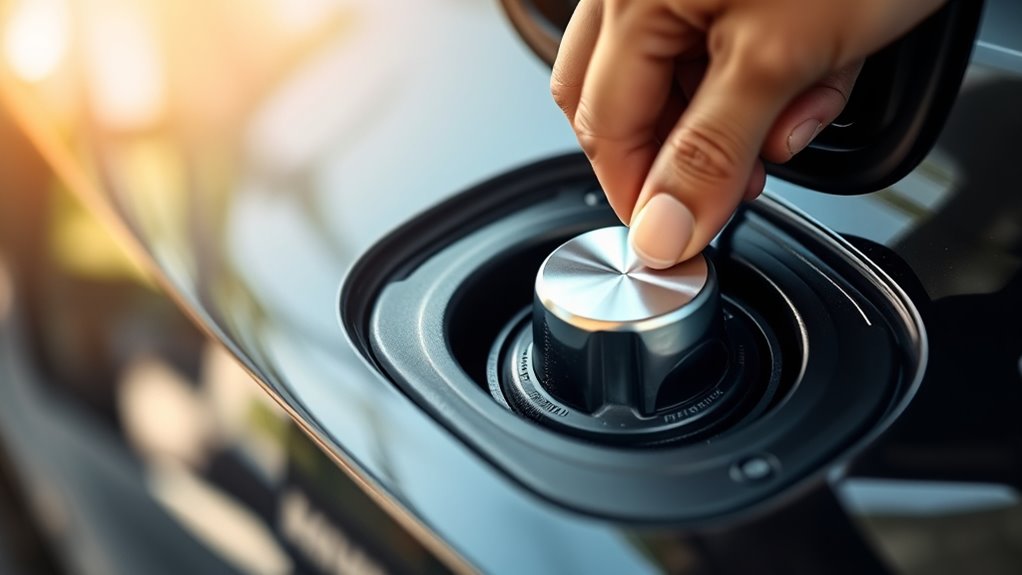
Before you fill up your tank, you’ll want to know the exact type of gas your car requires. Start by checking the owner’s manual; it clearly states the recommended fuel type and octane rating.
Next, look at the stickers near the fuel cap or on the inside of the fuel door—these often specify whether you need regular gas, premium fuel, or midgrade. Some vehicles also display fuel info on the dashboard or onboard computer when you open the fuel door or start refueling.
If you’re still unsure, consult the manufacturer’s website or contact a professional mechanic. Following these steps guarantees you use the right fuel type, protecting your engine and performance.
What Happens If You Put the Wrong Gas in Your Car?
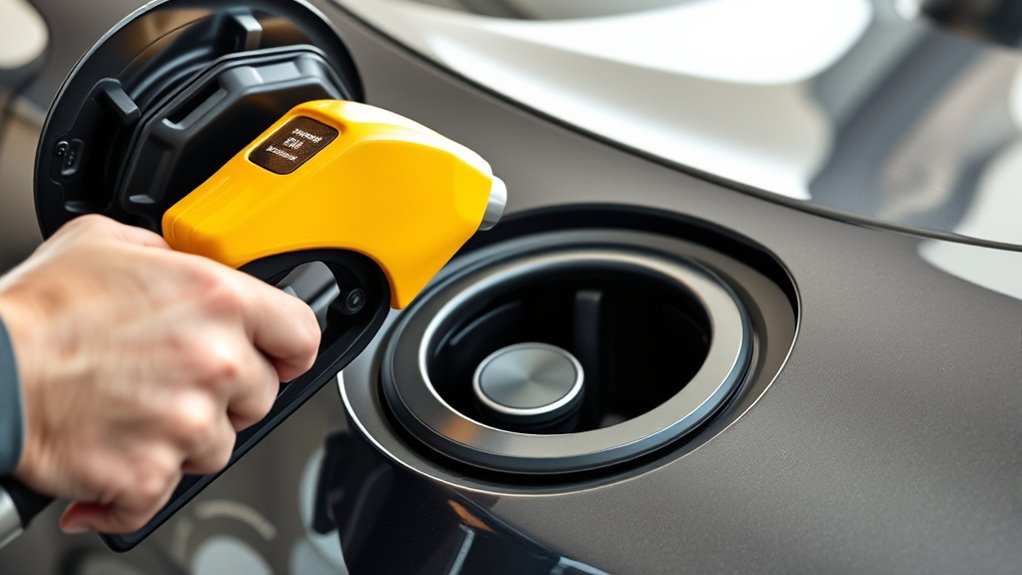
Using the wrong type of gas in your car can lead to serious problems. Putting diesel in a gasoline engine may cause your vehicle to stall, misfire, or become completely inoperable.
Using diesel in a gasoline engine can cause stalling, misfires, or complete breakdown.
Similarly, gas in a diesel engine results in poor combustion, engine knocking, and damage to fuel injection components. Both scenarios can cause severe engine damage and costly repairs.
The wrong fuel damages key parts of the fuel system, including pumps, injectors, and filters. If you accidentally use the wrong fuel, don’t start your engine.
Starting it can worsen engine damage and increase repair costs. Instead, have your car towed for a professional fuel drain and inspection.
Keep in mind, using incorrect fuel might void your vehicle warranty, leaving you responsible for repairs. So, always double-check which gas your car requires and fill up accordingly.
Preventing these mistakes saves you from expensive repairs and extended downtime. It’s worth taking a moment to be sure before you fill up.
Frequently Asked Questions
How Do I Find Out What Type of Gas My Car Takes?
You can find out what type of gas your car takes by checking the owner’s manual, looking for labels near the fuel door, or reviewing emission stickers. These are usually the easiest ways to get the info quickly.
If you’re still unsure, you can always contact the manufacturer or dealership. They can give you specific fuel recommendations tailored to your car.
Do I Use 87 or 89 Gas?
You don’t need rocket fuel—87 octane is usually perfect!
Unless your car’s manual screams for 89, stick with 87.
Using 89 won’t magically boost your ride, so save your money and fuel wisely.
Should I Use 91 or 93 Gas?
You should use 91 octane if your car requires it, but using 93 won’t boost performance much.
Stick to what your manual recommends to avoid engine issues and extra costs from higher-priced fuel.
Is 87 the Most Common Gas?
Yes, 87 octane is the most common gas you’ll find at stations, and most cars run efficiently on it.
Unless your vehicle needs higher octane, sticking with 87 saves you money without sacrificing performance.
Conclusion
Now that you know how to find the right gas for your car, you can avoid costly mistakes. Putting the wrong fuel in your tank is like pouring salt into a wound—it only makes things worse.
Always check your owner’s manual or the sticker inside your gas door to keep your engine running smoothly. Taking these small steps protects your car and gives you peace of mind every time you hit the road.
Choosing the right kind of gas is super important for your car’s performance and longevity. Using the recommended fuel not only helps your engine run efficiently but also prevents potential damage and costly repairs down the line. So, before you fill up, double-check that your car takes the correct gas type. It’s a simple habit that saves money and keeps your vehicle in top shape. After all, knowing what kind of gas your car needs is key to smooth driving and hassle-free maintenance.





3 Comments