5 Factors That Affect How Much It Costs to Paint a Truck
When you paint your truck, expect costs to vary based on its size and surface condition. Bigger trucks or those with damage need more paint and repairs, which can quickly add up.
Labor rates also differ depending on where you live, so location plays a big role in the price.
Plus, the quality and type of paint you choose will affect both how your truck looks and how much you spend.
Don’t forget about prep work—it might add to the bill, but it’s key for making the paint job last longer.
And if you want custom designs or extra finishes, be ready for those to bump up the cost quite a bit.
Keep reading to see how each of these factors shapes your total expense when painting your truck!
Key Takeaways
- Truck size and surface condition affect paint and repair needs, increasing costs for larger or damaged vehicles. Bigger trucks usually take more paint and time to finish. Plus, if the surface has dents or rust, it’ll cost more to fix before painting.
- Labor rates vary by region, with urban areas and certain states charging significantly higher prices. So, where you live can really impact the final bill. In big cities, expect to pay more than in smaller towns.
- Paint quality and finish type influence material costs and labor, with premium paints costing more but lasting longer. Choosing a high-end paint might seem pricey upfront, but it often saves money over time. It also gives your truck a nicer look and better protection.
- Prep work and repairs, including rust treatment and sanding, add to total expenses based on damage severity. The worse the damage, the more work needed before painting. This prep is super important to make sure the paint sticks well and looks great.
- Custom designs, specialty finishes, and extras like decals or ceramic coatings substantially raise the overall painting cost. If you want something unique or extra durable, be ready to spend more. These add-ons can really make your truck stand out, though!
How Truck Size and Condition Affect Truck Painting Costs
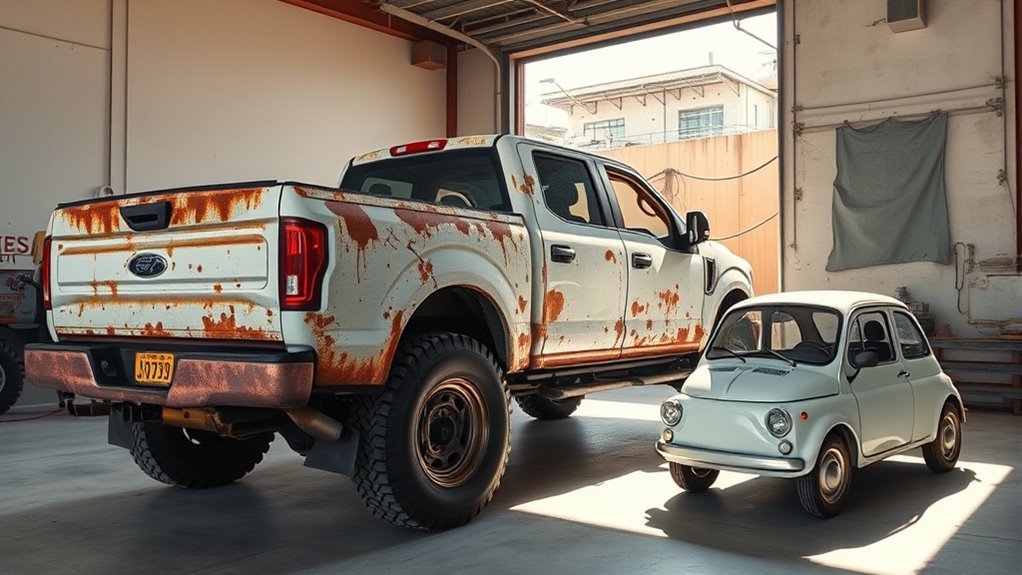
Because larger trucks like semi-trucks need more paint and labor, you’ll pay more to paint them than smaller pickups or vans. The truck size directly impacts painting expenses since bigger surfaces require more paint and longer paint application times, increasing labor costs.
Besides size, the surface condition plays a vital role. If your truck surface has rust, dents, or deep scratches, expect higher repair costs due to necessary rust removal and other prep work.
Trucks with significant surface damage demand sanding, rust treatment, or bodywork before paint application, which adds to the total cost. Conversely, a smooth and intact truck surface reduces prep work, lowering labor costs and painting expenses.
Ultimately, painting costs rise in proportion to truck size and the extent of surface damage needing correction. So, the better you maintain your truck’s surface condition, the less you’ll spend on repair costs and paint application.
How Labor Rates and Location Influence Your Price
While labor rates vary widely across regions, they play an essential role in determining your truck painting costs. In urban areas, labor rates for professional auto painting are typically 20-30% higher than in rural locations due to increased overhead costs and higher living expenses.
Labor rates vary significantly by region, often 20-30% higher in urban areas due to overhead and living costs.
For example, shops in states like California and New York charge more than those in less expensive regions. The average hourly labor rate ranges from $50 to $100, heavily influenced by location and shop reputation.
Regional differences in wages and operational costs directly impact your final bill, sometimes adding hundreds or even thousands of dollars. Choosing a shop in a lower-cost location can reduce expenses, but you should weigh this against the potential trade-offs in craftsmanship and materials quality.
Understanding how labor rates and location affect regional costs helps you make an informed decision when selecting a professional auto painting service for your truck.
Why Paint Quality and Finish Matter for Your Truck’s Price

When you choose higher-quality paints and finishes for your truck, you’ll notice a significant impact on the overall price. Paint quality like urethane or metallic finishes adds cost but really boosts durability and visual appeal.
Premium finishes, including clear coats and pearlescent effects, increase labor time and materials. But they offer long-term maintenance savings by resisting fading and corrosion.
The finish type—matte or gloss—also affects cost. Specialized finishes usually demand more skill, which can add up.
| Paint Quality | Emotional Impact | Cost Implication |
|---|---|---|
| Metallic Finishes | Eye-catching shine | Higher materials cost |
| Clear Coats | Sleek, smooth look | Increased labor time |
| Premium Finishes | Pride in appearance | Long-term maintenance savings |
| Durable Paints | Confidence in protection | Upfront investment |
Investing in better paint quality and finish means paying more now but saving on future repairs and upkeep. It’s worth thinking about if you want your truck to look great and last longer.
How Prep Work and Repairs Can Boost Your Bill
Choosing a high-quality paint and finish definitely impacts your truck’s look and longevity, but there’s more to contemplate before the paint even goes on. Prep work and repairs can quickly boost your bill, especially if your vehicle’s condition isn’t ideal.
Sanding and thorough surface treatment are necessary to guarantee proper paint adhesion and prevent future issues. If your truck has rust, dents, or deep scratches, addressing these repairs can cost between $150 and $500 each, adding up fast.
Skipping or rushing prep work might save money upfront but often leads to rework, which increases labor costs and delays completion. The more extensive the repairs, the longer the prep process, driving up labor expenses.
Primer and rust inhibitors also play a critical role in protecting your truck and enhancing durability, but their application depends on how worn or damaged your vehicle is. Investing in solid prep work ultimately saves you money by avoiding costly paint failures down the road.
What Custom Designs and Extras Really Cost
If you want your truck to stand out, custom designs and extras can considerably increase your painting costs. Custom designs like flames, racing stripes, or intricate artwork typically add $500 to $3,000 or more, depending on complexity.
Specialty finishes, including metallic paint or pearlescent layers, usually raise the price by $1,000 to $3,000 due to extra coats and skilled application. Adding decals or graphics affects graphic costs and can range from $200 to $1,000 based on size and detail.
You might also pay $200 to $1,000 to paint jambs and door edges for a seamless look. For added durability, clear coating or paint protection films like ceramic coatings can tack on another $1,000 to $2,500.
These cost factors combine to influence your total bill, so weigh your design ambitions against your budget carefully before deciding on custom designs and extras. It’s all about balancing what you want with what you can afford.
Frequently Asked Questions
What Are the Factors That Affect the Price of a Car Paint Job?
You’ll find the price depends on paint quality, vehicle size, and condition. Also, labor rates vary by shop reputation and location.
Custom designs or specialty finishes will raise costs, so plan your budget accordingly. It’s always good to get a few quotes before deciding.
What Are the Main Factors That Determine the Cost of Paint?
You’ll find paint type, surface size, and condition are key factors determining cost. Custom finishes and prep work add expenses, too.
Plus, labor rates and shop quality influence the final price you’ll pay for painting. So, it’s a mix of things that come together to set the cost.
What’s the Cheapest Color to Paint a Truck?
If your truck were a blank canvas, white would be the purest stroke—simple, clean, and budget-friendly.
You’ll save money choosing white because it’s widely available and doesn’t demand costly pigments or extra coats like flashy colors do.
It’s kind of the go-to if you want to keep things easy on your wallet. Plus, white looks sharp and can hide dirt pretty well.
Why Is Maaco Paint Job Cheap?
Maaco paint jobs are cheap because they use basic prep, synthetic enamel paints, and standardized processes. You’ll save money since they focus on affordability, skip extensive repairs, and offer discounts.
This keeps costs low without high-end finishes. So, if you’re looking for a budget-friendly option, Maaco is a solid choice.
Conclusion
When considering painting your truck, remember that the final price reflects more than just paint on metal—it’s an investment in care and craftsmanship. The size, condition, and location subtly shape the cost, while quality finishes and thoughtful prep work add layers of value.
Custom touches might gently nudge your budget upward, but they guarantee your truck truly stands out. Embrace these nuances, knowing that a well-painted truck is a reflection of pride and personality.
Painting your truck isn’t just about slapping on a new color. It’s about enhancing its look and protecting it from wear and tear. Factors like the truck’s size, the current condition of its surface, and where you get the work done all influence the overall cost. Plus, quality prep work and premium finishes add more value and durability. Adding custom designs or special effects can raise the price but ensures your truck is unique. So, when thinking about truck painting costs, consider these elements carefully—they all contribute to a finish that combines beauty, protection, and personal style.



One Comment