How Many Axles Does a Car Have
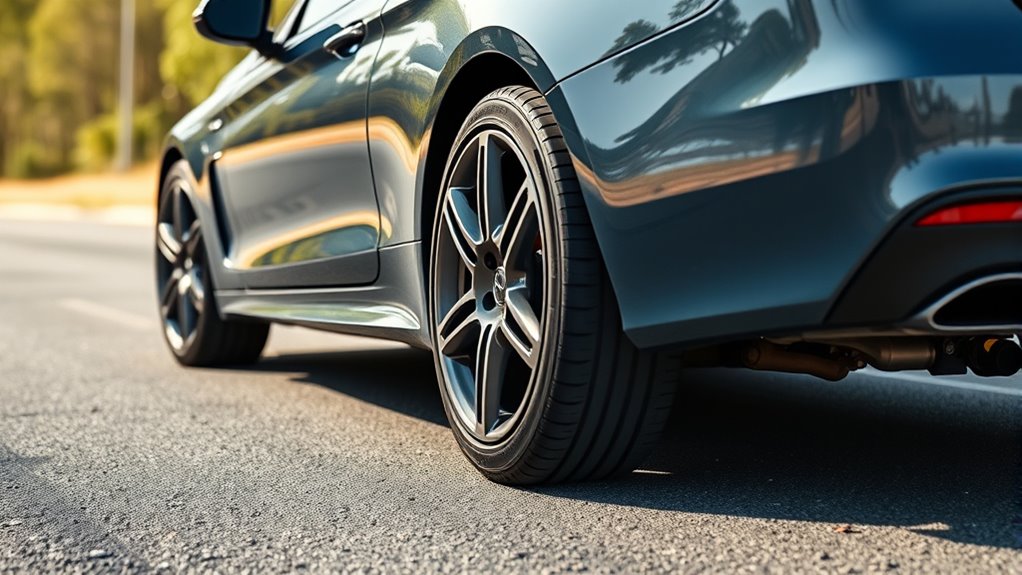
You likely drive a car with two axles—one at the front for steering and one at the rear for support and power transmission. Most passenger cars have two axles, which help keep the vehicle stable and controlled on the road. These axles are essential parts of your car’s suspension and drivetrain system.
While typical passenger cars stick to two axles, larger vehicles like trucks have more. They add extra axles to carry heavier loads and improve traction.
Curious about how multiple axles affect a vehicle’s performance and handling? There’s plenty to learn about the benefits and challenges that come with having more axles.
Key Takeaways
- Most passenger cars have two axles: one front axle and one rear axle. The front axle supports steering and front wheels, while the rear axle supports weight and power transmission.
- Axle count is consistent across front-wheel, rear-wheel, and all-wheel drive passenger cars. So, no matter the drive type, you’ll typically see two axles.
- Heavy-duty vehicles like trucks and buses have more than two axles to carry heavier loads. They need the extra support to handle all that weight.
- Two axles provide stability, control, and smooth vehicle movement for standard cars. It’s a simple setup that works well for everyday driving.
How Many Axles Does a Typical Car Have?

A typical car has two axles—one at the front and one at the rear. When you look at most passenger cars, you’ll notice that the number of axles is usually two, regardless of whether the vehicle is front-wheel, rear-wheel, or all-wheel drive.
The front axle plays a vital role by supporting the front wheels and handling steering, which helps you control the car. Meanwhile, the rear axle supports the vehicle’s weight and, in rear-wheel-drive cars, transmits power from the engine to the wheels, propelling the car forward.
Both axles work together to guarantee smooth and balanced movement, providing stability and control while you drive. Understanding that a standard car has just these two axles helps you appreciate the simple yet effective design behind most vehicles on the road today.
Vehicles With More Than Two Axles and Their Impact on Performance
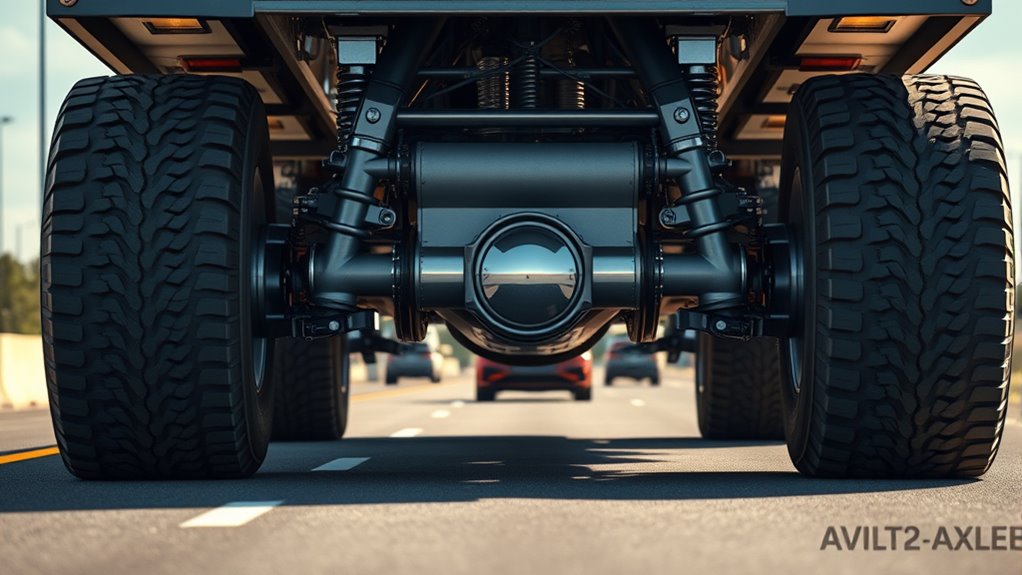
How do vehicles with more than two axles affect their performance? Vehicles with more than two axles, like heavy-duty trucks and buses, boost load-carrying capacity and improve weight distribution. This, in turn, enhances safety and stability.
These multi-axle vehicles reduce road wear by spreading the load more evenly. They also offer better traction, which is especially useful for off-road capability and transporting heavy or oversized loads.
However, there are trade-offs. Maneuvering multi-axle vehicles can be challenging because of their larger turning radius. This makes tight spaces tougher to navigate.
Plus, having more axles means higher maintenance demands and operational costs. So, if you’re managing or driving these vehicles, that’s something you’ll want to keep in mind.
Frequently Asked Questions
Are Cars 2 Axle or 4 Axle?
Cars are typically 2-axle vehicles. You’ll find one axle in the front for steering and one in the rear for support.
Unless you’re dealing with larger, specialized vehicles, you won’t see 4 axles in standard cars. So, for most everyday rides, 2 axles are the norm.
What Is a 4 Axle Vehicle?
A 4-axle vehicle is a beast on wheels, designed to carry loads heavier than a mountain. You’ll find it in trucks or machinery, offering extra stability and traction by spreading weight across four axles.
Basically, having four axles means the vehicle can handle more weight without losing balance. It’s like giving the vehicle extra support so it can tackle tough jobs more easily.
How Many Axles Are on a 4 Wheel Car?
A 4-wheel car usually has two axles—one front axle for steering and one rear axle for support and power.
You’ll find this setup in most passenger cars unless it’s a specialized or all-wheel-drive model.
It’s pretty standard, but some cars might mix it up depending on their design or function.
How Much Do Axles Cost to Replace?
You’ll typically pay between $500 and $1,200 to replace an axle, with labor costing around $200 to $600. Prices vary based on your car’s model, axle location, and whether you choose OEM or aftermarket parts.
It really depends on a few things like the make and model of your vehicle. Plus, where the axle is located can make a difference. And of course, deciding between OEM and aftermarket parts can impact the overall cost too.
Conclusion
Now, imagine yourself behind the wheel, feeling the steady grip of those two axles beneath you. But what if there were more? Each extra axle changes how the vehicle moves, handles, and carries weight—transforming your driving experience in ways you might not expect.
So next time you see a car or truck, look closer. Those axles aren’t just metal bars; they’re the hidden heroes shaping every journey you take. Understanding how many axles a car has can give you insight into its performance and safety.
Whether it’s a simple two-axle car or a heavy-duty vehicle with more, axles play a crucial role in supporting weight and ensuring smooth handling. So remember, those axles are more than just parts—they’re key to how your car drives and carries you safely on the road.