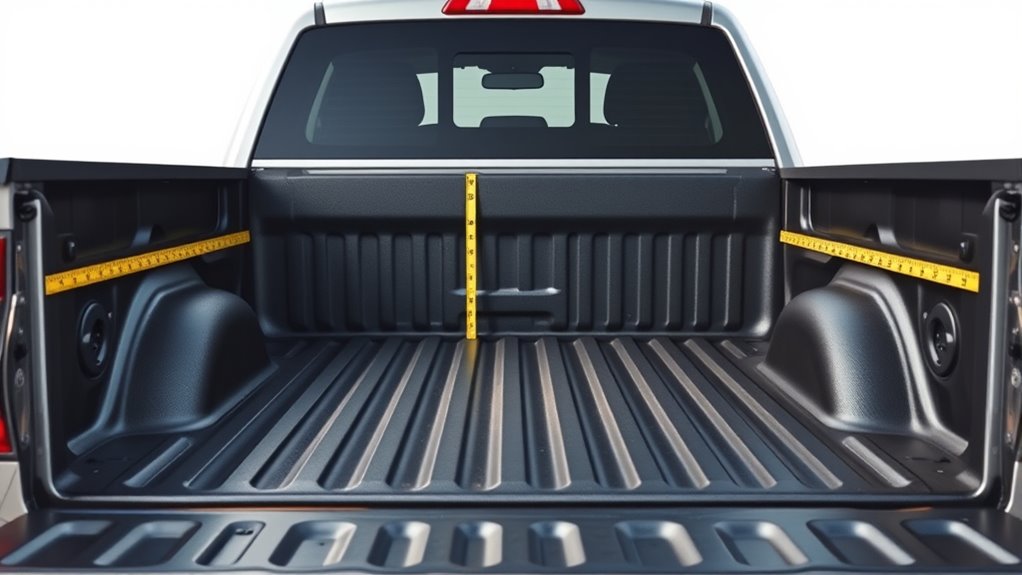
5 Key Measurements: How Wide Is a Truck Bed
To know how wide your truck bed is, start by measuring the interior width across the inside of the bed rails at the widest point. This measurement usually falls between 48 and 60 inches. It’s the key number to understand when figuring out what accessories will fit.
Next, don’t forget to check the overall width from outer rail to outer rail. You’ll also want to measure the bed rail thickness, the distance between the wheel wells, and the bed length. These extra measurements are super helpful to make sure everything fits just right.
Taking accurate measurements saves you from costly mistakes. Plus, knowing these details helps you pick the perfect setup for your truck bed. So, grab your tape measure and get ready to measure like a pro!
Key Takeaways
- Measure the interior width between the bed rails at the widest point, just below the top edge, with the tailgate closed on level ground. This gives you the most accurate space inside the bed.
- Record the overall bed width from outer rail to outer rail at the top. This measurement typically ranges between 60 and 66 inches, depending on your truck model.
- Measure the bed rail thickness to determine clamp compatibility for side-mounted toolboxes and accessories. Knowing this helps you pick the right gear that fits snugly.
- Measure the spacing between the wheel wells, which is usually around 48 inches. This is important because it shows the usable interior width where you can actually load cargo.
- Measure the bed length from the front wall to the tailgate. This helps you understand the total cargo area dimensions and plan for larger items.
How to Accurately Measure Your Truck Bed Width

When measuring your truck bed width, make sure your vehicle is on level ground with the tailgate closed. This helps you get an accurate reading.
To measure your truck bed properly, position a measuring tape across the inside of the bed rails at the widest point, just below the top edge. Focus on the interior width by recording the distance from the inner edge of one bed rail to the inner edge of the opposite bed rail.
Avoid any curves or indentations that could distort your bed rail distance. It’s best to use a straight, rigid measuring tape to prevent sagging or bending, which helps ensure an accurate measurement.
Take multiple bed measurements along the length of the inside of the bed to spot any tapering or irregularities. For the most precise results, use the smallest interior width measurement when determining fit for accessories or liners.
This careful process guarantees you get the exact truck bed width you need. It’s worth taking the time to measure right so everything fits perfectly.
The 5 Essential Truck Bed Width Measurements Explained
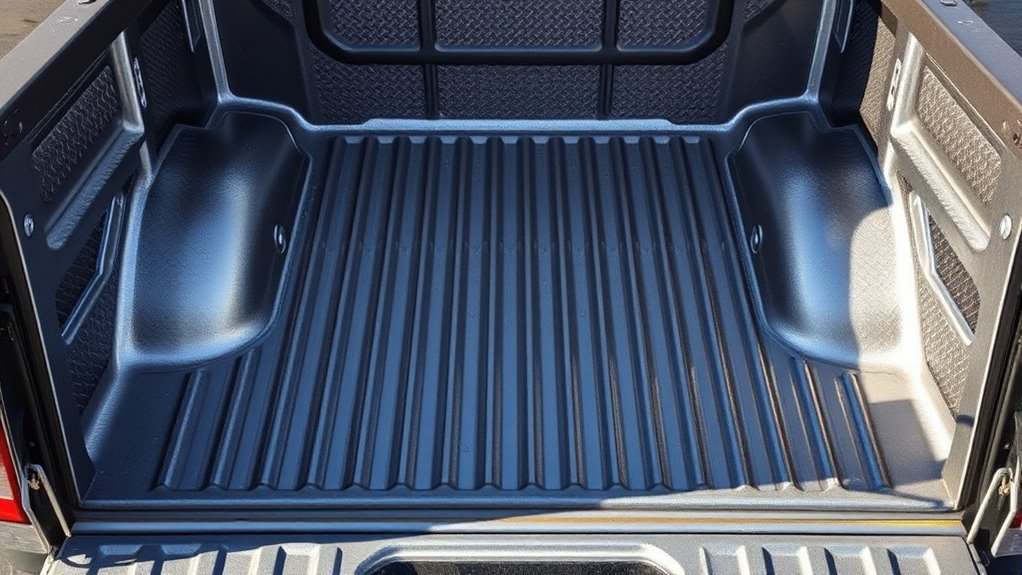
Although measuring your truck bed width might seem straightforward, understanding the five essential measurements guarantees you get the right fit for accessories and cargo. When measuring truck bed width, you’ll want to note these key dimensions to verify perfect bed accessories fitment and maximize cargo space.
Accurate truck bed measurements ensure your accessories fit perfectly and help you maximize cargo space efficiently.
- Overall bed width: Measures from outer rail to outer rail at the top, typically 60 to 66 inches.
- Interior bed dimensions: Wall-to-wall space inside the bed, usually between 48 to 60 inches, defining usable cargo space.
- Bed rail width: Thickness of the side rails, vital for clamps and cover fit.
- Wheel well spacing: Distance between wheel wells, often about 48 inches, affecting large item loading.
- Bed length: Measures how far the bed extends, important for full cargo capacity.
Using proper bed measurement tools and accounting for truck model variations helps you get reliable results every time. It’s all about being precise so your accessories fit just right and you make the most of your truck bed space.
How Bed Material and Design Impact Truck Bed Width

Since truck bed width directly affects how well your accessories fit, it’s important to take into account the materials and design features used in the bed’s construction. The bed material plays a big role: steel vs composite beds differ in sidewall thickness, with steel generally having thinner walls that provide greater interior width.
Composite beds often include molded surfaces and integrated plastic caps, which can reduce usable space and create tighter clearances around accessories. Bed design features like tapered rails, reinforced sidewalls, or molded contours also impact the overall width you have to work with.
These variations in bed construction influence accessory fit, so knowing whether your bed has thicker sidewalls or molded features helps you choose compatible tools and covers. Keeping bed material and design in mind guarantees you maximize your truck bed’s interior width for a more secure and efficient accessory fit.
How Truck Bed Width Influences Toolbox Fit and Compatibility
Understanding your truck bed width is key to choosing toolboxes that fit securely and function properly. When measuring truck bed dimensions, knowing both the bed rail width and interior bed width helps ensure proper mounting and accessory compatibility.
A mismatch can cause poor toolbox fit, unsafe mounting, or wasted space. So, it’s really important to get your measurements right before making a purchase.
Keep these points in mind:
- Bed rail width, often 56 to 66 inches, determines the clamp range for side-mounted toolboxes.
- Interior bed width between wheel wells, usually around 48 inches, dictates the size of a wheel well toolbox.
- Narrower beds limit options; precise measuring truck bed width avoids incompatible toolboxes.
- Proper mounting depends on matching toolbox size with your truck’s bed dimensions.
- Accessory compatibility hinges on accurate bed width measurements to prevent gaps or overhangs.
Taking a little extra time to measure correctly saves you from headaches later on. It makes sure your toolbox fits like a glove and works just the way you need it to.
Common Truck Bed Measurement Mistakes to Avoid
When measuring your truck bed, you’ll want to avoid common mistakes that can throw off your dimensions and cause fitting issues. One frequent measurement mistake is measuring at an angle instead of straight across, which distorts your truck bed width and hampers accurate measurements.
Always use proper measuring methods, focusing on inside bed dimensions and bed rail measurements to guarantee precision. Also, don’t forget to account for bed liners, caps, or other installed accessories. Ignoring these can lead to incorrect bed accessories fitment.
Avoid relying solely on manufacturer specs without measurement verification, especially if your truck is modified. Measuring both sides of the bed is essential to spot discrepancies and prevent uneven fitment.
Finally, steer clear of outdated measuring techniques, like measuring from outside edges. By following proper measuring techniques and double-checking your results, you’ll avoid common errors and secure accurate measurements for a perfect fit.
Frequently Asked Questions
How Wide Is a Regular Truck Bed?
A regular truck bed is typically between 60 and 66 inches wide from outer rail to outer rail. You’ll find the interior width between wheel wells is usually about 48 inches, which helps when fitting accessories.
It’s pretty handy to know these measurements if you’re planning to load up gear or add custom parts. Makes the whole process a lot smoother.
How to Tell Truck Bed Size by VIN?
You can tell your truck bed size by decoding the VIN using manufacturer-specific lookup tools. The VIN includes codes for bed length and configuration, letting you identify exact dimensions without measuring physically.
It’s pretty handy because you don’t have to get out a tape measure or guess. Just plug the VIN into the right tool, and it’ll tell you what you need to know.
How Wide Is a Ford F-250 Truck Bed?
A Ford F-250 truck bed is about 50 inches wide between the inner walls. You’ll find the exterior width, including rails, is roughly 80 inches.
How Wide Is a F-150 Truck Bed?
Think of your F-150 truck bed as a sturdy box about 60 inches wide across the top rails. You’ll find around 48 inches between the wheel wells, perfect for hauling gear or fitting accessories snugly inside.
It’s a pretty practical size, don’t you think? Just enough room to handle most jobs without feeling too bulky.
Conclusion
So, now that you know exactly how wide your truck bed is, you’ll never accidentally buy a toolbox that won’t fit—because who doesn’t love a little surprise when unloading?
Measuring might seem tedious, but skipping it is the real shortcut to frustration. You’ve got the tools and know-how; just don’t let those “close enough” guesses drive your next purchase.
Precision saves time, money, and a whole lot of headache—trust me, your truck will thank you. When it comes to truck bed measurements, getting the width right is key. It ensures your accessories fit perfectly, avoiding returns or modifications.
So take the time to measure your truck bed width accurately. It’s a simple step that makes all the difference in your truck setup and helps you get exactly what you need without hassle.





2 Comments