How Much Water Does a Fire Truck Hold?
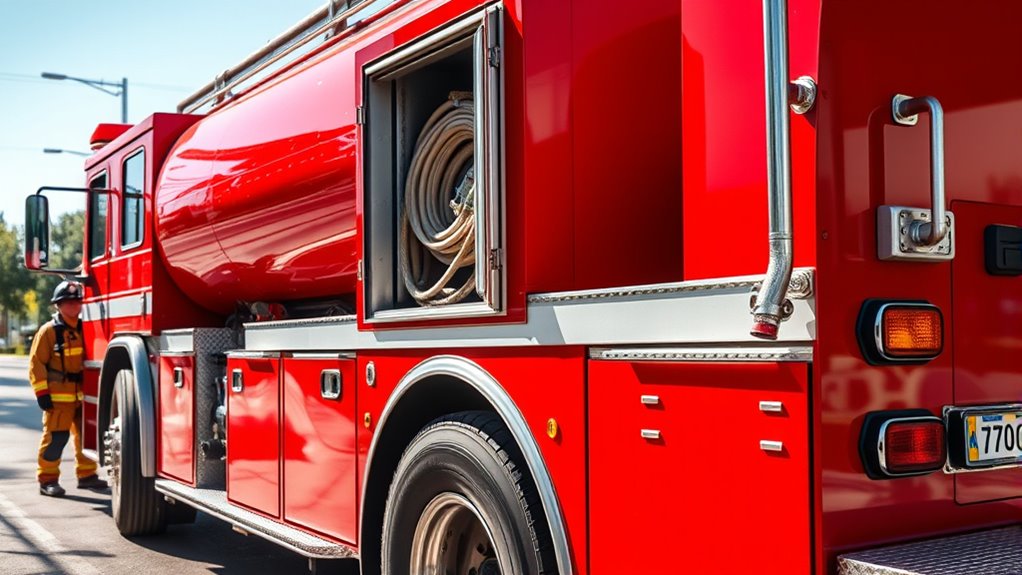
Fire trucks hold varying amounts of water, usually based on their type and where they operate. The amount of water a fire truck carries is crucial because it affects how firefighters tackle different emergencies.
You’ll find urban fire trucks carrying between 500 and 1,000 gallons since they rely on nearby hydrants.
Rural trucks often carry over 3,000 gallons to fight fires without easy water access. This extra capacity helps them stay effective in remote areas where water sources are scarce.
Specialized trucks like aerial ladders hold less, around 200 to 500 gallons.
If you want to understand how these capacities fit different firefighting roles and environments, keep exploring. It’s pretty interesting to see how each truck is designed to meet specific needs on the job!
Key Takeaways
- Fire trucks vary in water capacity based on type, ranging from 200 to over 3,000 gallons. It really depends on what the truck is designed for.
- Urban fire trucks typically hold 500–1,000 gallons because they usually have hydrants nearby. So, they don’t need to carry as much water.
- Rural tanker trucks often carry over 3,000 gallons. That’s to make up for limited water sources out in the countryside.
- Pumper-tankers combine roles and usually have capacities exceeding 3,000 gallons. They’re kind of like all-in-one water carriers and pumps.
- Specialized aerial ladder and wildland trucks have smaller tanks, generally 200–500 gallons. They focus more on other functions besides just carrying water.
Water Capacities Across Different Types of Fire Trucks
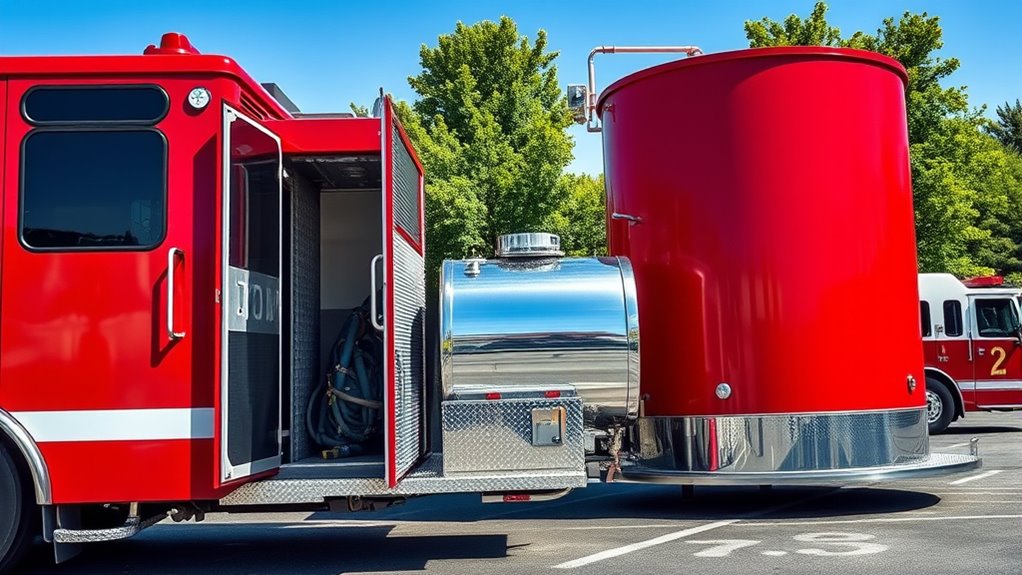
When you consider the different types of fire trucks, their water capacities vary considerably to meet specific needs. Pumper trucks, for example, typically carry between 500 and 1,000 gallons of water. They’re designed to supply firefighters with a steady flow during initial attack.
Tanker trucks, which you’ll often see in rural areas, can transport over 3,000 gallons. This makes them essential where hydrants are scarce. Some fire trucks combine these roles; pumper-tankers hold over 3,000 gallons and pump water on-site.
Aerial ladder trucks and wildland firefighting vehicles usually have smaller water capacities, ranging from 200 to 500 gallons. That’s because their functions are more specialized. Understanding these water capacities across different types of fire trucks helps you appreciate how each vehicle supports firefighting efforts efficiently, tailored to their operational roles.
Matching Fire Truck Water Capacity to Urban and Rural Firefighting Needs
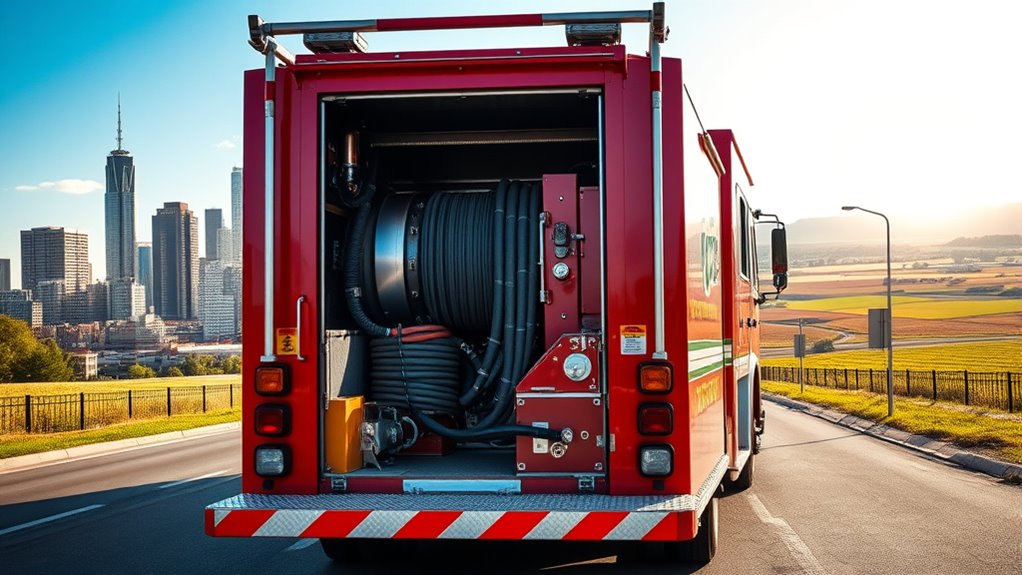
Because firefighting demands differ between urban and rural areas, fire trucks are equipped with water capacities tailored to their environment. In urban settings, fire truck capacity usually ranges from 500 to 1,000 gallons, relying heavily on nearby hydrants to meet firefighting needs quickly.
Fire trucks carry water capacities suited to urban or rural needs, with urban trucks relying on hydrants for quick supply.
This setup works well since water sources are readily accessible. In contrast, rural fire trucks often carry tanks exceeding 3,000 gallons because they face limited access to municipal water supplies.
This larger capacity guarantees they can fight fires effectively in remote locations. Some fire trucks, like pumper-tankers, combine features with capacities over 3,000 gallons, making them versatile for both urban and rural firefighting needs.
Matching fire truck capacity to the specific environment assures firefighters have sufficient water on hand, especially where infrastructure gaps exist. By understanding these distinctions, you’ll see how water capacity directly supports effective firefighting operations tailored to different community challenges.
Frequently Asked Questions
How Much Water Is Stored in a Fire Truck?
A fire truck holds between 200 and over 3,000 gallons of water, depending on its type. You’ll find pumper trucks carry 500-1,000 gallons, while tankers can store much more for larger fires.
How Many Gallons of Water Does a Fire Truck Use per Minute?
When flames roar like a beast, you’ll need 100 to 300 gallons per minute from a fire truck’s pump to tame it.
Your water flow depends on the pump size and nozzle you’re using. It’s not the same for every situation, but that range usually gets the job done.
How Much Does a Fire Engine Weigh With 1000 Gallons of Water?
A fire engine with 1,000 gallons of water weighs between 30,000 and 35,000 pounds. You’ll notice the water alone adds about 8,340 pounds, greatly affecting the truck’s weight and handling.
That’s a lot of extra weight to manage, right? It really changes how the truck moves and brakes. So, drivers need to be extra careful when they’re on the road.
What Is the Water Capacity of a Fire Truck?
Water’s the lifeblood of firefighting, and fire trucks hold anywhere from 200 to over 3,000 gallons.
Depending on your needs—urban or rural—you’ll find trucks designed to carry just the right amount to fight flames effectively.
It really depends on where the truck is used and what kind of fires it’s meant to tackle.
Conclusion
When it comes to fire trucks, knowing how much water they hold is key to fighting fires effectively. Whether you’re in a bustling city or out in the countryside, the right water capacity can make all the difference.
You don’t want to be caught with your pants down when flames roar. So, choosing the right fire truck is like having the perfect tool in your hands—ready to douse the heat and save the day.
In short, understanding the water capacity of a fire truck is crucial for firefighting success. The amount of water a fire truck holds can vary widely, depending on the type and purpose of the vehicle. Having the right water supply ensures firefighters can tackle blazes efficiently, whether it’s a quick city response or a prolonged rural battle. So, knowing how much water a fire truck holds isn’t just trivia—it’s a vital piece of the firefighting puzzle that helps protect lives and property every day.