How to Put Oil in Your Car in 3 Simple Steps
To put oil in your car, start by checking the oil level. Pull out the dipstick, wipe it clean, then put it back in. After that, pull it out again and check the level and condition of the oil. This step is important to know if your car actually needs more oil or just a top-up.
Next, choose the right oil for your car. Your owner’s manual is the best guide for this. Make sure to pick certified products that match the specifications recommended for your engine. Using the correct oil helps your engine run smoothly and last longer.
Finally, add the oil slowly using a funnel. Pour a little at a time and pause often to avoid overfilling. Once done, securely tighten the cap.
Following these simple steps will keep your engine healthy and running efficiently. You’ll find these tips easy to follow and essential for proper car care.
Key Takeaways
- Ensure the engine is off and the car is on a level surface before checking the oil level. This helps get an accurate reading.
- Locate and remove the dipstick, wipe it clean, and then reinsert it fully. After that, pull it out again to check the oil level.
- Use a funnel to add oil gradually in small increments. Make sure to pause and check the level each time you add some oil.
- Stop adding oil once the dipstick shows the oil at the maximum mark. You don’t want to overfill it.
- Securely replace the oil cap. Then, after a few minutes, recheck the oil level to confirm everything is just right.
How to Check Your Oil Level and Condition

Before you check your car’s oil, make sure the engine has been off for at least five minutes and the vehicle is on a level surface. This rest period helps you get an accurate oil level reading.
Always let your engine rest for five minutes on a level surface before checking oil levels for accuracy.
To check the oil, locate the dipstick, often marked with a yellow handle. Pull it out, wipe it clean, then reinsert it fully before pulling it out again to read the oil level.
Look at where the oil in your car reaches against the oil level indicator on the dipstick—it should be between the minimum and maximum marks. Also, observe the oil condition; fresh oil is usually amber and clear, while dark, dirty, or milky oil suggests it’s time for an oil change or mechanic’s attention.
Regular oil level maintenance, including monthly oil level checks or more frequent checks during long trips, helps prevent engine damage and keeps your car running smoothly. It’s a simple step that can save you a lot of trouble down the road.
Choosing the Right Engine Oil for Your Car

When selecting engine oil, you should always follow your vehicle owner’s manual to find the recommended type and viscosity. The owner’s manual provides essential oil specifications to ensure oil compatibility and protect your engine. Using the right oil type and viscosity rating guarantees optimal oil quality and performance.
Keep these points in mind when choosing engine oil:
Verify that the oil meets manufacturer certifications like API or ILSAC to guarantee quality and compatibility. Consider synthetic oil if your car demands high performance or operates in extreme conditions, as it offers better protection.
Always buy the recommended oil from reputable sources to avoid counterfeit or subpar products.
Sticking to the recommended oil helps maintain engine health, improves efficiency, and extends your vehicle’s lifespan. Avoid switching oil types or viscosity ratings unless advised by a professional.
Following these guidelines ensures you use the correct engine oil tailored for your car’s needs.
How to Add Oil Safely Without Overfilling
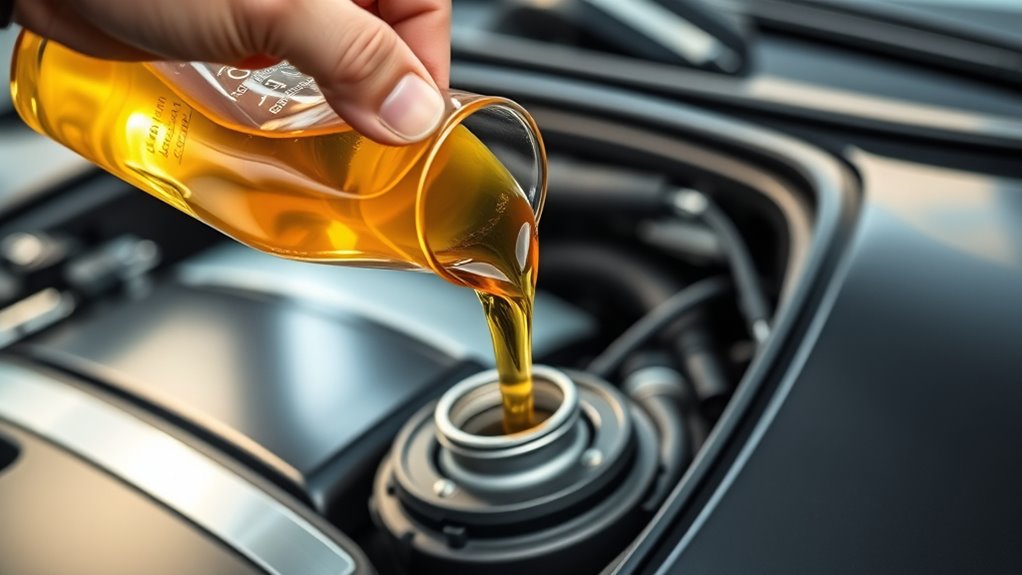
Choosing the right engine oil sets the stage for proper maintenance, but adding it correctly keeps your engine running smoothly. When you add oil to your vehicle, do it gradually in quarter-quart increments.
Use a funnel to pour new engine oil directly into the oil pan’s fill port. This minimizes spills and guarantees precision. After each addition, pause for 2-3 seconds, then check your oil level using the dipstick.
This step is vital to avoid overfilling, which can damage your engine. Keep checking the dipstick frequently and stop adding oil once it reaches the top mark. That mark reflects your car’s exact oil needs.
After filling, securely replace the oil cap and wait a few minutes before rechecking the level. This helps confirm you haven’t overfilled.
This careful approach ensures your oil change effectively keeps your car running, maintaining peak performance and protecting your engine’s longevity. Always choose the right oil and add it safely.
Frequently Asked Questions
How to Put Oil in Your Car Correctly?
You’ll want to check the oil level when the engine’s cool. Then, unscrew the oil cap and get ready to add oil.
Add the oil slowly using a funnel to avoid spills. After a bit, recheck the level with the dipstick to make sure you’re not overfilling.
It’s important to avoid putting in too much oil. Once you’re happy with the level, securely close the oil cap and you’re good to go!
Can I Just Add Oil Myself to My Car?
Absolutely, you can lend your car a little liquid gold yourself. Just take it slow, use the right oil, check levels often, and seal the cap tight.
Your engine will thank you for the care. Easy, right? Just a bit of attention goes a long way!
How to Change Oil in Car Step by Step?
You lift your car safely, drain the old oil, remove and replace the filter, then add new oil through the fill cap.
Finally, check the dipstick to verify proper oil level before finishing up.
How Do You Put Oil in an Engine?
You locate the oil fill port and remove the cap. Then, use a funnel to pour the oil slowly.
Add small amounts and check the dipstick as you go. Once you’re done, replace the cap.
Start the engine and recheck the oil level to make sure everything’s accurate. Easy, right?
Conclusion
Adding oil to your car is easier than you might think, and you don’t need to be a mechanic. By checking your oil level regularly, choosing the right type, and adding it carefully, you keep your engine running smoothly.
Worried about overfilling? Imagine the oil as water in a glass—too much spills and makes a mess. Just add little by little, checking the dipstick, and you’ll avoid any trouble.
You’ve got this! Remember, regularly putting oil in your car not only helps maintain your engine’s performance but also extends its life. Keeping an eye on your oil level and topping it up when needed is a simple step that prevents costly repairs down the road. So, stick to these easy steps, and your car will thank you with smooth rides and reliable starts every time.