How to Tell If Your Car AC Freon Is Low
You can tell your car’s AC freon is low if it blows warm air or never fully cools. This is a common sign that your AC system isn’t working properly and needs attention.
You might also notice weaker airflow from the vents or persistent fogging on your windshield.
Sometimes, unusual sounds like hissing or squealing when you turn on the AC can mean the refrigerant level is low.
Keep an eye out for oily spots or greasy puddles near AC parts too—these often signal leaks.
When your freon is low, your system struggles to keep the car cool and comfortable.
Luckily, there are ways to recharge the freon yourself if you’re comfortable with it.
Otherwise, getting professional help to fix leaks and restore cooling is a smart move.
Keep exploring to learn how to handle low AC freon and keep your car’s air conditioning working great!
Key Takeaways
- Your car’s AC blowing warm air or failing to reach full cooling indicates low refrigerant (Freon) levels.
- You might also notice reduced airflow from the vents or persistent moisture and fogging on the windshield when the AC is running.
- Sometimes, unusual hissing or squealing noises while the AC is on can be a sign of refrigerant leaks.
- It’s a good idea to check under the vehicle for oily spots or greasy puddles near AC components since these often suggest leaks.
- Honestly, the best move is to get a professional inspection to confirm if the Freon is low and to properly recharge or fix any leaks.
Signs Your Car’s AC Refrigerant Is Low

If your car’s AC blows warm air or never quite reaches full cooling, it’s a clear sign your refrigerant might be low. When your car air conditioning struggles, you’ll notice warning signs like reduced airflow from the vents or the Car A/C consistently blowing hot air.
These symptoms happen because the air conditioning system relies on the correct refrigerant level to cool effectively. Another key sign is persistent moisture or fogging on your windshield, especially in humid conditions. This means the system can’t dehumidify properly.
Listen for unusual noises like hissing or squealing when the AC runs—these often point to a refrigerant leak. You might also spot oily spots or greasy puddles under your vehicle near AC components, which signals a leak causing low refrigerant.
Recognizing these signs early helps you understand when your car needs professional attention. That way, you can avoid further damage to the air conditioning system.
How to Recharge Your Car’s AC: DIY and Professional Options
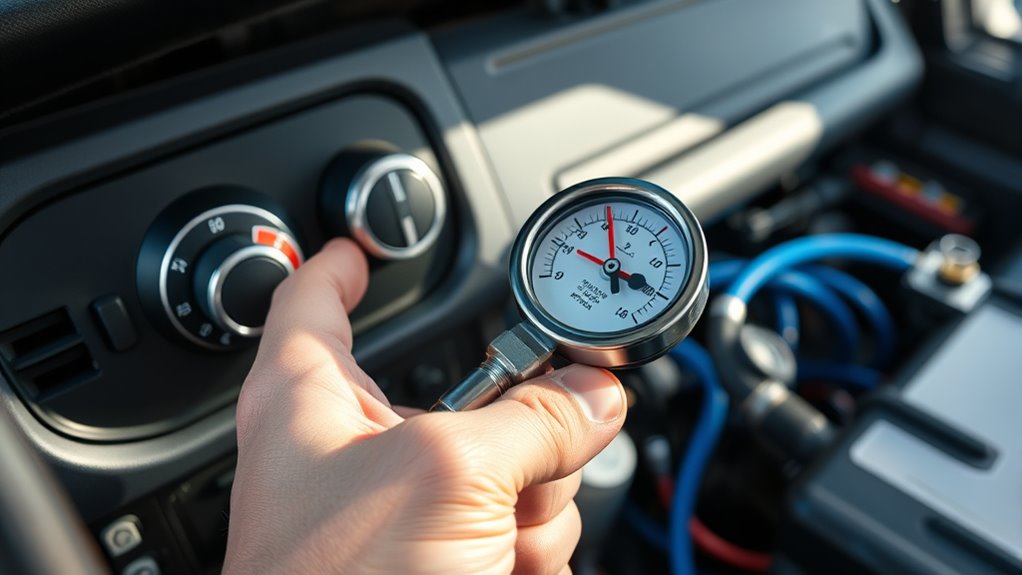
While you can recharge your car’s AC yourself using a DIY kit, doing so requires careful attention to avoid overfilling or missing leaks. DIY kits typically connect a refrigerant canister to the low-pressure port under the hood, allowing you to add refrigerant directly to the system.
However, without proper tools, you might not accurately measure refrigerant levels, which risks damage to your car’s A/C system. Professionals usually spend 1-2 hours evacuating old refrigerant, checking for leaks, and recharging with the exact amount needed.
They use specialized equipment to make sure the system is properly sealed and working efficiently. If you suspect a leak, getting a professional inspection is really important because just recharging won’t fix the underlying problem.
While DIY recharging is convenient and cost-effective, relying on a professional technician guarantees safety and keeps your car’s A/C system performing at its best over the long term.
Frequently Asked Questions
Can Autozone Check Freon Levels?
Yes, AutoZone can check your car’s freon levels using their tools. They’ll quickly assess if your refrigerant is low and can often recharge it.
But for more complex leak detection, you might need to see a professional mechanic. They have the right equipment and expertise for tougher issues.
Can I Just Add Refrigerant to My Car?
Adding refrigerant without fixing leaks is like patching a leaking boat with tape—it won’t last.
You shouldn’t just add refrigerant; have a pro check and recharge your system properly.
This way, you avoid damage and keep your car running efficiently.
How to Fix Low Freon in Car?
You’ll need to find and fix any leaks first, then recharge the system with the correct refrigerant using a gauge.
If you’re unsure about doing this yourself, it’s a good idea to have a professional technician handle it. This way, you can guarantee proper sealing and avoid any damage.
Is It Okay to Drive a Car With Low Refrigerant?
You shouldn’t drive with low refrigerant because it strains the AC compressor, risks damage, and reduces cooling efficiency.
It’s best to get it recharged promptly to avoid costly repairs. Plus, you’ll keep your car comfortable during hot weather.
Conclusion
If you’re worried about handling your car’s AC recharge yourself, don’t be. Many DIY kits come with clear instructions that make the process simple and safe.
Plus, knowing how to spot low freon early can save you from costly repairs down the line. Whether you choose to recharge it on your own or visit a professional, taking action promptly ensures your car stays cool and comfortable all summer long.
Learning how to tell if your car AC freon is low is a smart move. Catching the problem early means you avoid bigger issues and keep your AC running efficiently. So, don’t wait until the heat is unbearable—check your freon levels and recharge if needed to enjoy a refreshing ride every time you hit the road.