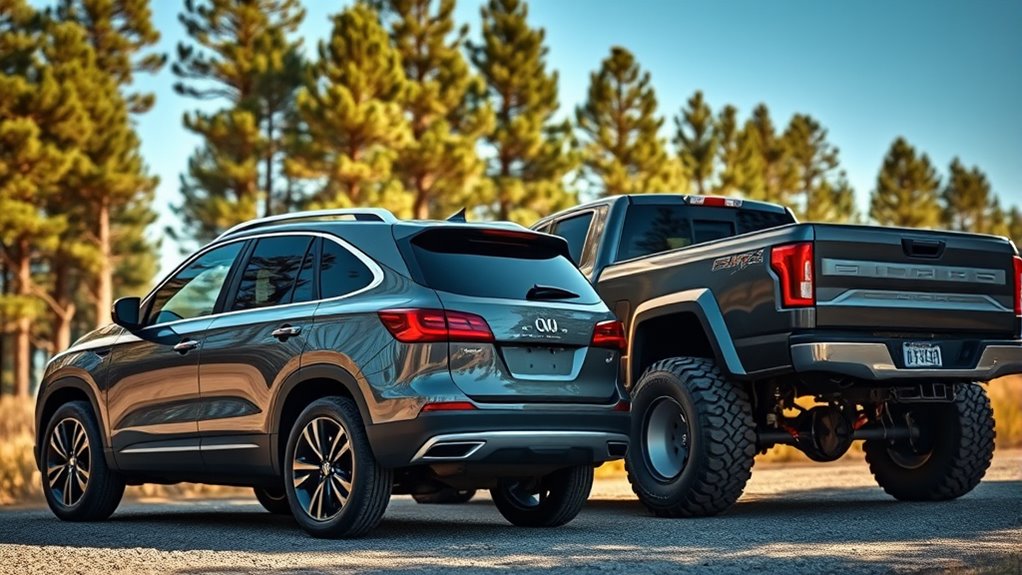
How to Determine If an SUV Is a Truck
You can tell if an SUV is built like a truck by checking if it has body-on-frame construction, where the body sits on a separate steel frame, often a ladder chassis. This type of build is a key indicator that the vehicle shares more in common with trucks than with typical SUVs.
Look for heavy-duty off-road suspension designed for rugged use and higher towing capacity. Truck-based SUVs usually emphasize toughness, utility, and durability for heavy loads and rough terrain.
If you want to understand what truly sets these vehicles apart and how to identify them, there’s more to uncover.
Knowing these details helps you spot the difference between a regular SUV and one that’s built with truck-like strength and capability.
Key Takeaways
- Check if the SUV has body-on-frame construction, indicating a separate steel frame like trucks. This type of build is a strong hint that the SUV is more truck-like in its design.
- Identify if the chassis is a ladder frame, which is typical in heavy-duty pickups and truck-based SUVs. It’s a classic setup for vehicles built to handle tough jobs.
- Look for off-road or heavy-duty suspension systems designed for rugged terrain and durability. These systems often mean the SUV is built to take on rough conditions.
- Verify if the SUV has higher towing and payload capacities, similar to truck specifications. If it can haul a lot, it’s probably closer to a truck than a regular SUV.
- Determine if the vehicle emphasizes toughness, utility, and structural design shared with trucks. This focus usually sets these SUVs apart from more passenger-oriented models.
How To Tell If An SUV Is Built Like A Truck
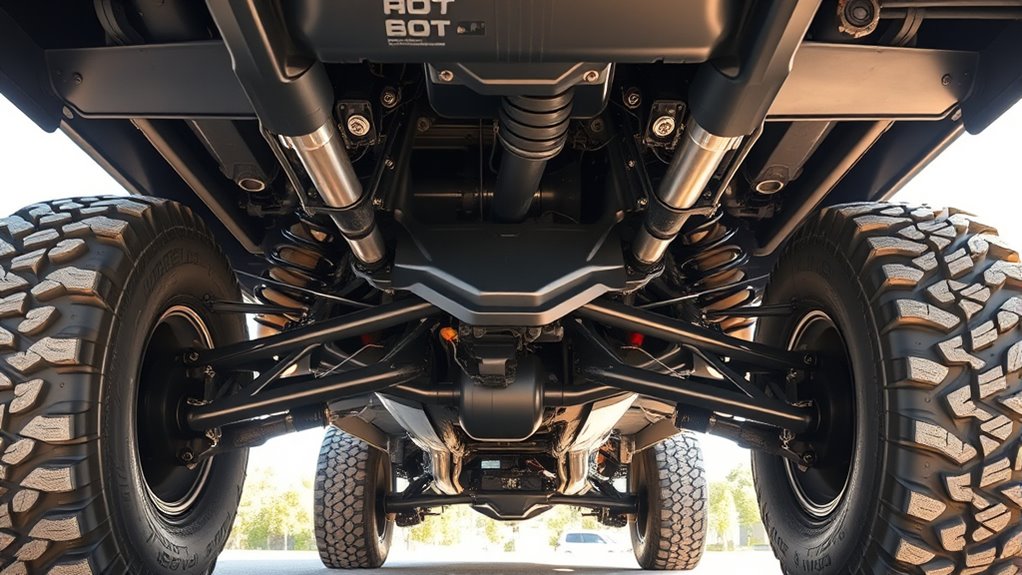
How can you tell if an SUV is built like a truck? Start by checking if it has a body-on-frame construction, meaning the body sits on a separate steel frame. This ladder frame chassis is common in heavy-duty pickups and gives the SUV greater durability and off-road capability.
Next, look for a truck chassis or truck platform designation in the specs. This usually means it shares structural elements with trucks. SUVs built on this foundation typically have higher towing capacity and payload capacity than unibody models.
Also, pay attention to the suspension system. An off-road suspension designed for rugged terrain and heavy loads is a good sign of a truck-like build.
Lastly, if the chassis design emphasizes off-road use or the vehicle is classified as a light truck, you can be pretty confident the SUV is built like a truck. It’s all about combining toughness and utility.
Key Differences Between Trucks And SUVs: Construction, Capability, And Features
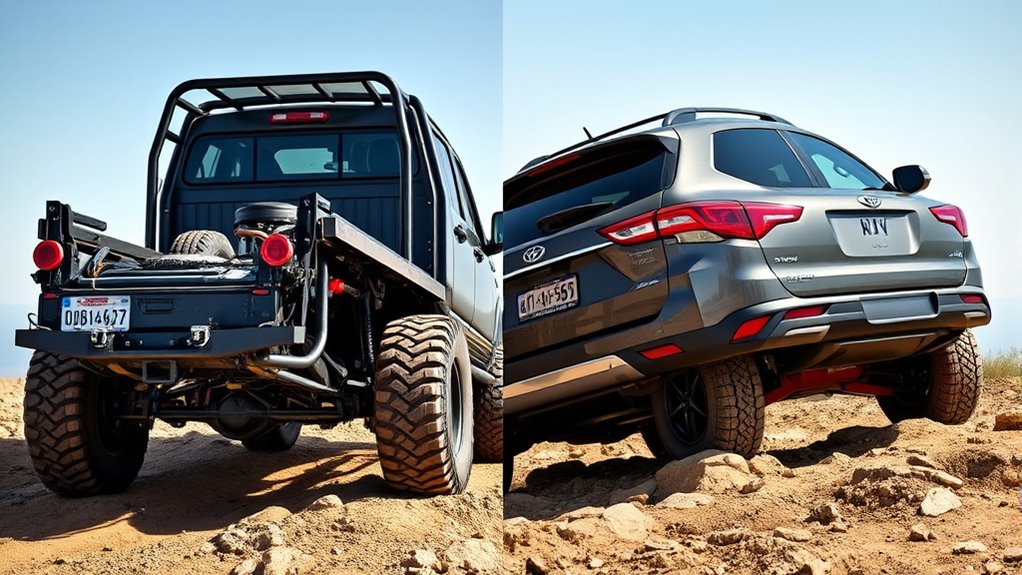
Although trucks and SUVs might look similar at first glance, their construction and capabilities set them apart in important ways. Trucks typically use body-on-frame construction, giving them a rugged build and stronger chassis design ideal for heavy-duty tasks.
In contrast, many SUVs, especially crossovers, rely on unibody construction, which provides a smoother ride but usually less durability for tough conditions. When it comes to towing capacity, trucks often outperform SUVs, handling loads up to nearly 22,000 pounds.
You’ll also notice trucks feature an open cargo bed designed for heavy payloads and easy hauling, while SUVs offer an enclosed cargo area better suited for protecting gear from the elements.
Off-road capability tends to be higher in trucks thanks to their robust design, making them better for challenging terrain. Understanding these distinctions helps you decide whether a vehicle is truly a truck or simply an SUV with some truck-like traits.
Frequently Asked Questions
Can You Consider a SUV a Truck?
Yes, you can consider an SUV a truck if it’s built on a body-on-frame chassis like traditional trucks. Larger SUVs with truck platforms often qualify, especially if they’re designed for towing or off-road use.
It really depends on the build and purpose. So, if an SUV shares the same foundation as a truck, it makes sense to think of it as one.
How to Identify a SUV?
You might think identifying an SUV is tricky, but it’s simple: look for a taller profile, higher ground clearance, and spacious interior.
If it feels rugged yet comfortable, you’ve spotted an SUV ready for both city streets and off-road adventures. Easy, right?
What Separates a Truck From a SUV?
What separates a truck from an SUV is mostly its frame and cargo design. Trucks use a body-on-frame chassis with an open bed for heavy hauling.
On the other hand, SUVs have unibody construction and enclosed cargo areas, which makes them better for lighter handling. So, it really comes down to what you need the vehicle for.
Is a Toyota Tacoma a Truck or a SUV?
The Toyota Tacoma is a truck, not an SUV. You’ll notice it has a separate truck bed, body-on-frame design, and towing capabilities that define it as a midsize pickup.
It’s built for hauling and off-road use. So, if you’re thinking about rugged performance and utility, the Tacoma fits the bill perfectly.
Conclusion
When you’re figuring out if an SUV is built like a truck, remember it’s more than just looks—it’s about what’s under the skin. Like a knight’s armor hiding strength beneath, an SUV with a truck’s frame and capabilities stands ready for tougher battles.
So next time you’re deciding, look beyond the surface and trust the build. That’s how you know if your ride is ready to haul, tow, and conquer like a true truck.
In the end, determining if an SUV is a truck comes down to checking its frame, suspension, and towing capacity. These key features reveal if it’s designed for heavy-duty work or just cruising around town. By focusing on these details, you’ll know if your SUV can handle the tough jobs like a real truck.