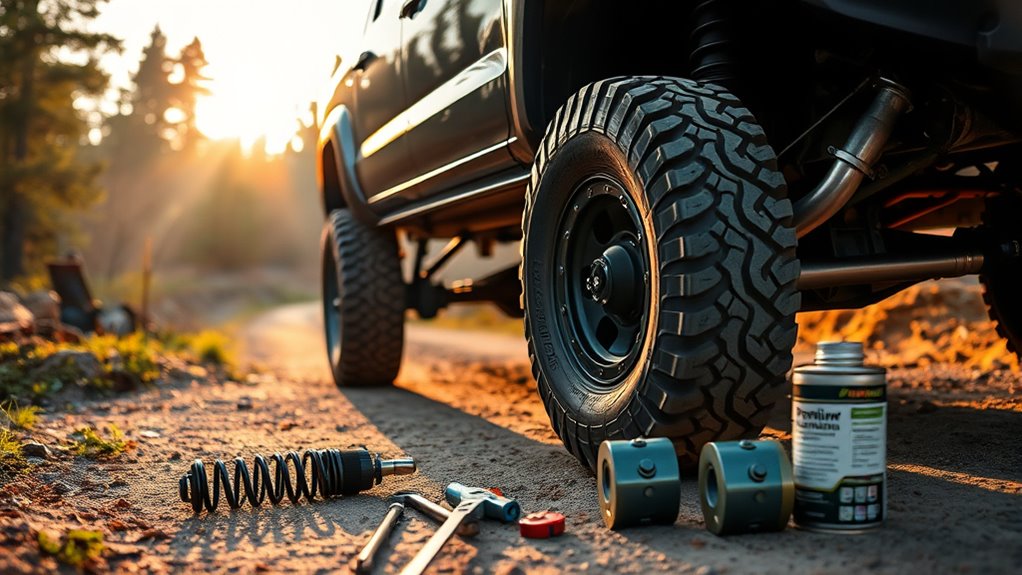
How Much Does It Cost to Lift a Truck: 7 Expenses to Consider
Lifting your truck can cost anywhere from a few hundred to over $15,000, depending on the type of lift kit, the height you want to achieve, and the installation method you choose. Whether you’re going for a body lift or a suspension lift, the expenses can add up quickly.
Wheels and tires that fit the new height are another important cost to consider.
You’ll also need to think about alignment and possible drivetrain upgrades to keep your truck running smoothly.
Professional installation might add to the price, but it’s worth it for safety and a proper fit.
Plus, don’t forget about hidden expenses like sensor recalibration or trimming that can pop up along the way.
If you want the full breakdown, there’s a lot more to evaluate beyond just the lift itself.
So, before you start, make sure you know all the costs involved in lifting your truck.
Key Takeaways
- Lift kits range from $180 for body lifts to $5,000+ for suspension lifts, depending on height and complexity. The bigger the lift, the more you can expect to pay.
- Plus, adding parts like wheels, tires, and spacers will bump up the total cost quite a bit. These extras really add up fast.
- Getting a professional to install the lift usually costs between $800 and $2,500. It’s worth it for safety and making sure your truck handles right.
- You can save money by doing it yourself, but it takes some serious mechanical skills. And if you mess up, it could lead to damage or a bad setup.
- Don’t forget about hidden expenses like drivetrain upgrades and sensor recalibration. You might also need trimming or face unexpected repairs after installation.
Types of Lift Kits and Their Costs

When you’re considering lifting your truck, understanding the types of lift kits and their costs is essential. There are several types of lift kits to choose from, each varying in price and complexity.
Body lift kits are the most affordable option, typically costing between $180 and $450. They offer 2 to 5 inches of lift without changing your suspension components.
Body lift kits provide an affordable 2 to 5-inch lift without altering suspension components.
If you’re looking for a more substantial change, suspension lift kits are the way to go. These kits range from $1,000 to over $5,000, depending on the height and complexity involved.
Leveling kits fall somewhere in between, usually costing between $200 and $1,000 to even out your truck’s stance.
Keep in mind, the cost of lifting your truck increases with the height and quality of materials used. Installation costs also vary, with simple kits being less expensive and complex suspension lifts requiring more labor and expense.
Understanding these types of lift kits helps you budget wisely. So, take your time to decide what works best for your truck and your wallet.
How Lift Height Affects Lift Kit Cost
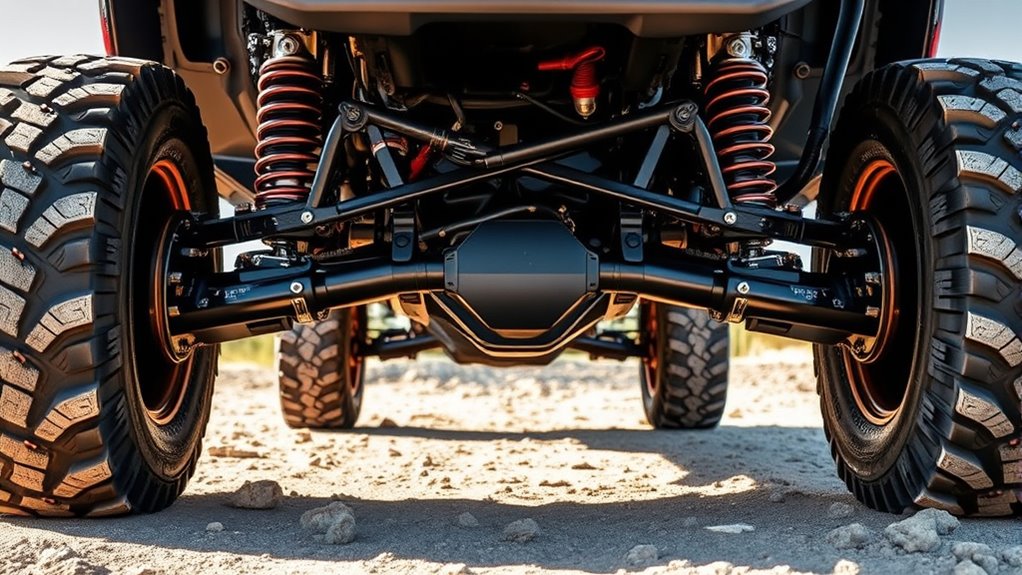
When you choose a higher lift, expect the cost to rise sharply with each inch added. Bigger lifts need more complex parts and longer installation times, which can push the price much higher.
Don’t forget, upgrading tires and suspension often comes with taller lifts, adding to your overall expense. So, it’s not just the lift itself you’re paying for—it’s everything that comes along with it.
Cost Scaling By Inches
Because each additional inch of lift requires more extensive modifications, the cost of lifting your truck rises considerably as you increase height. If you’re considering lifting, understanding how cost scales by inches helps you budget smartly.
A simple leveling kit that lifts 1-2 inches usually costs between $200 and $600. As you move to suspension lifts from 3 to 6 inches, expect a cost range from $1,500 to $4,000. For lifts over 8 inches, prices jump to $5,000-$15,000 or more.
Keep in mind:
- 1-2 inch leveling kits are the most affordable
- Costs rise sharply with each additional inch
- Taller lifts require more parts and labor
Also, installation fees increase with lift height. So, budget for both parts and installation costs.
This scaling shows why even small height increases can really affect total expenses.
Complexity And Components
As you consider higher lift heights, the complexity of the components and installation grows considerably, impacting the overall cost. A suspension lift kit for smaller lifts might run between $1,000 and $3,000.
But as the lift height increases beyond 6 inches, you’ll face pricier components and necessary upgrades like driveline modifications. These additions can push your total well above $12,000.
Installation costs also rise because larger lifts demand professional expertise to handle the intricate adjustments and ensure safety. Meanwhile, body lift kits remain cheaper, usually under $2,000.
However, they’re only practical for lifts up to 5 inches since they don’t alter suspension components. Ultimately, the higher the lift height you want, the more complex and costly both your suspension lift kit and installation will become.
Installation Time Impact
Increasing your truck’s lift height directly extends the installation time, often doubling or even more compared to smaller lifts. When you opt for taller lifts, expect the installation to take over 15 hours versus about 7 for smaller ones. This added labor time results from the complexity and extra modifications needed.
Here’s what impacts installation as lift height increases: taller lifts (6 inches or more) require trimming or custom parts. Suspension and body lift complexity grows with height.
Professional installers charge more due to longer labor time. DIY installations become more time-consuming and challenging. And of course, extended labor time increases overall lift kit costs.
Understanding this helps you budget properly for professional installation based on the lift height you choose. It’s always better to plan ahead so you’re not caught off guard by extra time or expenses.
Installation Costs: What Causes Price Differences?
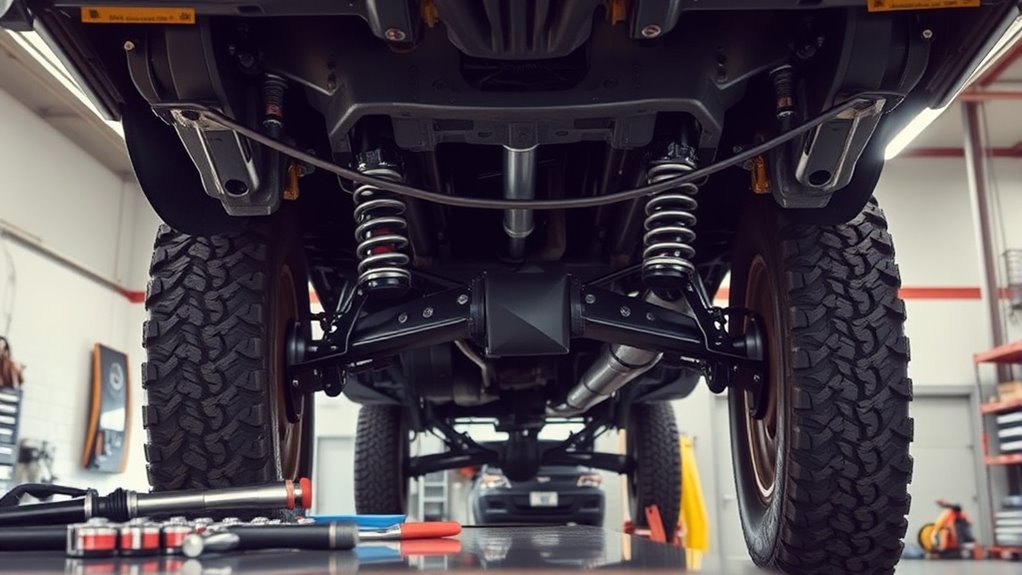
When you look at lift kit installation costs, you’ll notice they vary widely depending on the complexity of the job and your truck’s make and model. Simple installations like leveling or body lifts might cost around $150, while more complex suspension lifts can exceed $2,500.
The complexity affects labor time since some trucks need extensive modifications, increasing installation costs. Larger lifts often require additional work such as trimming, steering adjustments, or drivetrain tweaks, which also drives up expenses.
Labor rates fluctuate based on your location and the shop’s reputation; high-demand areas or well-known installers tend to charge more for their expertise. While you might consider DIY installation to save money, specialized tools and the risk of improper setup could lead to extra costs or safety issues.
Ultimately, understanding these factors helps you anticipate the installation costs and choose the best option for your truck lift project.
Additional Parts That Increase Lift Kit Expenses
Several additional parts can quickly add to your lift kit expenses, especially if you want your truck to perform well and look great. Beyond the basic lift, these components *guarantee* your truck handles properly and maximizes ground clearance without issues.
Expect to budget for wheels and tires upgrades, which can add $3,500 to $6,500 for high-end options. You might also need additional modifications like trimming or bodywork to fit larger tires, costing anywhere from $200 to $1,000 or more.
Don’t forget about TPMS sensor recalibration or replacement, typically $200 to $400, to keep your tire monitoring accurate. Drivetrain upgrades like gear swaps or driveshaft changes can add $1,000 or more, especially for extreme lifts.
Lastly, spacers or adapters priced between $100 and $300 may be necessary to achieve proper wheel fitment. Each of these parts contributes to lift kit expenses but plays a crucial role in maintaining your truck’s performance and maximizing the benefits of increased ground clearance.
How Wheels and Tires Impact Total Lift Cost
Upgrading your wheels and tires can quickly become one of the most significant expenses in your truck lift project. Selecting larger wheels and tires not only boosts your truck’s appearance and off-road capability but also adds considerable costs.
High-end wheels alone can range from $3,500 to $6,500, while tires typically add $2,000 to $4,500 to your budget. When you upgrade to larger wheels, you might also need spacers or adapters, costing an extra $100 to $300, to guarantee proper fitment.
Bigger tires often require trimming or suspension upgrades to prevent rubbing and maintain clearance. Don’t forget balancing and aligning your wheels and tires after installation, which adds about $100 to $200.
The material and size of your wheels affect the price too—larger, forged wheels cost more than smaller, cast ones. Factoring in these elements helps you plan your total lift cost more accurately.
Lift Kit Installation Costs: Professional vs. DIY?
When deciding between professional and DIY lift kit installation, you’ll want to weigh cost against expertise. Professionals charge more but offer warranties and guarantee a safe, precise fit.
If you have the skills and tools, doing it yourself can save money. But keep in mind, mistakes could lead to costly repairs or safety issues. So, it’s a bit of a trade-off!
Professional Installation Benefits
Although installing a lift kit yourself might save money upfront, hiring a professional guarantees the job is done correctly and safely. Professional installation reduces the risk of vehicle damage and safety issues by ensuring proper fitment and alignment.
While the cost ranges from $800 to $2,500, it’s often worth the investment for peace of mind.
Here’s why professional installation benefits you:
- Certified technicians handle complex steering and suspension adjustments
- Proper alignment prevents uneven tire wear and handling problems
- Warranties on installation work offer long-term support
- Saves time by avoiding trial-and-error mistakes
- Protects your truck from costly vehicle damage during installation
Choosing professional installation helps you get the most from your lift kit without unnecessary risks. It’s a smart choice that keeps your truck safe and running smoothly.
DIY Installation Considerations
If you have the right tools and mechanical skills, installing a lift kit yourself can save you significant labor costs, typically ranging from $300 to $1,500. DIY installation means you’ll need proper tools and a solid understanding of your truck’s suspension system.
Before starting, carefully read instructions and watch tutorials to guarantee safety and accuracy. Remember, improper installation can cause safety hazards, uneven tire wear, and damage to suspension parts.
While DIY might save money, it demands time, patience, and mechanical know-how. If you’re unsure, professional installation—though costing between $800 and $2,500—offers expert setup and peace of mind.
Ultimately, weigh your skills and safety priorities before deciding whether DIY installation is the right path for you.
Hidden Lift Kit Costs to Watch Out For
Because lifting your truck involves more than just the kit and installation, you’ll want to watch out for hidden costs that can quickly add up. These additional expenses often catch enthusiasts off guard.
Lifting your truck is more than just parts and labor—hidden costs can surprise even seasoned enthusiasts.
They can turn a straightforward upgrade into a pricier project. Beyond the initial lift kit and labor, consider these potential hidden costs:
- Wheel spacers, larger tires, and alignment adjustments, which can add $1,000 to $4,000
- Drivetrain upgrades like gear swaps or driveshaft modifications for bigger lifts, costing $1,000+
- Recalibrating or replacing TPMS sensors, typically $200–$400
- Trimming or modifying body and suspension parts during installation
- Unexpected repairs or part replacements needed after the lift
Frequently Asked Questions
How Much to Professionally Lift a Truck?
You’ll typically pay between $800 and $2,500 to professionally lift your truck. Complex suspension lifts can cost more, but getting it done right guarantees safety and quality.
Always compare quotes before deciding. It’s worth taking the time to find the best deal that doesn’t cut corners.
How to Calculate Lift on Truck?
Measuring your truck’s lift is like reading a ruler’s secret story. You simply measure from the ground to a fixed point on the wheel well before and after the lift.
Then, subtract those numbers to find the exact height gained. It’s pretty straightforward once you get the hang of it. Just take your time to make sure your measurements are accurate.
Does Lifting a Truck Affect Insurance?
Yes, lifting your truck can increase your insurance premiums since it changes the vehicle’s safety profile.
You’ll need to notify your insurer, provide documentation, and possibly pay more or buy extra coverage to stay protected. It’s important to keep them in the loop so there aren’t any surprises if you need to make a claim.
Is Lifting a Truck Worth the Cost?
Sure, you’re definitely worth spending thousands just to tower over everyone else.
But seriously, if you crave off-road thrills and style, lifting’s worth it—just don’t expect your wallet to thank you for this shiny upgrade.
Conclusion
Think of lifting your truck like stacking blocks: the higher you go, the more careful and precise you need to be. Just like adding one block can change the whole structure, each expense—from lift kits to tires—adds up quickly.
Knowing these costs upfront helps you build a solid plan without surprises. So, before you start stacking, make sure you’ve counted every piece to keep your truck safe and your budget intact.
When it comes to truck lift costs, it’s important to consider all the factors involved. From the initial lift kit and labor to new tires and alignment, every expense plays a part in the total price. By understanding these costs ahead of time, you can avoid unexpected bills and make smart decisions.
In short, being prepared with a clear idea of how much it costs to lift a truck lets you enjoy your upgrade without breaking the bank. Keep these expenses in mind, and you’ll have a safer, more reliable lifted truck that fits your budget perfectly.



10 Comments