Why Does My Truck Shake When I Drive?
If your truck shakes when you drive, it can be pretty unsettling. The first thing to check is your tires and wheels. Uneven tire wear, unbalanced tires, or bent rims are common reasons for those annoying vibrations.
Also, don’t forget to look at your tire pressure. Low or incorrect pressure can definitely cause your truck to shake.
Beyond the tires, suspension issues like worn shocks or misaligned wheels often make the problem worse.
Sometimes, the source of the shaking might be deeper, such as drivetrain or engine troubles.
Understanding these common causes can really help you figure out what’s going on. Once you know the issue, you can get your truck running smoothly again and enjoy a safer, more comfortable ride.
Key Takeaways
- Uneven or worn tires, along with improper inflation, commonly cause truck vibrations and steering shimmy while driving. It’s surprising how much a little imbalance can shake things up.
- Damaged or bent wheels from impacts can create noticeable shaking at various speeds. Even small dents can make a big difference when you’re behind the wheel.
- Worn suspension components and poor wheel alignment often result in high-speed instability and uneven tire wear. This can make your truck feel shaky or loose, especially on the highway.
- Drivetrain issues like worn CV joints or engine misfires produce rhythmic vibrations, especially during acceleration. You might notice a pattern in the shaking when you hit the gas.
- Early inspection and maintenance of tires, suspension, and drivetrain prevent worsening vibrations and costly repairs. Catching problems early can save you a lot of headaches down the road.
Why Your Truck Shakes: Tire and Wheel Problems to Check First

When your truck shakes while driving, the first place you should check is your tires and wheels. Uneven tire wear, like cupping or feathering, often causes a shimmy in the steering, especially at high speeds.
If your truck shakes, start by inspecting tires and wheels for uneven wear causing steering shimmy.
Tire balance plays an essential role; out-of-balance tires create vibrations that become more noticeable between 50-70 mph. Don’t overlook tire inflation—incorrect pressure can lead to uneven contact with the road, triggering tire issues and shaking.
Wheel damage from potholes or impacts can bend rims, worsening vibrations and causing instability. While you inspect, keep in mind that worn wheel bearings and CV joints might contribute to the problem but focus first on tire and wheel conditions.
Aging tires with hardened rubber lose grip, worsening the vibration. By addressing these tire and wheel concerns early, you’ll often resolve shaking issues and guarantee a smoother, safer ride.
How Suspension, Drivetrain, and Engine Issues Cause Truck Shaking
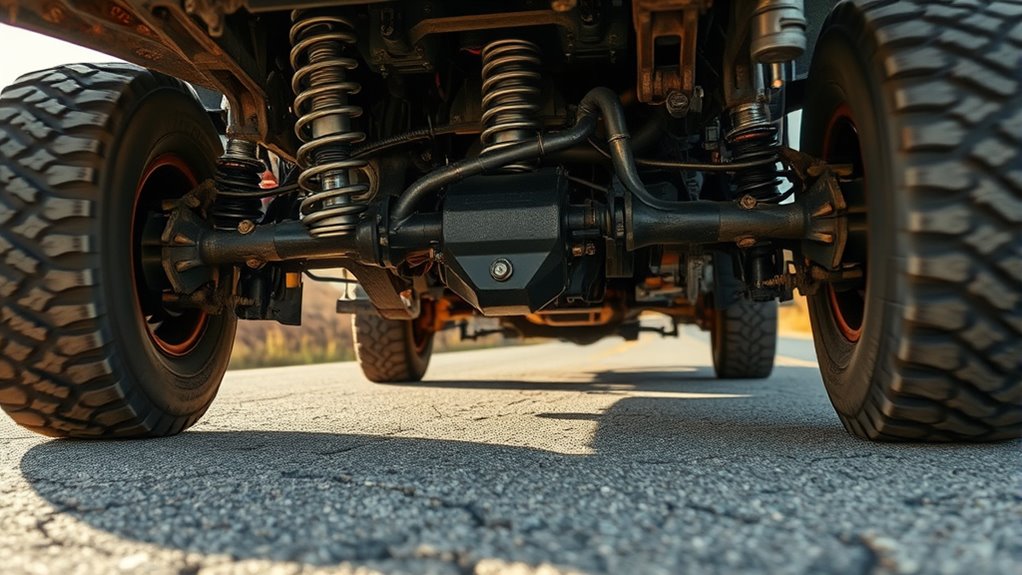
Although tire and wheel problems are common causes of truck shaking, issues with your suspension, drivetrain, or engine can also make your vehicle vibrate or shake while driving. Suspension issues, like worn ball joints, control arms, or shocks, often cause shaking at high speeds due to instability and poor wheel alignment.
Drivetrain problems, such as worn CV joints or a damaged driveshaft, create rhythmic vibrations that intensify during acceleration. Engine misfires, caused by failing spark plugs or clogged fuel injectors, result in uneven power delivery and noticeable shaking.
Uneven tire wear from suspension problems can amplify these vibration causes, making the ride rougher. Loose or damaged suspension and drivetrain components might even trigger severe oscillations, sometimes called death wobble.
Since repair costs vary considerably based on the part affected, it’s vital to diagnose whether suspension, drivetrain, or engine issues are behind your truck’s shaking early. That way, you can avoid further damage and costly repairs.
Frequently Asked Questions
Why Does My Truck Shake Over 70 Mph?
Your truck shakes over 70 mph because your tires might be unbalanced, your wheels misaligned, or your suspension worn out. You should check these components and address any driveline or brake rotor issues to stop the vibrations.
Sometimes, it’s just a simple fix like balancing your tires or getting an alignment. Other times, worn suspension parts or brake problems could be the cause. It’s best to have these checked out soon to keep your truck running smoothly and safely.
Does Shaking Mean My Engine Is Bad?
Shaking doesn’t always mean your engine is bad, but it can indicate issues like misfires or imbalances. You should get it checked promptly to avoid worsening damage and guarantee your truck runs smoothly and safely.
It’s better not to ignore the shaking. Even if it seems minor now, it could lead to bigger problems down the road. So, getting it looked at sooner rather than later is definitely a smart move.
Is It Safe to Drive My Car if It Shakes?
You shouldn’t drive your shaking car, as 70% of accidents involve vehicle malfunctions. Shaking often signals serious issues that can worsen, so get it inspected promptly.
It’s really about keeping yourself and others safe on the road. Don’t wait around—better to be cautious and get it checked out soon.
How to Diagnose a Shaking Truck?
You’ll want to check your tires for damage or imbalance first. Inspect suspension parts like ball joints and shocks next.
Then, test brakes for warped rotors. Also, listen for vibrations while driving to spot drivetrain issues. It might help you narrow down the problem faster.
Conclusion
So, your truck’s shaking like it’s got the jitters—welcome to the club! Before you panic and start blaming ghosts, check those tires, wheels, and suspension first. Engine and drivetrain issues love to join the shake party too.
Ignoring it won’t make your truck dance less; it’ll just turn your daily drive into an unintentional off-road adventure. You don’t want to deal with a shaky ride every time you hit the road, right?
Fixing the problem now is key. Whether it’s worn tires, unbalanced wheels, or suspension troubles, addressing these issues will save you from bigger headaches down the road. Don’t let your truck’s shaking ruin your driving experience—get it checked and enjoy a smooth, steady ride again.