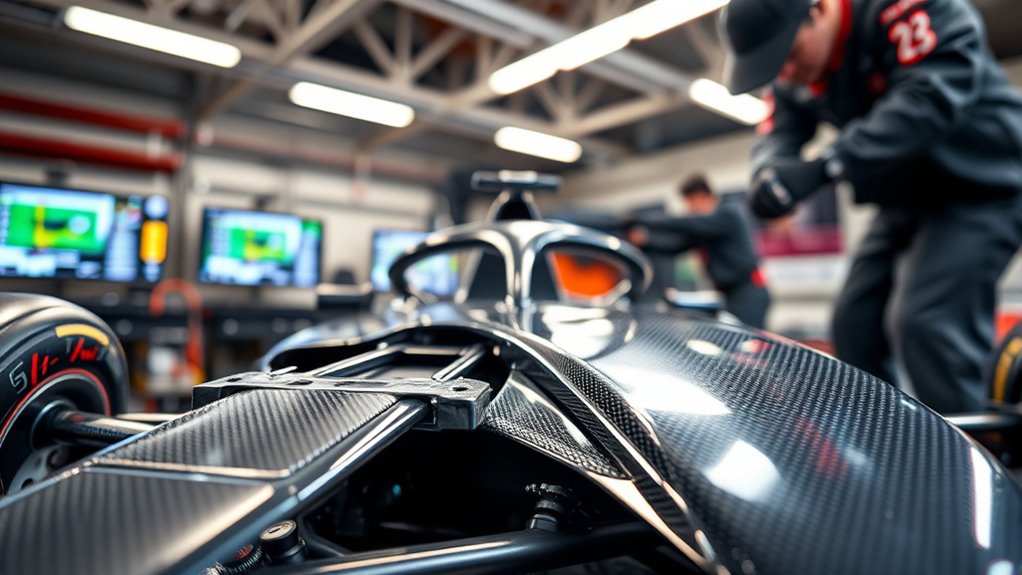
5 Key Factors That Determine How Much an F1 Car Costs
You’ll face sky-high costs when building an F1 car, with the hybrid power unit being the biggest driver. It can account for over 85% of the total price! That’s a huge chunk of the budget right there.
Advanced materials like carbon fiber and intricate aerodynamic parts push expenses even higher. These components aren’t just fancy—they’re crucial for performance and durability.
Manufacturing demands precision and top-tier infrastructure. Plus, ongoing development and testing mean teams keep spending to stay ahead. It’s a constant race off the track as well as on it.
And don’t forget about budget caps. They force teams to innovate smartly within strict limits. Keep exploring to uncover how each factor shapes the final cost of an F1 car.
Key Takeaways
- Advanced materials and aerodynamic components really bump up the costs. This is mainly because of the pricey carbon fiber and the need for precise design.
- When you look at the hybrid power unit, the ERS is a big part of the expense. It involves complex engineering and costly development that you can’t cut corners on.
- Manufacturing isn’t just about making parts; it’s about bespoke, low-volume pieces. Plus, you need high-tech infrastructure, which drives production costs way up.
- Then there are the ongoing operational expenses. Think engineering labor, software, testing, and the constant push for innovation.
- Budget caps mean teams have to be smart with their spending. They focus on cost-effective materials and finding efficient ways to develop their cars without breaking the bank.
Overview: What Makes an F1 Car So Expensive?
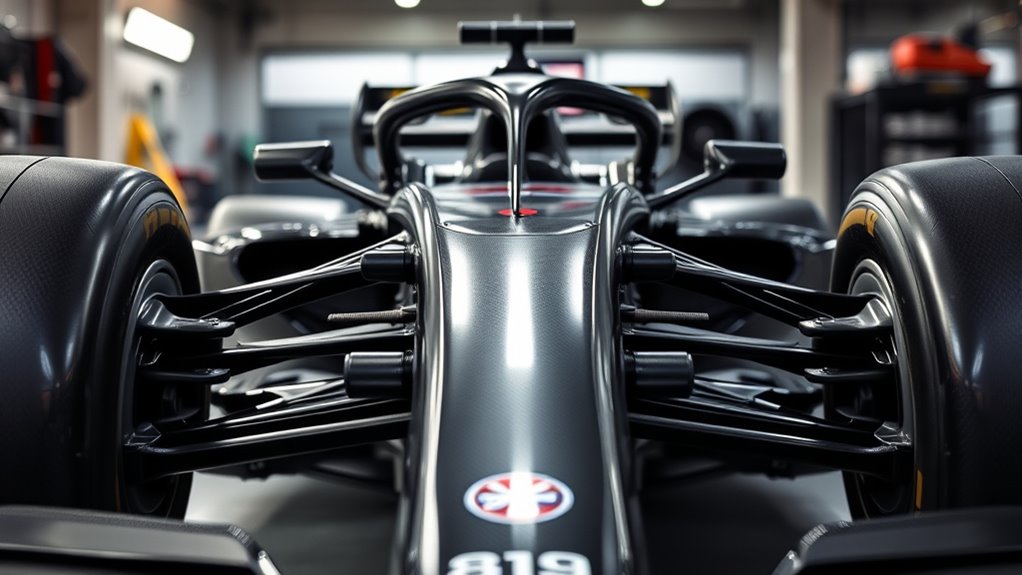
Although you might not see it at first glance, an F1 car’s price tag is driven by its use of advanced materials like carbon fiber. This alone costs around $12 million just for the chassis.
An F1 car’s staggering price stems largely from advanced materials like carbon fiber, with the chassis alone costing $12 million.
When you look closer, the materials used throughout the Formula 1 car play a huge role in its expense. Every part, from the aerodynamic wings to the precision gearboxes and sophisticated electronics, carries a significant part cost, often running into hundreds of thousands of dollars each.
These components are crafted with extreme precision, using cutting-edge technology and lightweight, durable materials to maximize performance. Low production volumes and constant design updates push costs even higher since each component is fundamentally custom-made.
While hybrid power units are a major contributor to the overall budget, their detailed costs belong to another discussion. For now, understanding that the combination of specialized materials and intricate parts makes an F1 car incredibly costly is key to grasping why these machines come with such a hefty price tag.
Why the Hybrid Power Unit Dominates F1 Car Costs
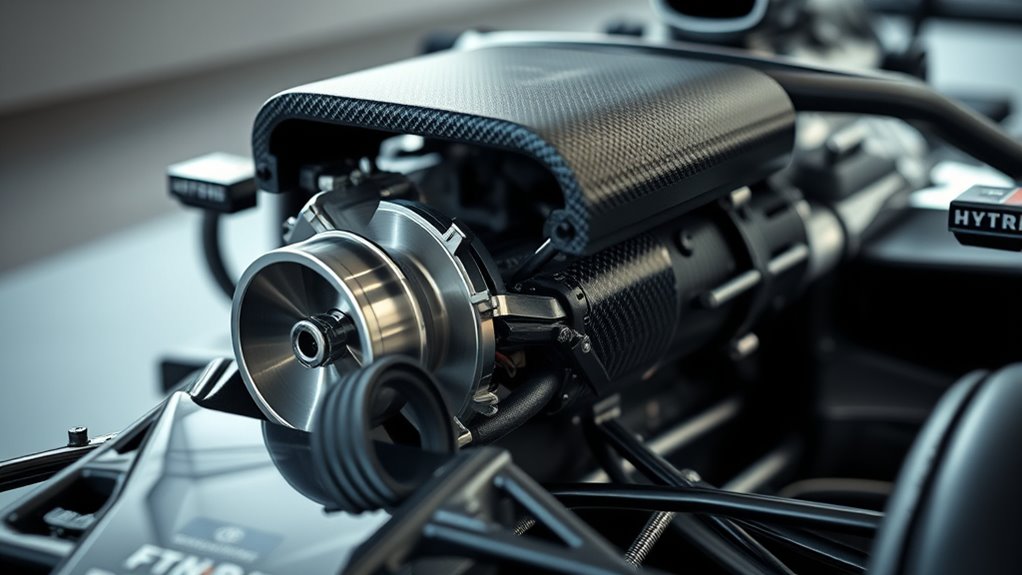
While advanced materials and precision parts make an F1 car expensive, the hybrid power unit takes cost to another level. This complex system, which includes the turbocharged V6 engine and the Energy Recovery System (ERS), accounts for about 86% of the car’s total cost—often surpassing $10 million.
You’ll find that the ERS alone costs around $12 million due to its intricate design and cutting-edge technology. Developing and manufacturing these components demand extensive research and development, coupled with high-tech materials that withstand extreme thermal and mechanical stresses.
Because the hybrid power unit must perform reliably under intense conditions, teams invest heavily in precision engineering and costly manufacturing processes. On top of that, ongoing regulatory changes push teams to innovate constantly, driving research and development costs even higher.
When you consider all this, it’s clear why the hybrid power unit dominates the expenses in building an F1 car. It’s not just about making a fast engine—it’s about creating a masterpiece of technology that can handle the extreme demands of Formula 1 racing.
How Advanced Materials and Aerodynamics Add to Costs
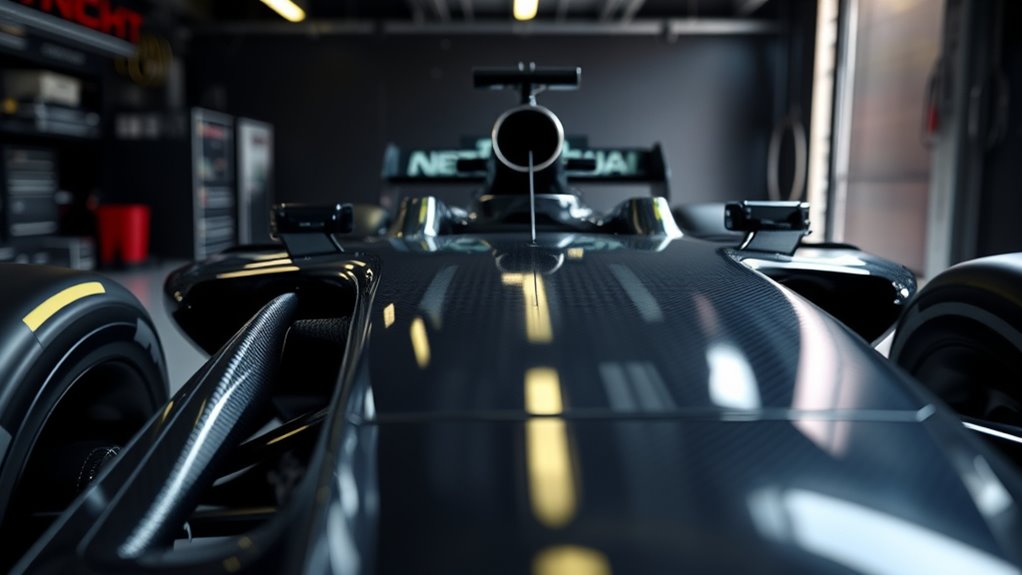
Because every fraction of a second counts in Formula 1, teams pour millions into advanced materials and aerodynamic design to gain an edge.
Advanced materials like carbon fiber make the chassis ultra-light and strong but can cost up to $12 million alone. Aerodynamics also play a critical role; front and rear wings are custom-designed and refined through extensive wind tunnel testing and CFD technology, driving costs higher.
Each aerodynamic package set ranges from $150,000 to $300,000, reflecting the complexity and precision required.
| Component | Cost Range | Purpose |
|---|---|---|
| Carbon Fiber Chassis | ~$12 million | Lightweight strength |
| Front Wing Set | $150,000-$300,000 | Airflow optimization |
| Rear Wing Set | $150,000-$300,000 | Downforce generation |
| Wind Tunnel Testing | Millions annually | Aerodynamic validation |
| CFD Technology | High R&D costs | Flow simulation and refinement |
Investing in these elements guarantees peak performance but considerably adds to the total F1 car cost.
It’s a big investment, but in this sport, every advantage counts!
Manufacturing, Infrastructure, and Operational Expenses
When you consider the manufacturing of an F1 car, you quickly realize it demands cutting-edge machinery and costly materials like carbon fiber and advanced composites. Each part, from the monocoque chassis to aerodynamic components, requires precise production with low-volume, bespoke designs. This drives manufacturing costs up because you need lightweight, durable, and high-performance parts that meet rigorous safety and performance standards.
Beyond manufacturing, infrastructure plays a vital role. You rely on high-tech factories, specialized equipment, and extensive testing facilities to design, build, and refine the car. These infrastructures require significant investment to keep pace with innovation.
On top of that, operational expenses add another layer of cost. Engineering labor, software development, and ongoing testing demand continuous funding to guarantee peak performance. Altogether, manufacturing, infrastructure, and operational expenses create a complex, expensive ecosystem essential for delivering an F1 car that performs at the highest level.
Budget Caps and Their Impact on F1 Car Development
How do budget caps reshape the development of an F1 car? Budget caps limit how much teams can spend, directly affecting car development and the overall cost of a Formula 1 car. Since the 2022 cap set spending at $140 million—excluding driver salaries and marketing—team management must carefully allocate resources for design and upgrades.
You’ll see teams focusing on efficiency and innovation within this fixed budget, choosing cost-effective materials and streamlined development strategies to stay competitive. It’s all about making every dollar count.
Budget caps also encourage collaboration and shared technology among teams, helping optimize performance without overspending. This financial discipline forces you to rethink traditional approaches, prioritizing clever engineering over sheer expenditure.
Ultimately, budget caps make car development more strategic, ensuring teams balance performance with cost control. If you want to understand how the cost of a Formula 1 car is shaped today, you can’t ignore the profound impact of budget caps on team management and development choices.
Frequently Asked Questions
What Is the 75% Rule in F1?
The 75% rule in F1 means you must use at least 75% homologated parts from the current season’s car. If you don’t, you risk penalties or disqualification. This rule ensures your car meets up-to-date safety and performance standards.
It’s basically a way to keep things fair and safe on the track. Teams can’t just run old parts that might not be as reliable or safe anymore. So, sticking to this rule is pretty important!
What Makes an F1 Car Expensive?
Think of an F1 car as a spaceship—you’re paying for ultra-light materials, custom engines, and cutting-edge tech. You can’t cut corners when speed and precision rule; every part demands relentless innovation and craftsmanship.
It’s not just about going fast. It’s about pushing the limits of engineering, where every gram and millisecond counts. That’s why the price tag is sky-high.
What Is the 90% Rule in F1?
The 90% rule in F1 means you must complete at least 90% of the race leader’s laps to be classified and earn points.
If you don’t, even if you finish, you won’t get any points.
How Much Does an Entire F1 Car Cost?
An entire F1 car costs you between $12 million and $15 million. This price includes all parts, from the chassis to the hybrid power unit.
It really reflects the cutting-edge technology and materials packed into every component. Pretty amazing, right?
Conclusion
When you look at an F1 car’s price tag, remember that every penny goes into cutting-edge tech, hybrid power, and precision engineering. You can’t rush perfection—these machines are crafted with advanced materials and intense R&D.
All of this happens while teams carefully manage budget caps to stay competitive. So, as the old saying goes, “You get what you pay for.”
Understanding these costs helps you truly appreciate the blend of innovation and expense behind every lap. The price reflects not just raw speed but also the incredible innovation, hybrid technology, and engineering precision that make F1 cars so unique. It’s this combination of factors that drives the high cost and awe-inspiring performance of every race.





9 Comments