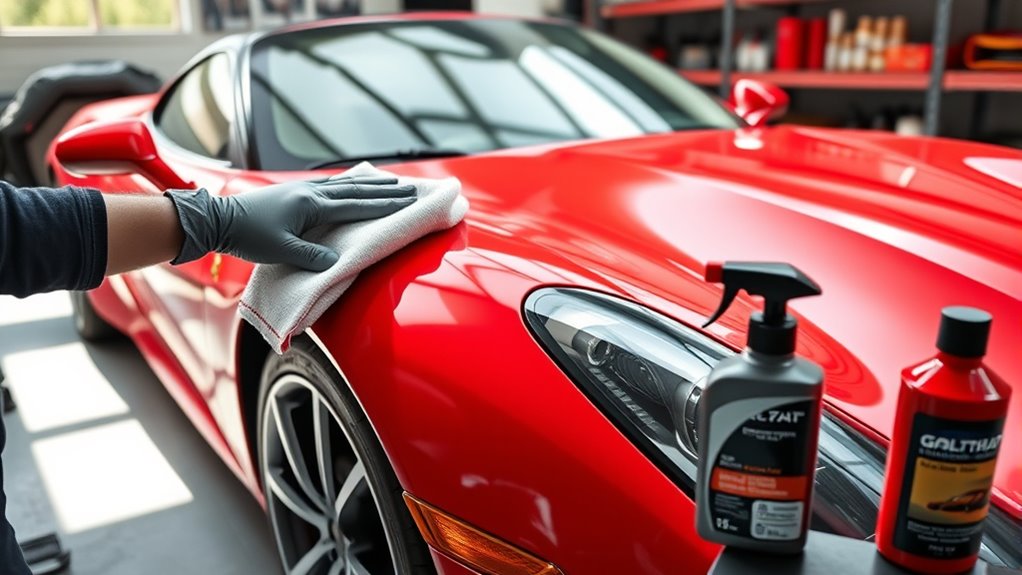
5 Essential Tips to Maintain a Sports Car
To keep your sports car in top shape, regularly inspect and properly inflate your tires. Rotating them every 5,000 to 10,000 miles helps guarantee even wear and extends their lifespan.
Choosing the right engine oil and changing it on schedule is key. Don’t forget to replace the filter too, as this keeps your engine running smoothly.
Check belts, hoses, and air filters for any signs of wear. Swapping them out as needed can prevent bigger issues down the road.
Make sure to test your battery’s health regularly and clean the terminals often. This keeps your car starting strong every time.
Finally, wash, wax, and protect your car inside and out. Maintaining its shine not only looks great but also helps preserve its value over time.
There’s plenty more to explore for peak performance, but these essential tips are a great place to start!
Key Takeaways
- Regularly check and maintain tire pressure, inspect for wear, and rotate tires every 5,000 to 10,000 miles for optimal handling and safety. It really helps keep your ride smooth and secure.
- Use the manufacturer-recommended engine oil type and change oil and filter every 5,000 to 10,000 miles to ensure peak engine performance. Staying on top of this can save you from costly repairs down the road.
- Inspect belts and hoses frequently for damage and replace air filters every 12,000 to 15,000 miles to maintain engine efficiency. A little attention here goes a long way in keeping things running smoothly.
- Test battery voltage regularly, clean terminals, and replace the battery every 3 to 5 years to avoid electrical issues. Batteries can be sneaky, so don’t let them catch you off guard.
- Wash and wax the exterior regularly, clean wheels carefully, and vacuum interiors to protect and preserve the car’s appearance. A clean car not only looks great but also holds its value better over time.
Inspect, Inflate, and Rotate Your Sports Car Tires
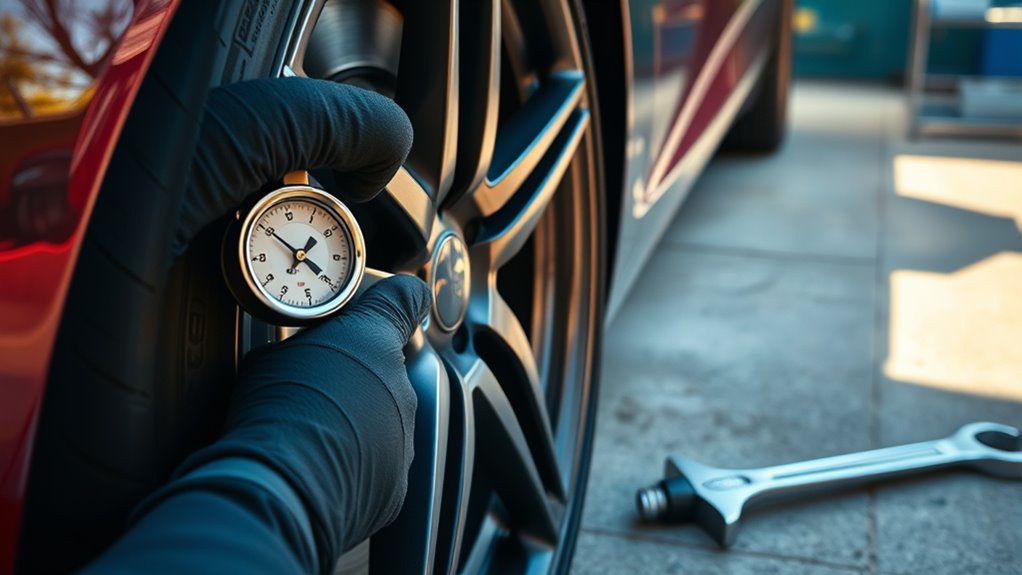
Since your sports car’s performance heavily depends on its tires, you should regularly check their pressure with a reliable gauge and keep it at the manufacturer’s recommended PSI. This is usually listed on the driver’s door jamb. Proper tire pressure is vital for safety and handling, especially in high-performance sports cars.
Regularly checking tire pressure at the recommended PSI ensures optimal safety and performance for your sports car.
Use a tire gauge to verify your tires are neither underinflated nor overinflated. It might seem simple, but keeping the right pressure makes a big difference.
Next, inspect your tires often for signs of uneven wear, tread wear, balding, or sidewall bulges. Uneven wear can indicate alignment issues and reduce safety. Performing tire rotation every 5,000 to 10,000 miles helps promote even tread wear and extends tire life.
Finally, use the penny test to check if your tires need replacement—if Lincoln’s head is fully visible, it’s time for new ones. Staying on top of tire pressure, rotation, and inspection is essential vehicle maintenance that keeps your sports car performing at its best.
Choose and Change Engine Oil for Your Sports Car
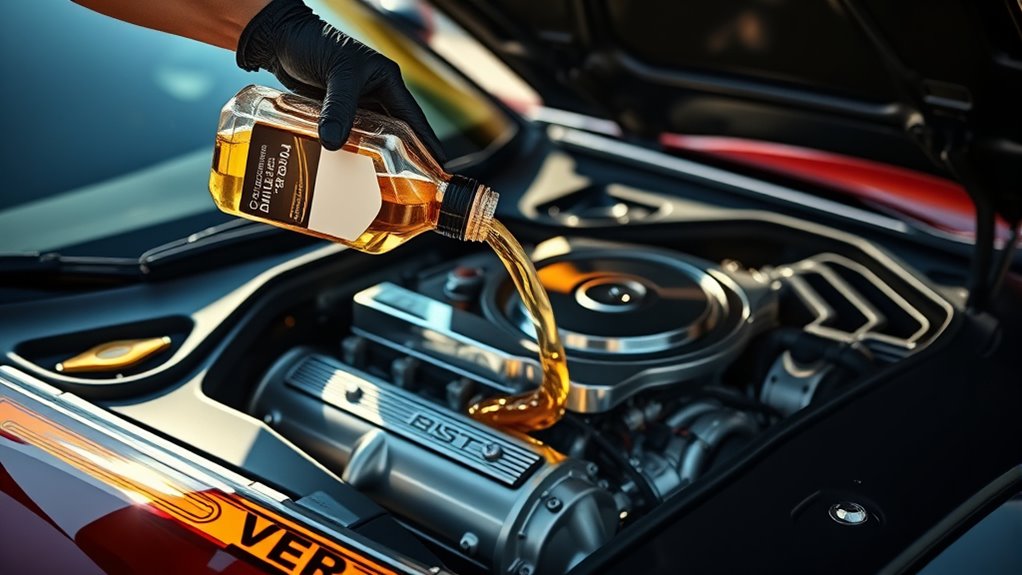
When you want to keep your sports car running smoothly, choosing and changing the right engine oil is crucial. Always use the manufacturer-recommended engine oil type and viscosity—like 5W30 or 10W40—as specified in your owner’s manual.
High-quality oils designed for high-performance engines ensure excellent engine lubrication and protect essential components under demanding conditions. It really makes a difference in how your car performs.
Schedule an oil change every 5,000 to 10,000 miles, depending on your driving conditions and manufacturer guidelines. Don’t forget, each oil change should include replacing the oil filter to keep contaminants from circulating through your engine.
Also, make it a habit to check your oil level with the dipstick regularly. Top off the oil as needed to keep everything running smoothly and properly lubricated.
Check and Replace Belts, Hoses, and Air Filters
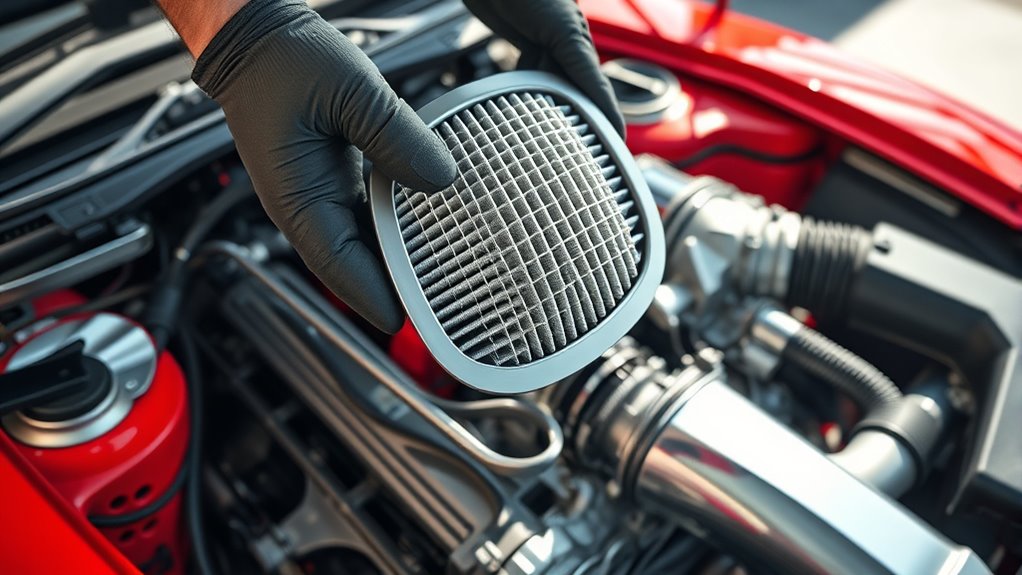
Although belts, hoses, and air filters might seem less exciting than engine oil, they play essential roles in your sports car’s performance. Regularly inspect these components during maintenance to avoid unexpected engine issues.
Use a flashlight to spot signs of wear that aren’t easily visible.
Here’s what you need to focus on:
- Belts: Check for fraying, cracking, or glazing. Replace them every 60,000 to 100,000 miles or sooner if damaged to prevent engine failure.
- Hoses: Examine for cracks, brittleness, or leaks. Replace any compromised hoses immediately to avoid coolant or oil leaks that can harm engine performance.
- Air Filters: Replace every 12,000 to 15,000 miles or when dirty. A clogged air filter restricts airflow, reducing engine efficiency and power.
Following the manufacturer’s recommended intervals guarantees your belts, hoses, and air filters keep your sports car running smoothly and reliably.
Test Battery Health and Maintain Your Sports Car’s Power
Keeping your sports car’s battery in good health guarantees reliable starts and consistent power delivery. Regularly test the battery using a multimeter to confirm the voltage stays above 12.4V, indicating it holds a proper charge.
If you notice slow engine cranking or dimming lights, your battery may be weak and need replacement—ideally every 3 to 5 years. During inspection, check the battery terminals for corrosion and clean them with a wire brush or battery cleaner solution to maintain solid connections.
A discharged or weak battery can be quickly revived using a portable jump starter, helping you get back on the road without delay. Don’t forget to verify the alternator’s functionality during routine inspections, as it recharges the battery while you drive, ensuring continuous power.
Wash, Wax, and Protect Your Sports Car’s Exterior and Interior
To preserve your sports car’s stunning appearance, you should regularly wash it using pH-balanced, high-quality car wash soap and microfiber mitts that prevent scratches. This careful cleaning maintains the paint’s shine and protects the exterior surface from damage.
After washing, apply a high-quality wax or ceramic coating at least once a year. This helps protect your car’s paint from UV rays and environmental contaminants.
To maintain and protect both exterior and interior surfaces, follow these essential steps:
- Use gentle, non-abrasive cleaners on chrome details, aerodynamic features, and delicate exterior parts. This will prevent wear and keep everything looking sharp.
- Clean wheels and tires with non-acidic cleaners and soft brushes. It helps avoid brake dust buildup and keeps your car looking pristine.
- Vacuum carpets and upholstery regularly. Wipe down surfaces with appropriate cleaners, and don’t forget to apply protectants to leather or fabric seats. This keeps the interior fresh and well-maintained.
Frequently Asked Questions
What Is the $3000 Rule for Cars?
The $3000 rule means you shouldn’t spend more than $3,000 annually on repairs for your sports car.
It helps you budget wisely and avoid unexpected expenses that could make ownership too costly or stressful.
Basically, it’s a guideline to keep your car fun to drive without breaking the bank.
What Are the Maintenance Requirements for Sporty Cars?
You’ll want to keep your sporty car humming smoothly by regularly changing oil, checking tire tread like a hawk, and ensuring lights shine bright.
Routine brake and fluid checks keep it roaring, ready for every thrilling drive. Just a little attention goes a long way in keeping that sporty feel alive.
What Is the 30 60 90 Rule for Cars?
The 30-60-90 rule means you check your car at 30, 60, and 90 days or miles.
You’ll inspect oil, tires, and fluids to catch problems early, preventing costly repairs and keeping your car running smoothly.
It’s a simple way to stay on top of your car’s health without much hassle. Just a quick check can save you a lot of trouble down the road!
What Is the Silent Killer in Cars?
You’d think something loud and obvious is the silent killer in cars, but it’s actually carbon monoxide—odorless and invisible.
You can’t hear or smell it, yet it sneaks in and poisons without any warning signs.
Conclusion
By regularly inspecting your tires and rotating them like a dancer’s graceful step, you keep your sports car’s grip firm on every curve. Changing the oil guarantees your engine hums smoothly, while fresh belts and filters let it breathe like a wild stallion.
A strong battery powers your thrill rides, and a gleaming exterior shines under the sun’s embrace.
With these simple habits, your sports car won’t just run—it’ll roar with life and passion. Regular tire checks, timely oil changes, and keeping your belts and filters fresh are key to maintaining performance. Don’t forget a powerful battery and a spotless exterior to keep your ride looking and feeling its best.
Maintaining a sports car is all about consistency and care. Stick to these essential tips, and your sports car will deliver thrilling drives with reliability, style, and unmatched passion every time you hit the road.






7 Comments