
3 Key Factors That Affect How Much a Truck of Concrete Costs
Three key factors affect how much a truck of concrete costs: truck size, delivery distance with site conditions, and the concrete mix type you choose. These elements play a big role in your overall budget when ordering concrete. Understanding them can help you avoid surprises and make smarter decisions for your project.
Larger trucks carry more but cost more to deliver, while smaller trucks may need multiple trips, raising expenses. It’s a trade-off between quantity and delivery costs.
Longer distances and tough site access add fees for fuel, labor, or specialized equipment. So, where your site is located really matters.
Plus, different mixes like decorative or high-strength concrete come with varying price tags. Choosing the right mix depends on what your project needs and your budget.
Explore these details to make the best budget decisions. It’s all about balancing cost, convenience, and quality.
Key Takeaways
– Truck size impacts delivery fees, with larger trucks costing more but offering better cost efficiency for bigger loads.
It’s a bit of a trade-off. Bigger trucks mean higher upfront delivery costs, but if you’ve got a large project, they can save you money in the long run.
– Delivery distance affects transportation costs, increasing fees with longer travel and difficult site access.
Basically, the farther the concrete has to go, the more you’ll pay. If your site is tricky to reach, expect some extra charges.
– Concrete mix type influences price, with specialty mixes and admixtures adding to the base concrete cost.
Different mixes serve different purposes, so specialty ones will bump up the price a bit.
– Load size determines per-yard cost, as smaller loads incur higher charges compared to full truckloads.
If you only need a little concrete, be prepared to pay more per yard than if you order a full truckload.
– Site conditions and logistics, such as road access and congestion, can lead to additional delivery fees or delays.
Sometimes, it’s not just about distance. Narrow roads or busy traffic can slow things down and add to your bill.
How Your Truck Size Impacts Concrete Delivery Costs
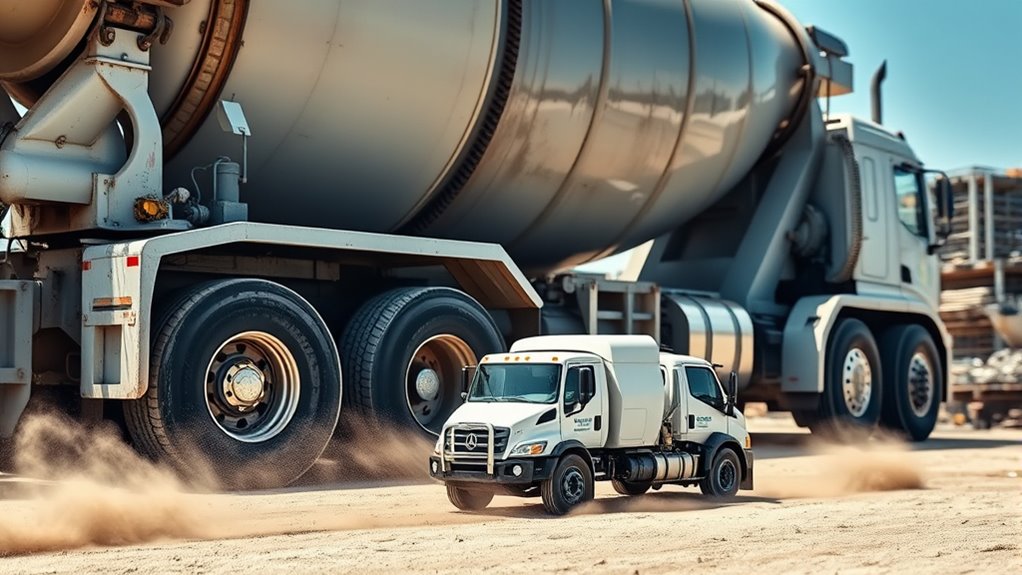
When you choose a larger concrete truck, expect higher delivery fees due to its size and fuel consumption. But you’ll benefit from a lower cost per yard on full truckload deliveries of 10 yards or more.
The truck size directly affects delivery costs because bigger trucks carry 8 to 14 cubic yards. This makes them ideal for larger project sizes. In contrast, small trucks or mini-mixers hold around 4 cubic yards, which lowers the initial delivery fee.
Larger trucks carry 8 to 14 cubic yards, ideal for big projects; small trucks hold about 4 cubic yards, lowering initial fees.
However, small trucks often lead to multiple trips, increasing overall costs. Short load deliveries under 5 yards usually come with higher per-yard charges. So, if your project is small, these fees can add up quickly.
Transportation logistics also play a role; larger concrete trucks need more space and specialized access. This can raise the delivery fee. Understanding your project size and matching it to the right truck capacity helps you manage delivery costs efficiently.
Plus, it makes handling the complexities of concrete truck transportation logistics a lot easier.
How Delivery Distance and Site Conditions Drive Up Prices
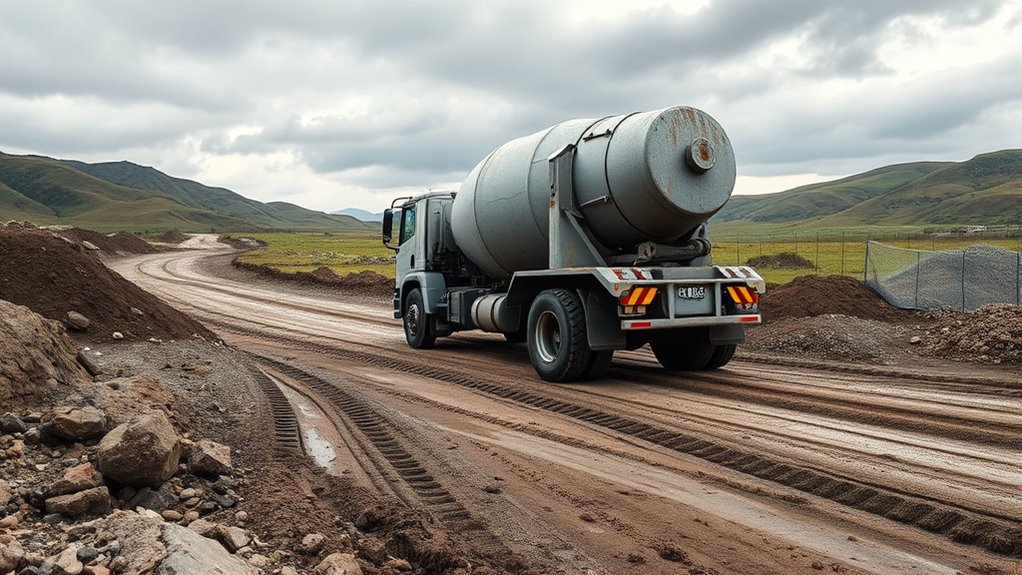
Although delivery distance might seem straightforward, it plays a major role in your concrete costs because transportation fees can range from $50 to $150 depending on how far the truck must travel. The farther the delivery distance, the higher the transportation costs, as longer travel time means increased fuel and labor expenses.
But it’s not just distance—you also need to weigh site conditions.
If your site has access issues like narrow roads or rough terrain, you might face extra delivery charges. These conditions often require specialized equipment or smaller trucks, which can raise equipment needs and labor costs.
Site congestion may also cause delays, extending wait times and pushing up transportation fees further. All these factors combine to increase your project costs, so be sure to account for both delivery distance and site conditions when budgeting your concrete order.
How Different Concrete Mixes Affect Your Truckload Cost

How much you pay for a truckload of concrete depends heavily on the mix you choose. Different concrete variations directly impact the truckload price, as each mix type comes with unique materials and performance features.
Choosing your concrete mix greatly influences the truckload price due to varying materials and features.
Here’s how various concrete mixes affect the cost per yard and ultimately your total truckload price:
- Standard concrete typically costs $125–$150 per yard, serving as the baseline for pricing.
- Decorative concrete, like stamped or colored options, adds $35–$50 per yard, increasing aesthetic value and cost.
- Fiber-reinforced concrete costs around $160–$190 per yard due to added fibers for durability.
- High-strength concrete and mixes above 6,000 PSI range from $175–$250, with admixtures like retarders or waterproofing agents adding $10–$50 per yard.
Selecting the right concrete mix balances your project’s needs with the total truckload price. So, choose wisely based on performance and budget.
Frequently Asked Questions
What Are the Factors That Affect the Cost of Concrete?
You’ll find concrete cost varies by mix strength, delivery distance, additives like fibers or color, project size, and regional demand.
Seasonal changes also play a role, so plan accordingly to manage your budget effectively.
What Is the 4 2 1 Rule for Concrete?
The 4-2-1 rule for concrete is like a recipe you follow: you mix 4 parts cement, 2 parts sand, and 1 part aggregate. It helps you get the right strength and consistency for small projects.
Think of it as a simple way to make sure your concrete turns out just right without too much fuss. It’s great for when you need a quick, reliable mix.
How Much Should a 20X20 Concrete Slab Cost?
You should expect a 20×20 concrete slab to cost between $585 and $900, covering materials and delivery.
Additional expenses like site prep or finishing might increase the price, depending on your project’s specifics and location.
It really depends on where you live and what exactly you need done. So, keep that in mind when budgeting!
How Much Is a 20 Yard Truck of Concrete?
You’ll pay around $2,200 to $3,000 for a 20-yard truck of concrete. Prices depend on mix type, delivery distance, and any specialty options.
Bulk discounts often help lower your overall cost per yard. So, if you’re ordering a lot, it’s definitely worth asking about those savings!
Conclusion
When ordering concrete, you’ll see costs vary based on truck size, delivery distance, and mix type. For example, if you need a 10-yard truck for a remote site with rough terrain, expect higher fees than a nearby, easy-access location.
Choosing the right mix also matters—specialty blends cost more but suit your project needs. By understanding these factors, you can better plan your budget and avoid surprises on delivery day.
Knowing how truck size, delivery distance, and mix type affect concrete costs helps you make smarter decisions. This way, you get the right amount of concrete where you need it, without paying extra for things that don’t fit your project. So, keeping these key factors in mind will save you money and stress, making your concrete delivery smooth and on budget.