How to Start a Tow Truck Business in 10 Essential Steps
To start a tow truck business, you first need to secure all the necessary licenses, permits, and insurance to stay compliant with local laws. These are crucial steps that lay a solid foundation for your business.
Next, figure out your startup costs and explore different funding options to get your venture off the ground.
Once you have the finances sorted, choose the right trucks and equipment tailored to the services you plan to offer.
Setting competitive pricing is also key to attracting customers while keeping your business profitable.
Don’t forget to hire and train qualified drivers who can deliver reliable service.
Establishing an efficient office and dispatch system will help your operations run smoothly.
Building a strong online presence and networking within the industry can help you secure valuable contracts.
With smart planning and management, you can grow your fleet and boost profits.
Keep exploring to uncover more key strategies.
Key Takeaways
– Obtain necessary licenses, permits, and commercial driver’s licenses to ensure legal and regulatory compliance.
It’s important to get all your paperwork in order before you hit the road. This step keeps your business legit and running smoothly.
– Secure funding and budget for tow trucks, equipment, insurance, and startup operational costs.
You’ll need a solid financial plan to cover everything from trucks to insurance. Planning your budget carefully can save a lot of headaches later.
– Choose appropriate tow truck types and equip them with essential tools for your service offerings.
Pick the right trucks that match the kind of towing services you want to provide. Don’t forget to stock them with the tools you’ll need every day.
– Develop competitive pricing strategies based on service type, distance, and local market standards.
Setting fair and competitive prices is key to attracting customers. Think about what your competitors charge and the costs involved in each job.
– Establish a dispatch system, hire qualified drivers, and implement safety and performance monitoring.
A good dispatch system keeps things running efficiently. Plus, hiring skilled drivers and keeping an eye on safety will help your business build a solid reputation.
Understand Tow Truck Business Licensing and Local Regulations

Before you start your tow truck business, you’ll need to secure all the required licenses and permits from your state and local authorities to operate legally. Obtaining a business license is essential—it shows you comply with local regulations and lets you officially operate.
Make sure your drivers have the proper licenses too, whether that’s a standard driver’s license or a Commercial Driver’s License (CDL), depending on the vehicles you plan to tow. Different states have specific transportation regulations, especially for heavy-duty or oversized towing, so check if you need special permits.
Ensure your drivers hold the right licenses and check for special permits on heavy or oversized towing.
Don’t overlook insurance requirements; liability, property, cargo, and workers’ compensation coverage protect your business and keep you compliant. Finally, regularly review your drivers’ DMV records and conduct background checks to ensure they maintain clean driving histories and meet all licensing standards.
Staying on top of these regulations and licensing steps keeps your business running smoothly and legally from day one.
Figure Out Tow Truck Business Startup Costs and Find Funding

Although starting a tow truck business requires a significant investment, understanding your startup costs and securing the right funding will set you up for success.
The initial cost of purchasing a tow truck is around $50,000, but leasing can help reduce upfront expenses. Keep in mind, lease payments plus interest may total about $106,000 over time.
Besides the truck, you’ll need essential tools and safety equipment like straps and lights, which can cost several hundred dollars initially. Don’t forget to factor in licensing, insurance, and other fees when estimating your startup costs.
To fund your business, consider saving money, applying for business loans, or leasing your tow truck to manage cash flow effectively. By carefully calculating these expenses and exploring funding options, you’ll ensure your tow truck business starts on solid financial footing without unexpected setbacks.
Select Tow Trucks and Essential Towing Equipment
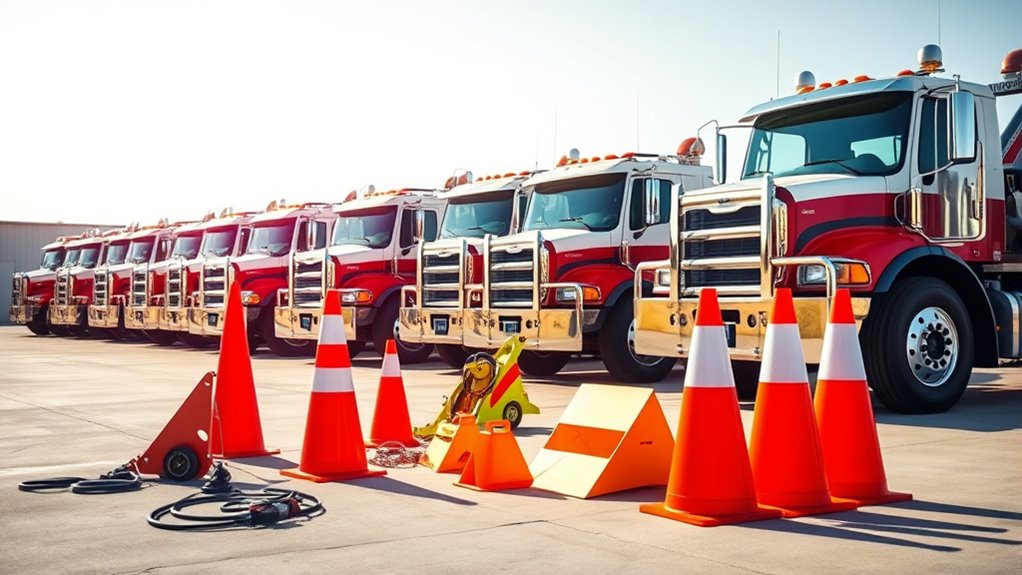
You’ll need to pick the right tow truck type—flatbed or wrecker—based on the services you want to offer and the conditions you’ll face.
Don’t forget to equip your truck with essential tools like straps, jump boxes, and cordless tow lights to keep operations smooth and safe.
Plus, staying on top of maintenance and learning basic repairs will save you time and money down the road.
Choosing Tow Truck Types
When selecting tow truck types, it’s important to match your choice to the specific towing services you plan to offer. The most common tow trucks include flatbeds, wreckers, and integrated trucks, each designed for different tasks.
Flatbeds work best for transporting disabled or damaged vehicles without causing extra damage. This makes them ideal for luxury or new cars.
Wreckers, equipped with a boom and hook, handle heavy-duty towing and accident recovery efficiently. They’re built tough to manage those challenging jobs.
Integrated trucks combine features for quick, versatile towing. They’re great if you want a bit of everything in one vehicle.
You’ll also need to decide whether to buy used trucks or lease, depending on your budget and long-term plans. This choice can really impact your business flexibility.
Choosing the right tow truck types guarantees you meet client needs effectively and run your business smoothly. It’s all about making the best match for what you do.
Essential Towing Tools
Since having the right tow trucks is only part of the equation, equipping your business with essential towing tools guarantees you can handle every job safely and efficiently. You’ll need flares, fire extinguishers, air hoses, jump boxes, straps, and wheel skates.
Safety gear like magnetic tools and four-point lashing systems ensures secure vehicle recovery. Cordless tow lights and snatch blocks also come in handy.
| Tool | Purpose | Approximate Cost |
|---|---|---|
| Jump Box | Battery jump-start | $250 |
| Wheel Skates | Vehicle movement | $60 (pair) |
| TowMate Lights | Illumination | $220 |
| Straps | Securing loads | Varies |
| Snatch Blocks | Load redirection | Varies |
Having these towing tools ready lets you maximize your tow trucks’ efficiency and safety.
Equipment Maintenance Basics
Although selecting the right tow trucks and equipment is essential, maintaining them regularly keeps your business running smoothly and safely. Choose tow trucks based on your service needs—flatbeds for cars or wreckers for heavy-duty recovery.
Also, consider local weather and road conditions. These factors can really affect what equipment works best for you.
Perform routine maintenance like oil changes, brake inspections, and tire rotations to guarantee safety and reliability. These small steps go a long way in preventing breakdowns.
Invest in essential towing equipment such as straps, wheel skates, snatch blocks, and safety gear. Focus on tools that meet industry standards, like the four points of restraint for securement.
Balance costs by weighing leasing versus purchasing used trucks, but keep long-term maintenance in mind. Sometimes leasing might save you upfront, but owning can be better down the line.
Finally, prioritize magnetic tools and proper lashing equipment to protect both your crew and the vehicles you tow. Safety should always come first, right?
Decide Your Tow Services and Set Pricing Plans
Before launching your tow truck business, you need to clearly define the specific services you’ll offer, such as light-duty towing, heavy vehicle recovery, roadside assistance, or off-road recovery.
As a tow company, setting competitive pricing plans is crucial. Research local regulations and industry standards to price based on vehicle size, callout time, and distance.
Include fees for urgent calls, extra equipment, or storage to boost revenue.
Here’s a sample pricing plan to guide you:
| Service | Typical Price Range |
|---|---|
| Light-duty Towing | $75 – $125 |
| Heavy Vehicle Recovery | $150 – $300 |
| Roadside Assistance | $60 (lockouts, 10 miles) |
| Off-road Recovery | $200 – $400 |
Regularly review your pricing plans to cover fuel, insurance, and operational costs while staying competitive. This approach guarantees profitability and customer satisfaction.
Get Insurance and Permits for Your Tow Truck Business
To operate your tow truck business legally and protect your investment, you’ll need to obtain the proper insurance and permits. Start by securing extensive insurance coverage, which should include liability, vehicle, property, and workers’ compensation insurance.
Operate your tow truck business legally by securing comprehensive insurance and all necessary permits to protect your investment.
Aim for minimum limits of $250,000 per vehicle to safeguard your assets. Next, make sure to get all necessary permits and licenses. These include your business license, an EIN, and any special permits for oversized or specialized vehicles required by state transportation authorities.
Also, verify your drivers have the proper licenses—standard for trucks under 26,000 pounds or CDL for heavier vehicles.
Here’s a quick checklist for you:
- Obtain business licenses, an EIN, and relevant permits for your vehicle types.
- Secure extensive insurance with adequate coverage limits.
- Verify driver licenses and complete background checks to meet insurance and safety standards.
Following these steps keeps your tow truck business compliant and well-protected. It’s really about covering all your bases so you can focus on growing your business.
Set Up Your Office, Dispatch, and Communication Systems
You’ll need a dedicated office space with the right equipment to handle dispatch and admin tasks smoothly. Choosing the right dispatch technology will help you schedule jobs and track your trucks efficiently.
Setting up reliable communication tools guarantees you can respond quickly and keep your team connected at all times. It’s all about making sure everything runs without a hitch, right?
Office Space Requirements
When setting up your office for a tow truck business, consider the number of staff who will be working there to determine the right amount of space. Your office space should include a reception area, dispatch station, and administrative workspace.
Choose a location with easy access to your service area and enough parking for your fleet and employees. Equip your office with reliable communication tools to coordinate efficiently.
Keep future growth in mind when selecting your space. It’s important to think ahead so you don’t outgrow your office too quickly.
Focus on these key office space requirements:
- Designate specific areas for reception, dispatch, and administration to keep operations organized.
- Guarantee strong phone lines and internet connections for smooth communication with drivers and customers.
- Select a space that can expand as your team and equipment grow.
Dispatch Technology Options
How can you guarantee your tow truck business responds quickly and stays organized? Implement dispatch software like TowBook or TowSoft to streamline call management, vehicle tracking, and job scheduling. These tools help towing companies assign jobs efficiently and reduce manual workload through automated dispatch features and online booking.
Using smartphones with GPS and dedicated apps enables real-time updates between drivers and dispatchers, improving response times. While setting up your office, focus on reliable dispatch technology that integrates smoothly into daily operations.
Regularly update your software and train your staff to maximize efficiency and customer service. By investing in the right dispatch software, you assure your towing company stays competitive and responsive in a demanding market.
Communication Tools Setup
Although setting up a tow truck business involves many moving parts, establishing a reliable communication system is essential to keep operations running smoothly. To create an efficient setup, focus on these key areas:
Set up a dedicated office with computers, high-speed internet, and reliable phones to manage calls and dispatch easily. Implement towing management software to streamline call handling, vehicle tracking, and job assignments, ensuring quick response times.
Equip drivers with smartphones featuring GPS and communication apps or two-way radios to coordinate on the road effectively. Additionally, maintain systems for logging customer info and payments.
Consider adding chat features or FAQs on your website. These communication tools keep your team connected and your business organized.
Hire and Train Qualified Tow Truck Drivers
Since your tow truck business depends heavily on skilled drivers, you need to hire and train individuals who meet all local licensing requirements and safety standards. Start by verifying that your tow truck drivers hold the proper licenses, such as a valid CDL for heavy vehicles, and conduct thorough background checks, DMV record reviews, and employment history verification.
Also, don’t forget to incorporate drug screening during onboarding to comply with insurance rules. Providing CDL training and ongoing education on industry standards, safety protocols, and customer service is key to keeping your team sharp.
Make it a habit to regularly monitor driver performance to guarantee continued compliance. This way, your business stays safe and reliable.
| Hiring Step | Purpose |
|---|---|
| License Verification | Confirm legal driving eligibility |
| Background Checks | Ensure safety and reliability |
| CDL Training | Maintain high operational standards |
Build Your Online Presence and Marketing Strategy
Having skilled drivers on your team sets a strong foundation, but attracting customers requires a solid online presence and marketing strategy.
To build your online presence effectively, focus on these key steps:
- Create a professional, user-friendly website with quote forms, booking options, FAQs, and chat features. Use SEO-optimized blogs to boost visibility and attract high-value clients.
- List your business on Google Maps and online directories to increase local search presence and reach more customers in your area.
- Invest around $300 monthly in digital advertising and content marketing to generate consistent leads and promote your tow truck services.
You can outsource web design or use DIY platforms like Wix to develop your site without technical hassle. Regularly update your website with current services and customer reviews to engage visitors and build trust.
Network With Clients and Secure Towing Contracts
Securing towing contracts starts with building strong relationships with key clients like insurance companies, auto auctions, and fleet operators. You’ll want to show reliable, prompt service and transparent pricing to stand out and attract long-term contracts.
Networking beyond this circle helps too. Attend industry events and connect with local auto repair shops or law enforcement agencies to uncover more towing contract opportunities.
Offering specialized services such as heavy-duty towing or roadside assistance makes your business even more appealing to corporate clients. Don’t overlook your online presence; maintaining a professional website and showcasing positive customer reviews boosts your credibility and draws new contracts.
Plan Growth and Expand Your Tow Truck Fleet
To grow your tow truck business, you’ll need a clear plan for acquiring new trucks, whether by purchase or lease. Scaling operations efficiently means balancing investment costs with maintaining high service quality.
Let’s explore some strategies that can help you expand your fleet without sacrificing reliability. It’s all about smart growth that keeps your customers happy and your business running smoothly.
Fleet Acquisition Strategies
How can you effectively grow your tow truck fleet without breaking the bank? Leasing offers a smart option to reduce upfront costs, letting you start with fewer capital demands while expanding gradually.
To build your fleet strategically, consider these steps:
- Lease initial trucks to preserve cash flow, keeping in mind total payments will exceed purchase price due to interest.
- Acquire a mix of standard and specialized vehicles equipped with heavy-duty wreckers and magnetic tools to broaden service capabilities.
- Invest in regular maintenance and insurance to maximize truck longevity and reliability, essential for steady revenue growth.
Balancing leasing with selective purchases and upkeep ensures your fleet grows sustainably. This way, you position your business for long-term success without overwhelming expenses.
Scaling Operations Efficiently
While expanding your tow truck fleet, you’ll want to plan carefully to balance growth with costs. Make a clear strategy to acquire four trucks within three years, budgeting around $200,000.
Leasing can lower upfront expenses, but remember total payments may reach $106,000 per vehicle with interest. Invest in specialized heavy-duty equipment and maintenance tools to keep your fleet reliable and minimize downtime.
Use GPS trackers and operational monitoring to optimize routes, control unauthorized miles, and manage higher vehicle utilization efficiently. To support growth, expand your service contracts strategically by targeting lucrative government and corporate towing opportunities.
Frequently Asked Questions
How Profitable Is Owning a Tow Truck?
Owning a tow truck can be profitable, but you’ll face significant expenses like insurance and fuel.
By focusing on quick, high-margin services and managing costs well, you can earn around $10,000 profit before your own pay annually.
It’s definitely doable, but you’ve got to keep a close eye on your expenses to make real money.
Do You Need a License to Start a Towing Business?
You do need a license to start towing, and coincidentally, getting the proper endorsements can actually boost your credibility.
Without it, you risk fines and lost contracts—so don’t skip this essential step before hitting the road.
How to Start a Successful Towing Business?
You’ll succeed by securing proper licenses, gaining hands-on experience, and investing in reliable trucks.
Build a solid business plan, focus on excellent customer service, and create a strong online presence to attract and retain clients effectively.
It’s all about being prepared and staying connected with your customers. That way, your towing business can really take off!
How Much Do Tow Company Owners Make?
You can make around $100,000 annually per truck, with daily earnings hitting $800.
Your profit depends on costs like insurance and fuel, plus revenue from towing, roadside help, and contracts.
These all boost your overall income. It really adds up when you manage everything well.
Conclusion
Starting your tow truck business is like steering a powerful rig down an open highway—exciting and full of opportunity. By mastering licensing, securing funding, and choosing the right trucks, you’re setting the wheels in motion.
Building strong connections is key, so don’t underestimate the power of networking in this industry. Keep your engine running with smart marketing and skilled drivers.
Watch your business grow mile by mile. With determination and a solid strategy, you’ll tow your dreams into reality.
Remember, starting a tow truck business takes more than just a truck and a driver. It’s about understanding the ins and outs of licensing, funding, and equipment. Combine that with effective marketing and excellent customer service, and you’ll be ready to conquer any road ahead. Your tow truck business can thrive with the right preparation and passion driving every mile.