
10 Reasons Your Truck Shakes When Braking
Your truck shakes when braking because worn brake pads, warped rotors, or sticking calipers disrupt smooth stopping. These brake issues are among the most common reasons for vibrations and can affect your safety on the road.
Unbalanced or damaged tires, loose wheel bearings, and suspension or steering problems also cause your truck to shake when you hit the brakes. These parts need to work in harmony to keep your ride stable and smooth.
Poor alignment and structural problems add to the instability, making the shaking worse over time. Plus, aggressive driving habits and lack of regular maintenance only make these issues more noticeable and dangerous.
Fixing these factors helps restore control and safety to your truck. Keep reading to find out what else might cause your truck to shake and how to address it effectively.
Key Takeaways
- Warped brake rotors cause uneven pad contact, resulting in vibrations felt during braking. It’s like the brakes aren’t gripping smoothly, which can shake the whole truck.
- Worn brake pads and sticking calipers create uneven pressure. This leads to shaking and reduces your control when you try to stop.
- Damaged axle shafts or loose wheel bearings cause wheel wobble and instability when braking. You might notice a bit of a shimmy that’s hard to ignore.
- Unbalanced or worn tires increase vibrations by reducing grip and causing uneven road contact. This makes the ride feel rougher, especially when coming to a stop.
- Worn suspension or steering components worsen shaking by failing to absorb impacts and maintain alignment. When these parts don’t work right, every bump feels more intense.
Warped Brake Rotors Causing Truck Shaking

If your truck shakes when you brake, warped brake rotors are often to blame. These rotors can warp due to excessive heat caused by heavy or prolonged braking, which creates uneven contact with the brake pads.
Truck shaking during braking often signals warped rotors caused by excessive heat and uneven pad contact.
This uneven surface leads to vibrations that you’ll feel through the brake pedal and steering wheel, resulting in noticeable shaking during stops. Your braking system relies on smooth rotor surfaces for consistent stopping power, so warped rotors can also increase your stopping distances.
If you ignore the shaking and vibrations, you risk further damage to your braking components and reduced control. To fix this issue, you’ll need to replace or resurface the warped brake rotors.
Doing so restores smooth contact between the rotors and pads, eliminating the shaking and vibrations. Keeping your rotors in good shape is essential for a safe, stable braking experience every time you hit the brakes.
How Worn Brake Pads Make Your Truck Shake

When your brake pads wear down, they can’t grip the rotors evenly, causing your truck to shake when you brake. Uneven pressure from worn pads creates vibrations that you’ll feel through the steering wheel or truck body.
It’s kind of like your brakes are struggling to do their job properly. Ignoring this wear can lead to more severe braking issues and unsafe driving conditions. So, it’s definitely not something you want to overlook.
Brake Pad Wear Effects
Although brake pads are designed to provide smooth stopping power, worn pads can cause your truck to shake noticeably during braking. When brake pads wear unevenly, they don’t grip the brake rotor evenly, creating vibrations you feel through the brake pedal or steering wheel.
Debris trapped under worn brake pads also causes irregular friction, intensifying shaking. In extreme cases, metal-to-metal contact leads to jerky movements.
| Cause | Effect | Result |
|---|---|---|
| Worn brake pads | Uneven wear | Vibrations during braking |
| Uneven brake pad surface | Inconsistent rotor contact | Pulsations felt in pedal |
| Debris under pads | Irregular friction | Shaking sensation |
| Thin pads | Metal-to-metal contact | Jerky brake response |
Paying attention to brake pad wear can prevent these shaking issues. It’s definitely worth checking your pads regularly to keep things smooth and safe.
Uneven Pressure Causes
Since brake pads wear down over time, they often apply uneven pressure to the brake rotor, which causes your truck to shake when you hit the brakes. As the friction material on the brake pads thins, the contact with the rotor becomes inconsistent, resulting in vibration and a pulsing sensation through the brake pedal and steering wheel.
When brake pads wear completely, metal-to-metal contact can occur, making the shaking even worse. Uneven brake pad wear leads to irregular pressure distribution on the rotor, amplifying these vibrations.
Additionally, debris and dirt trapped under worn brake pads can disrupt the even pressure, further contributing to the shaking. So, addressing uneven pressure caused by worn brake pads is essential to stop your truck’s brake-related vibrations and keep your driving safe.
Unbalanced and Worn Tires Affecting Brake Stability
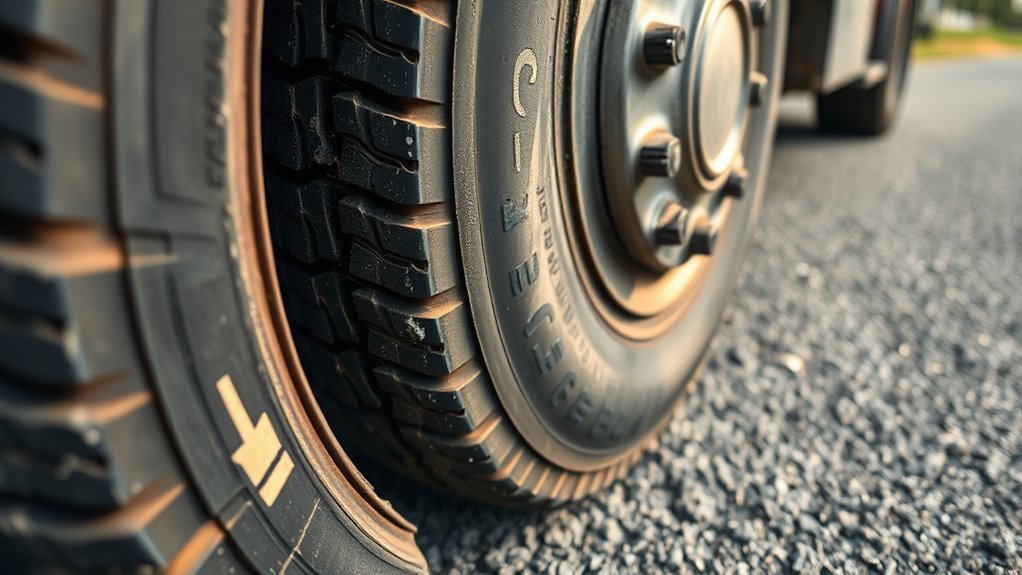
If your truck vibrates when braking, unbalanced or worn tires could be the culprit. Unbalanced tires cause uneven contact with the road, leading to vibrations that become more noticeable as you speed up and brake.
Vibrations when braking often stem from unbalanced or worn tires causing uneven road contact.
This uneven contact creates instability, which directly contributes to brake shake. Additionally, tire wear plays a significant role. Worn tires with irregular tread patterns can’t grip the road properly, increasing shaking during stops.
Hitting potholes or curbs often throws your tire balance off, worsening the vibrations when you brake. To prevent this, make sure you get regular tire balancing during rotations.
Keeping your tires balanced ensures even weight distribution, which reduces brake-related vibrations and improves overall stability. By addressing unbalanced tires and monitoring tire wear, you can maintain smoother braking and avoid the unsettling shake that compromises your truck’s safety and comfort.
Brake Caliper Problems That Cause Shaking
When your truck’s brake calipers stick or malfunction, they apply uneven pressure on the brake pads, causing noticeable shaking during stops. This sticking often results from corrosion or debris buildup, which impairs the brake calipers’ ability to operate smoothly.
If the caliper pistons fail to retract properly, the pads drag against the rotors, creating inconsistent braking and vibrations you can feel through the pedal and steering wheel. It’s pretty annoying, right?
Additionally, worn or damaged caliper slides can prevent the brake calipers from moving freely, leading to uneven pressure and increased shaking. Misaligned or sticking caliper components also cause uneven pad wear, which worsens the vibration over time.
Addressing brake caliper problems promptly helps restore smooth, even braking and eliminates shaking. So, if you notice persistent vibrations when braking, have a mechanic check the brake calipers and caliper pistons to make sure they’re functioning correctly and not sticking.
Suspension and Steering Issues Causing Brake Vibrations
If your truck shakes when braking, worn suspension parts like shocks or struts could be the culprit. You might also have steering system wear or damaged axle shafts causing instability and vibrations.
Checking these components can help you pinpoint the source of the shaking. It’s a good idea to inspect them sooner rather than later to avoid further damage.
Worn Suspension Components
Several worn suspension components like shocks, struts, and control arm bushings can cause your truck to shake when braking. When these parts wear out, they fail to absorb road impacts properly, leading to shaking during braking.
Worn suspension components also contribute to steering instability, making it harder to control your vehicle as you slow down. Plus, damaged suspension parts often cause vehicle misalignment, which worsens vibrations and uneven braking performance.
If your truck experiences these symptoms, it’s *essential* to inspect and replace worn suspension parts promptly. Taking care of these issues not only stops the shaking but also improves overall driving safety and comfort.
Don’t ignore signs of suspension wear; they directly impact brake stability and your truck’s handling on the road. It’s better to address them sooner rather than later!
Steering System Wear
Worn suspension components often go hand-in-hand with steering system wear, both contributing to the shaking you feel when braking. When parts like ball joints and tie rods in the steering system wear out or become loose, they cause uneven steering response and vibrations.
Damaged or misaligned control arm bushings can throw off your wheel alignment, making vibrations worse during stops. Even worn wheel bearings affect how smoothly your wheels rotate, increasing shakiness when you hit the brakes.
This combined wear in suspension components and the steering system reduces your truck’s stability, so you’ll notice more shaking as you brake. Addressing these worn parts promptly helps restore smooth, vibration-free braking and keeps your steering responsive and safe on the road.
Damaged Axle Shafts
One common cause of brake vibrations is damaged axle shafts, which can throw your truck’s wheel rotation off balance. When axle shafts are bent or worn, they cause uneven wheel rotation that leads to a wobbling sensation you feel during braking.
This wobble gets worse as the damage worsens, creating noticeable braking vibrations. You might also notice some steering instability linked to axle shaft issues.
Here’s what damage to axle shafts can cause:
- Uneven wheel rotation causing shaky brakes
- A wobbling sensation that worsens when stopping
- Compromised suspension alignment leading to vibrations
It’s a good idea to regularly inspect your axle shafts to catch damage early. Ignoring this can lead to unsafe braking and a rough driving experience.
Loose or Damaged Wheel Bearings and Truck Shaking
If you feel your truck shaking when you brake, loose or damaged wheel bearings could be the culprit. Worn bearings cause excessive play in the wheels, leading to brake vibration that you’ll notice especially when slowing down.
These faulty wheel bearings often produce a humming or grinding noise that gets worse during braking, signaling increased wear. Because the bearings allow uneven wheel rotation, your truck might shake or wobble each time you apply the brakes.
This uneven braking effect stresses the brake components, generating heat and friction that further contribute to the shaking sensation. Ignoring worn bearings can lead to more serious damage and unsafe driving conditions.
To prevent this, regularly inspect your wheel bearings and replace them as soon as you spot signs of wear. Staying on top of this maintenance ensures smoother braking and keeps your truck stable when you need it most.
Poor Wheel Alignment and Its Impact on Braking
When your truck’s wheels aren’t properly aligned, you’ll likely notice vibrations or shaking during braking. Poor wheel alignment causes uneven wheel wear, which leads to braking vibrations that compromise your driving comfort.
Misaligned truck wheels cause uneven wear and vibrations during braking, reducing driving comfort and control.
It also affects how your tires grip the road, reducing vehicle stability and making your truck feel less controlled when you hit the brakes. You might even feel your truck pulling to one side, a clear sign of misalignment.
Over time, this misalignment can worsen suspension and steering wear, increasing shaking.
Here’s how poor wheel alignment impacts braking:
- Uneven tire contact with the road causes inconsistent braking pressure.
- Increased wheel wear from misalignment leads to faster tire deterioration.
- Reduced vehicle stability compromises safe stopping distances.
Regular alignment checks, especially after hitting potholes or curbs, help prevent braking vibrations caused by alignment issues and keep your truck running smoothly.
Brake Drum Problems Leading to Truck Vibrations
Because brake drums play a crucial role in your truck’s braking system, any warping or surface damage can cause noticeable vibrations when you apply the brakes. Warped or out-of-round brake drums create uneven contact with the brake shoes, causing shaking, especially at lower speeds.
Cracks and deep grooves on the brake drum surface lead to pulsing sensations, another common brake problem. Excessive heat from aggressive braking causes the brake drum to expand unevenly, worsening vibrations.
Regular inspections and resurfacing or replacing damaged brake drums help maintain smooth braking. It’s definitely worth keeping an eye on these issues to avoid bigger problems down the road.
| Brake Drum Issue | Effect on Braking |
|---|---|
| Warped drum | Shaking during braking |
| Cracks/grooves | Pulsing sensation |
| Uneven surface | Uneven brake contact |
| Excessive heat | Drum expansion, vibration |
| Worn drums | Increased brake problems |
Addressing these brake drum problems promptly ensures a safer and vibration-free ride. So, don’t wait until the vibrations get worse—take care of them early!
How Driving Habits Affect Brake and Tire Wear
Though you might not realize it, your driving habits have a major impact on how quickly your brakes and tires wear out. Aggressive driving, like sudden stops and rapid acceleration, speeds up brake wear and causes rotors to warp, leading to braking vibrations.
Here are three ways your driving habits affect brake and tire wear:
- Frequent braking from high speeds generates excessive heat, warping brake rotors and increasing shaking.
- Abrupt stops and uneven acceleration cause uneven tire wear and strain your suspension, worsening vibrations.
- Poor maintenance combined with inconsistent driving leads to imbalanced tires and uneven brake wear, amplifying shaking during braking.
When to Get Professional Help for a Shaking Truck
If your truck keeps shaking when you brake, even after tire balancing and alignment, it’s time to see a professional.
Unusual noises or burning smells during braking signal potential safety risks that need immediate attention.
Don’t ignore persistent vibrations—they could mean serious brake or suspension issues that only an expert can properly diagnose.
Persistent Vibrations During Braking
When your truck shakes persistently during braking, it signals a problem that needs professional attention. Continuous vibrations often point to issues you shouldn’t ignore, like warped brake rotors or worn brake pads causing uneven braking.
If you notice your shaking truck doesn’t improve with routine maintenance, it’s time to act. Here are three common causes professionals check:
- Warped brake rotors or sticking brake calipers creating uneven braking forces.
- Unbalanced or unevenly worn tires contributing to constant vibrations.
- Suspension or steering problems worsening the shaking during braking.
Ignoring persistent vibrations can lead to unsafe driving and costly repairs. So, trust a mechanic to diagnose and fix these issues to keep your truck running smoothly and safely.
Unusual Noises Or Smells
Persistent vibrations during braking often come with other warning signs you shouldn’t ignore, like unusual noises or strange smells. If you hear squealing or grinding sounds, your brake pads might be worn down or your rotors could be warped, requiring a professional inspection.
A burning smell when braking is a serious red flag, often caused by overheating brake components or a sticking caliper. Ignoring this can lead to further damage or brake failure.
Additionally, if you notice clicking or knocking noises, loose suspension parts might be affecting your brake system’s stability. These issues often accompany the shaking and call for urgent professional diagnosis.
Addressing unusual noises and smells quickly can save you from costly repairs and keep your truck running safely. Don’t wait until a small problem turns into a big one!
Safety Concerns And Risks
Three critical signs of a shaking truck during braking demand your immediate attention to avoid serious safety risks. Ignoring these can lead to brake failure or other dangerous outcomes.
Watch for increasing or sudden vibrations, which often indicate worsening suspension issues or uneven braking.
Also, be alert to persistent shaking that compromises your ability to stop safely. This raises the risk of accidents.
And if you notice any unusual behavior during braking—like pulling to one side—that’s another signal of potential safety hazards.
If you spot these signs, get professional help immediately. Persistent shaking isn’t just annoying; it’s a warning that your truck’s braking system or suspension may be failing.
Timely diagnosis and repair protect you from serious damage and keep you safe on the road. Don’t wait until a minor problem turns into a costly, dangerous one.
Frequently Asked Questions
Is It Normal for My Truck to Shake When I Brake?
It’s normal to feel slight shaking when you brake gently at low speeds. But if your truck shakes a lot or at higher speeds, you should get your brakes and tires checked.
Better safe than sorry, right? This can help you avoid any safety issues down the road.
How Much Does It Cost to Fix a Car That Shakes When Braking?
If your truck shakes when braking, expect to pay between $300 and $1,200 to fix it.
For example, replacing warped rotors and brake pads often costs around $450, but exact costs depend on needed repairs. It really varies based on what’s going on with your brakes.
How to Fix Shuddering When Braking?
You should have your brake rotors inspected and replaced if warped. Swap out worn brake pads, balance your wheels, and check alignment.
Also, make sure to service suspension parts. Avoid aggressive braking to prevent heat buildup causing shuddering. It really helps keep everything running smoothly!
How Do I Diagnose Brake Shaking Myself?
You can diagnose brake shaking by inspecting rotors for warping, checking brake pads for uneven wear, and feeling for loose wheel parts.
Also, try spinning the tires to test balance. Notice if the steering wheel vibrates when you brake—that’s a big clue.
Conclusion
Your truck shaking when braking might seem like a small annoyance, but ignoring it can turn safety into risk. While warped rotors or worn pads cause vibrations, they also signal deeper issues like suspension or alignment problems.
By addressing these symptoms early, you’re not just fixing your truck—you’re protecting yourself and others on the road. Don’t wait for the shake to become a crash; act now and drive with confidence.
Remember, those shakes when braking aren’t just about comfort—they’re warnings. Taking care of your truck’s brakes, suspension, and alignment promptly keeps you safer and prevents costly repairs down the line. So, if your truck shakes when braking, don’t brush it off. Get it checked and stay safe on every trip.





One Comment