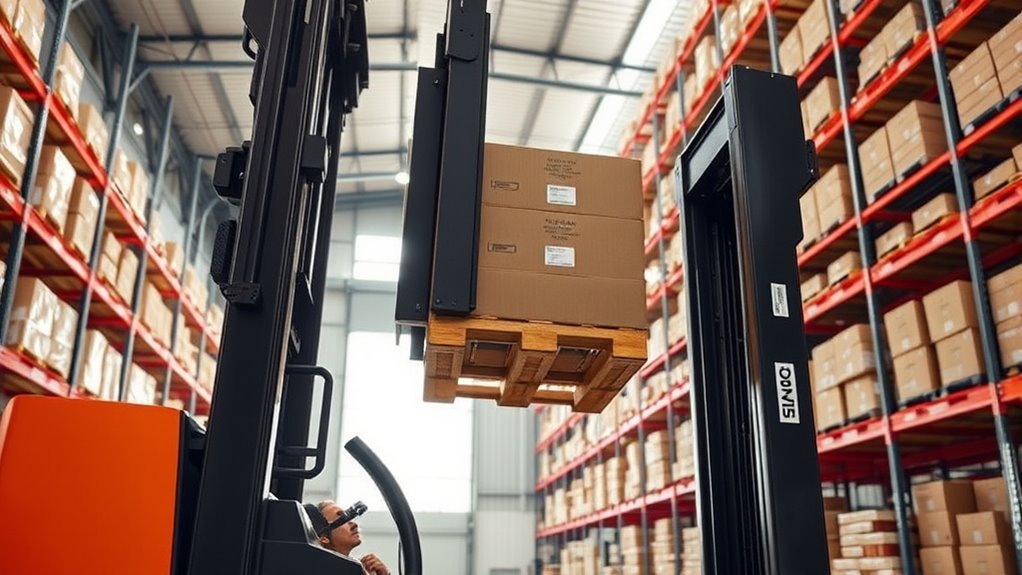
How Does a Reach Truck Work?
You control a reach truck using its extendable mast and pantograph system. This setup allows the forks to slide smoothly deep into high racks without tilting the mast. That’s key for keeping the load stable and handling heavy pallets with precision.
The truck’s narrow chassis and advanced steering help you maneuver tight aisles easily. Plus, safety systems maintain balance and prevent tipping. It’s designed to work perfectly in narrow warehouse spaces.
Keep going to explore how these features boost both efficiency and safety when working in tight areas. You’ll see why reach trucks are a smart choice for managing inventory in high racks.
Key Takeaways
- A reach truck uses an extendable mast with pantograph arms to smoothly extend forks forward into high racking systems. The pantograph mechanism keeps the mast vertical while extending, ensuring load stability and precise pallet placement.
- Hydraulic or electric controls enable responsive and controlled fork movement for efficient pallet retrieval and storage. This makes handling pallets much easier and faster.
- Narrow chassis and advanced steering allow maneuvering in tight aisles while maintaining operator visibility and safety. So, you can work in cramped spaces without worrying about bumping into things.
- Stability systems and load sensors prevent tipping and ensure safe handling of heavy loads during operations. This keeps both the operator and the load safe at all times.
How a Reach Truck’s Extendable Mast and Pantograph Work
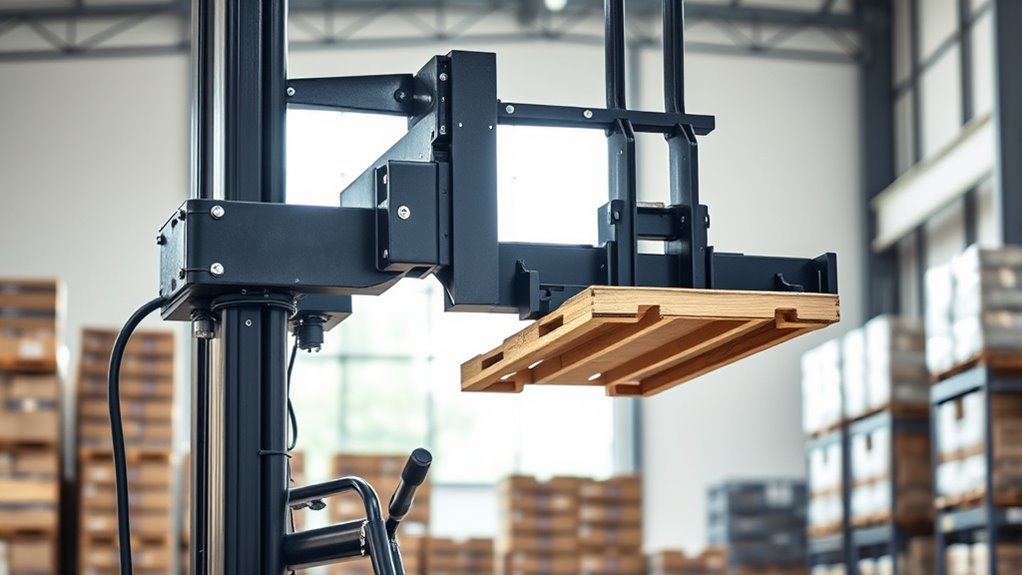
Although it might seem complex, the reach truck’s extendable mast relies on a pantograph mechanism that slides the forks forward and backward. This lets you reach deep into high racking systems without tilting the mast.
The reach truck’s pantograph mechanism extends forks smoothly, enabling deep access without tilting the mast.
This pantograph mechanism consists of interconnected arms that move in unison, providing precise extension of the forks into pallet racking. Because the mast remains vertical, you can handle loads with better stability and maintain the reach truck’s full load capacity.
Whether you’re working with vertical storage or high racking, this design allows accurate placement or retrieval of pallets without shifting the entire mast. The extension and retraction use hydraulic control or electric forklift technology, ensuring smooth and responsive movement.
Thanks to this system, you can efficiently operate in tight warehouse spaces, accessing elevated storage levels while maintaining control and safety. The pantograph’s precise extension enhances both productivity and load handling in demanding environments.
How Reach Trucks Maneuver in Narrow Aisles Safely
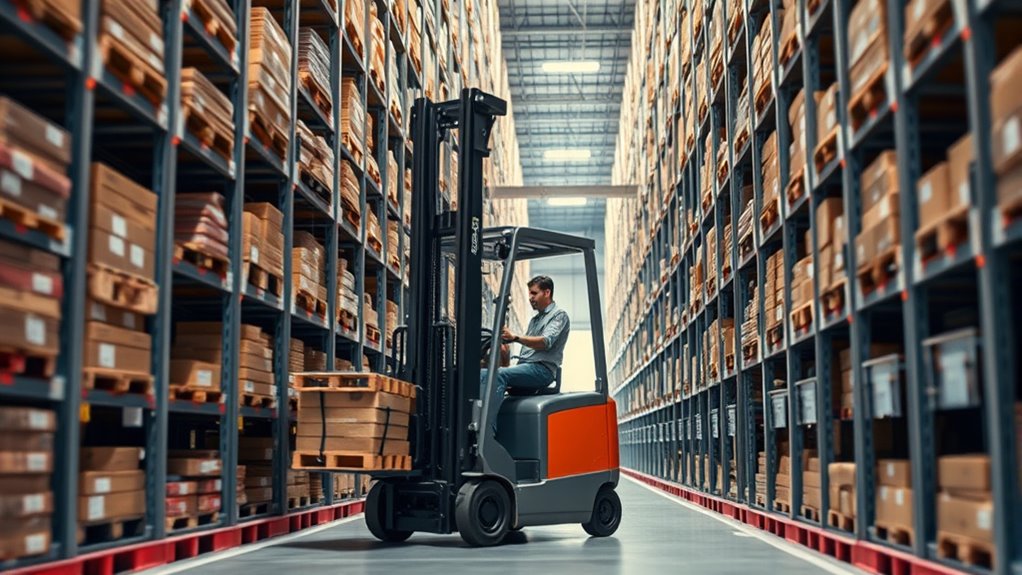
When you operate a reach truck in narrow aisles, its narrow chassis and precise steering let you navigate tight spaces as small as 8 to 10 feet without risking collisions or tip-overs. The advanced steering mechanisms provide tight turning capabilities, enabling smooth maneuvers even in limited aisle width.
Your elevated operator visibility, aided by clear sightlines and visibility aids, keeps you aware of your surroundings to prevent accidents. Hydraulics and load extension systems let you reach into vertical storage racks safely, while stability systems and load sensors keep the truck balanced during these operations.
| Feeling | Reason |
|---|---|
| Confidence | Precise steering mechanisms |
| Control | Stability systems prevent tipping |
| Safety | Operator visibility in narrow aisles |
Frequently Asked Questions
What Is the Correct Way to Drive a Reach Truck?
You should drive a reach truck with the mast and forks level, avoiding forward tilt. Move slowly when extending or retracting.
Keep the mast retracted while driving, and always check load stability before reversing or moving. It’s important to stay cautious and make sure everything is secure before you change direction.
Is a Reach Truck Hard to Operate?
You won’t find reach trucks harder than landing a spaceship!
Once you get the hang of the controls and mast movements, you’ll handle it like a pro—especially after some solid training and practice in tight spaces.
What Are the Common Problems With Reach Trucks?
You’ll often face hydraulic failures, electrical faults, or worn forks on reach trucks. Sensors and control glitches can cause accidents, while tire wear and brake issues reduce safety.
Regular maintenance helps you avoid these common problems. It’s all about staying on top of things to keep everything running smoothly.
Is a Reach Truck Harder Than a Forklift?
Think of driving a reach truck like piloting a drone through a forest—it’s harder than a forklift.
You’ll need extra skill to manage its extendable mast and navigate tight aisles safely and precisely every time.
It’s all about being careful and steady, making sure you don’t bump into anything while reaching those high shelves.
Conclusion
Now that you know how a reach truck’s extendable mast and pantograph work, plus how it maneuvers safely in tight aisles, you’re ready to tackle any warehouse challenge. These trucks are like magic wands, reaching places you’d think are impossible.
With this knowledge, you’ll operate confidently and efficiently, making your job smoother than ever. Trust me, mastering a reach truck is one of the smartest moves you’ll make on the warehouse floor!
Understanding how a reach truck works not only boosts your safety but also enhances productivity. These specialized forklifts are designed to navigate narrow aisles and lift loads at great heights with precision. So, whether you’re stacking pallets or retrieving inventory, your skills with a reach truck will be a game-changer in warehouse operations.



6 Comments