What Determines How Many Spark Plugs a Car Does Have?
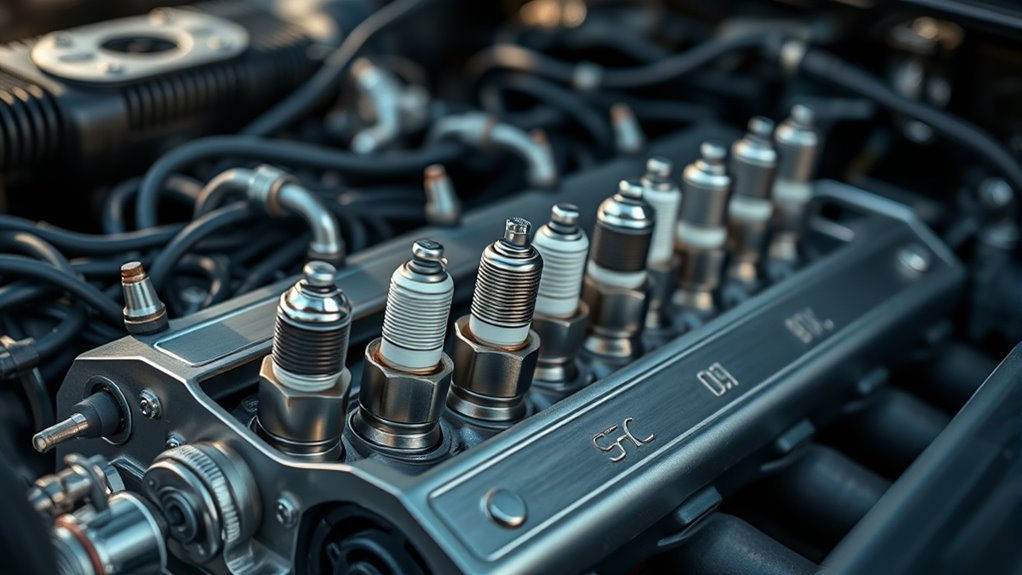
You can figure out how many spark plugs your car has mainly by looking at its cylinder count—most engines have one spark plug per cylinder. Knowing the number of cylinders is the easiest way to estimate the spark plug count.
Engine type affects where the plugs sit but usually not their number. So, whether you have an inline, V-type, or boxer engine, the spark plug count generally matches the cylinder count.
Some high-performance or large engines use multiple spark plugs per cylinder to boost efficiency and power. This setup helps improve combustion and overall engine performance.
If you want to understand why engine design and specific setups influence spark plug use, there’s more detail to explore ahead. It’s pretty interesting once you dig into the specifics!
Key Takeaways
- The number of engine cylinders primarily determines how many spark plugs a car has. Usually, there is one spark plug per cylinder.
- Engine configuration, like inline, V-type, or boxer, affects where the spark plugs are placed. But it usually doesn’t change the total number of spark plugs.
- Some high-performance or larger engines may have more than one spark plug per cylinder. This helps improve combustion and power output.
- Having multiple spark plugs can boost fuel efficiency and reduce emissions. It also ensures more reliable ignition, especially in demanding engine designs.
- The design of the ignition system and specific engine needs influence how many spark plugs are used. This helps keep firing consistent and the engine running smoothly.
How Cylinder Count and Engine Type Affect Spark Plug Numbers
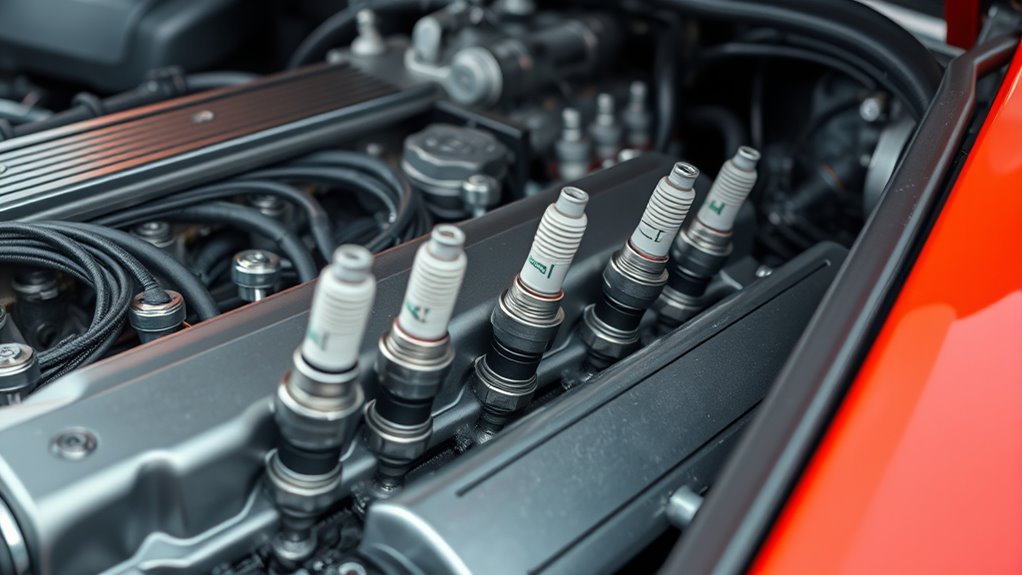
Although the number of spark plugs usually matches the number of cylinders in your car’s engine, the engine type and design can change that count. Typically, a four-cylinder engine has four spark plugs, and a six-cylinder engine has six. This straightforward relationship helps you understand the spark plug count based on the number of cylinders.
However, engine configuration plays a role too. For example, a V6 engine arranges cylinders differently than an inline six, affecting spark plug placement but usually keeping the number equal to the number of cylinders. Engine design variations like inline, V-type, or boxer engines influence how spark plugs fit but don’t always alter the spark plug count.
Why Some Engines Use Multiple Spark Plugs Per Cylinder
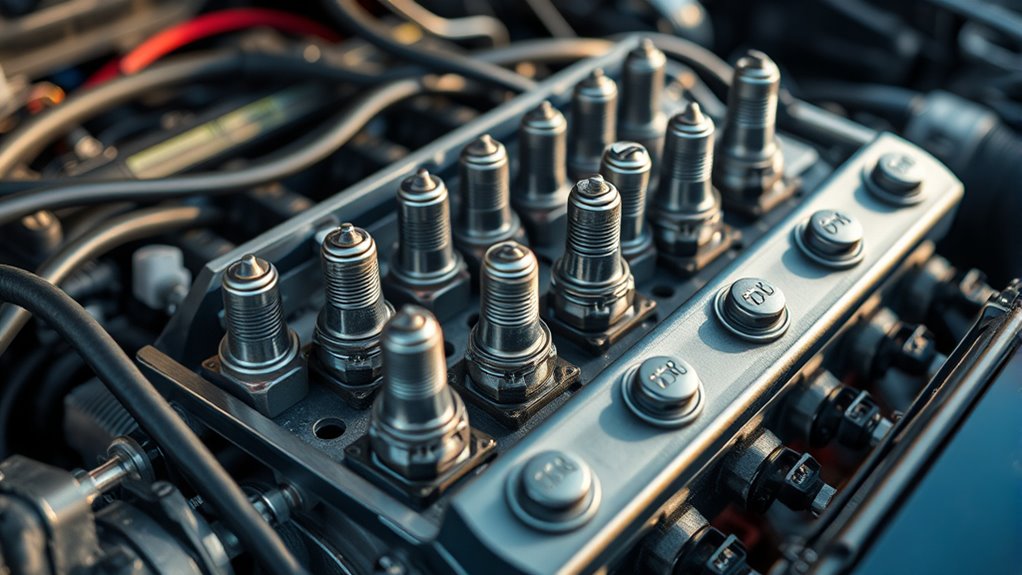
When you look under the hood of a high-performance or large engine, you might notice it uses more than one spark plug per cylinder to guarantee reliable and complete combustion. Multiple spark plugs help improve combustion efficiency by igniting the air-fuel mixture more evenly and quickly, especially in cylinders with a high compression ratio.
This setup is common in high-performance engines, like those in sports cars, where maximizing power output is crucial. Using multiple spark plugs per cylinder also enhances fuel economy and reduces emissions by ensuring more thorough fuel burning.
Additionally, this configuration helps prevent misfires and contributes to engine smoothness, which is essential in complex or larger engine configurations. The ignition system benefits too, as multiple spark plugs provide redundancy and more consistent firing.
Frequently Asked Questions
How Often Should You Replace Spark Plugs in a Car?
You should replace spark plugs every 30,000 to 100,000 miles, depending on their type. Check them regularly, especially if you drive in harsh conditions.
It’s a good idea to follow your vehicle’s maintenance schedule to keep your engine running smoothly. Taking care of your spark plugs can really make a difference!
Can You Drive With 3 Out of 4 Spark Plugs?
You can drive with 3 out of 4 spark plugs, but your engine will misfire, run rough, and lose power.
It’s not recommended since this can cause long-term damage and reduce fuel efficiency considerably.
Do I Need to Replace All Four Spark Plugs?
You absolutely need to replace all four spark plugs—it’s like trying to run a marathon with one shoe!
Replacing them together keeps your engine balanced, improves performance, and prevents costly issues down the road.
Trust me, it’s worth doing all at once rather than piecemeal. Your car will thank you!
What Kills Spark Plugs Quickly?
Using the wrong heat range, oil leaks, carbon buildup, short trips, and low-quality spark plugs kill your spark plugs quickly.
Avoid these to keep them lasting longer and performing at their best in your engine. It’s really about giving your spark plugs the right conditions to work well.
Conclusion
When you think about how many spark plugs your car has, remember it’s like choosing tools for a job—the more complex the engine, the more spark plugs it needs to fire efficiently. Your engine’s cylinder count and design directly shape this choice.
Just like a skilled chef uses multiple spices to perfect a dish, manufacturers use multiple spark plugs per cylinder to boost performance and reliability. This approach helps engines run smoother and burn fuel better.
Understanding what determines the number of spark plugs in a car gives you insight into how your engine works. It’s all about efficiency, power, and reliability. So next time you’re curious about your vehicle, remember that spark plugs play a key role in keeping your engine firing strong and your drive smooth.