How Do You Get Ants Out of Your Car in 10 Easy Steps?
To get ants out of your car in 10 easy steps, the first thing you want to do is find their nests and trails. Grab a flashlight and look closely around your seats and floor mats.
Next, give your car a deep clean. Focus on seats, carpets, and those hidden spots where crumbs and food might be lurking. This helps remove what’s attracting the ants in the first place.
Don’t forget to seal any cracks and door seals. Blocking their entry points is super important to keep them from coming back.
You can also try homemade sprays like vinegar or peppermint oil. Spray these on the trails and entry points to deter the ants naturally.
Treat those hard-to-see areas and then move your car to a different parking spot. This can confuse the ants and break their trail.
And finally, keep your car clean regularly to prevent any future invasions. Stick around for more helpful tips and tricks!
Key Takeaways
- Thoroughly vacuum and clean all seats, carpets, mats, and hidden areas to remove food crumbs and ant trails. This helps get rid of what’s attracting them in the first place.
- Inspect and seal door seals, window rubbers, and cracks to block ant entry points using weatherstripping or sealant. You don’t want any easy access for those little invaders.
- Apply natural sprays like vinegar or peppermint oil on entry points and trails. Make sure to reapply regularly because ants keep coming back otherwise.
- Place commercial ant baits in hidden spots like under seats and trunks for targeted ant elimination. This way, you’re attacking the problem right at the source.
- Change parking locations away from trees, anthills, or wooded areas. It messes with the ants’ navigation and helps reduce re-infestation.
Why Are Ants Attracted to Your Car?
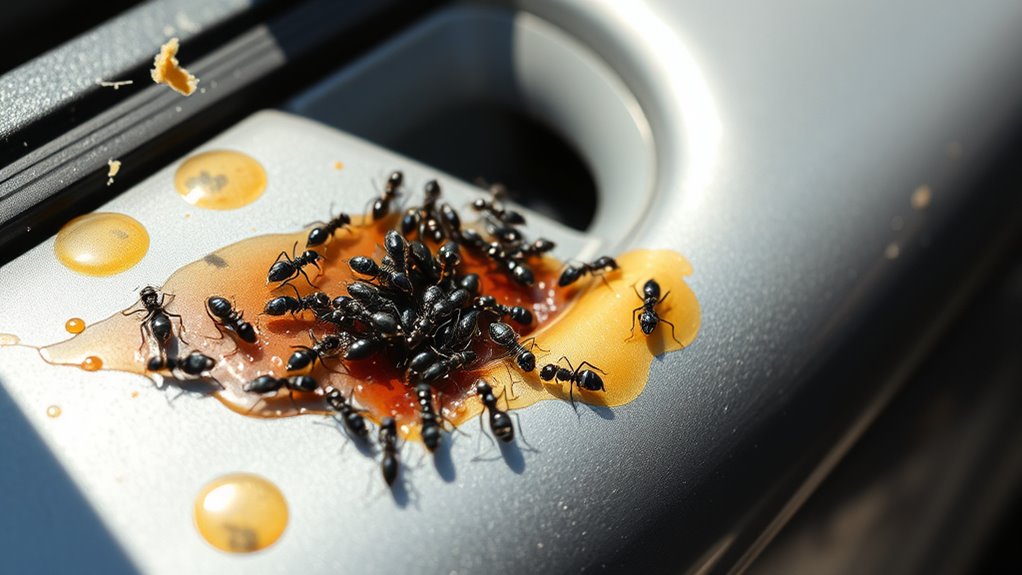
Because ants are always on the lookout for food and shelter, they’re drawn to your car whenever they find crumbs, spills, or leftover snacks inside. Ants in your car are primarily attracted to accessible food and water sources.
Even small traces of sugary drinks or bits of food can spark an ant infestation. Once one ant discovers these resources, it leaves pheromone trails that guide others straight to the spot, making the problem grow quickly.
Parking near trees, wooded areas, or anthills also increases the chances that ants will enter your vehicle, especially if they’re seeking shelter from harsh weather. Even after cleaning, residual food particles or sweet scents can lure ants back, encouraging them to invade again.
Understanding why ants target your car is the first step toward stopping them and preventing a frustrating ant infestation that can affect your driving experience and comfort.
How to Find Ant Nests and Trails in Your Car
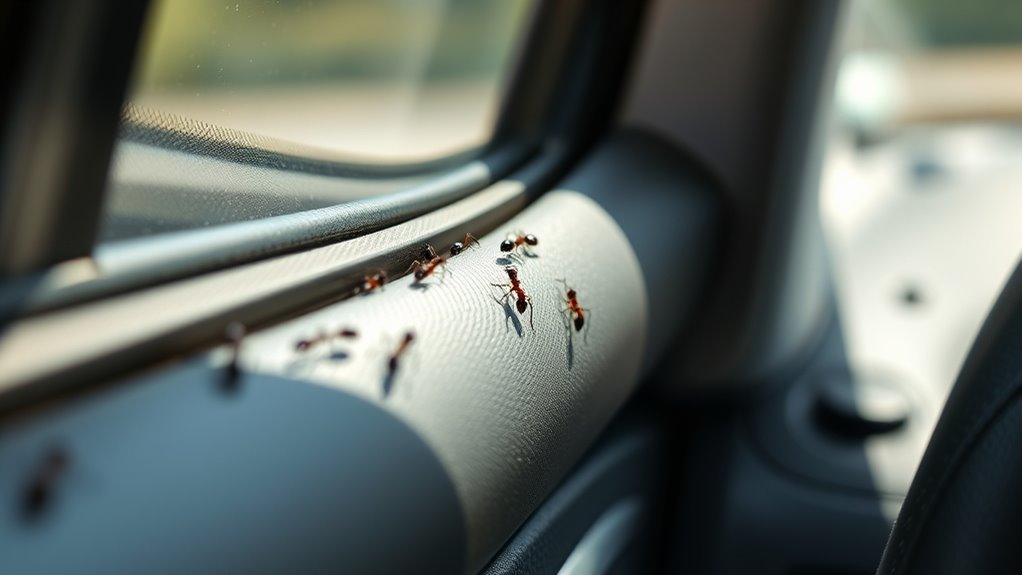
When you spot ants inside your car, tracking their nests and trails is key to eliminating them effectively. Start by following visible ant trails, which often appear as fine lines of pheromones leading to food sources or entry points.
These trails can guide you to the nest locations. Common nest spots include under carpets, inside door seals, beneath seats, or in the trunk area.
To find them, you’ll need to carefully inspect hidden places like under mats, inside panels, and around wiring areas where ants like to hide. Using a flashlight and magnifying glass can help reveal small ant activity or nest openings in these hard-to-see spots.
Deep Clean Your Car Interior to Remove Food and Crumbs
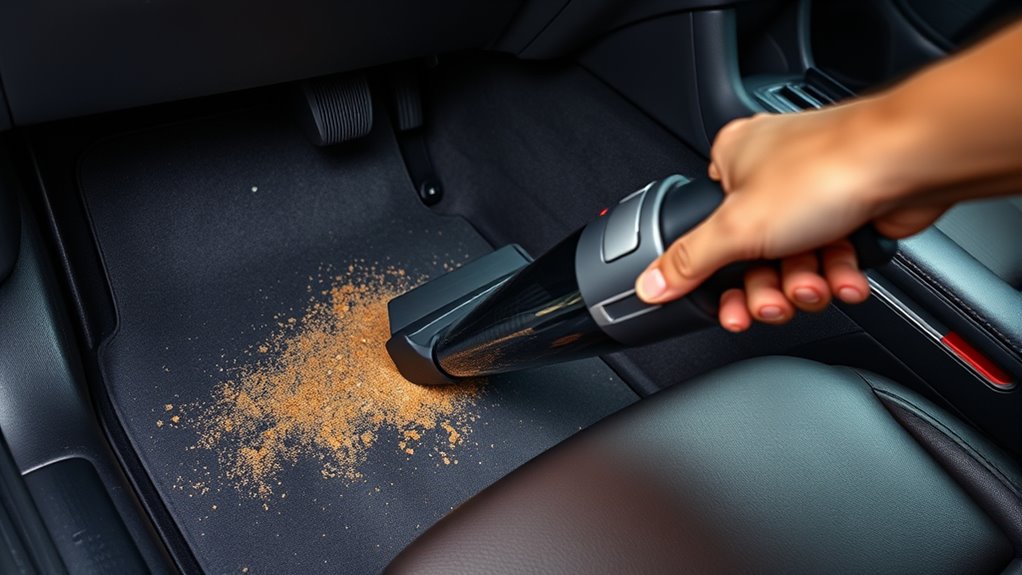
Although ants can enter your car through small openings, they’re mostly attracted by food particles and crumbs hiding in your interior. To get ahead of the problem, you need to deep clean your car. Focus on removing any food sources inside the car that lure ants in.
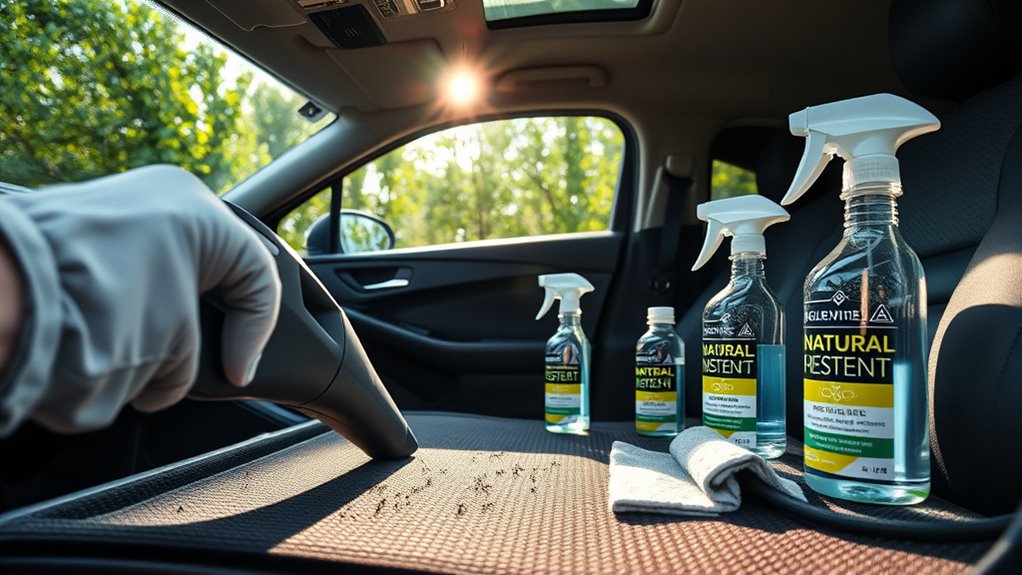
Start by vacuuming all seats, carpets, and floor mats thoroughly. This will help pick up hidden crumbs and debris. Then, wipe down all surfaces—dashboard, door panels, and console—with a damp cloth to get rid of sticky or food residues.
Vacuum seats, carpets, and mats thoroughly, then wipe surfaces to remove crumbs and sticky residues.
Don’t forget to remove and clean out any trash, wrappers, or food containers from storage compartments and glove boxes. Pay special attention to hard-to-reach spots like under seats, seat tracks, and inside vents where crumbs often hide.
Finally, clean and inspect the interior regularly. This way, you can prevent new buildup before it becomes a problem.
Seal Door Seals and Cracks to Keep Ants Out
Start by inspecting your car’s door seals for any gaps or cracks where ants could sneak in. Use weatherstripping or silicone caulk to seal these openings thoroughly.
Keeping door seals tight and intact is key to blocking ants from entering your vehicle. It’s a simple step but makes a big difference!
Inspect Door Seals
Because ants can squeeze through the smallest gaps, you’ll want to inspect your car’s door seals thoroughly for any tears, cracks, or holes. These tiny openings serve as perfect ant entry points, letting them invade your vehicle unnoticed.
To keep ants out, focus on your door seals by following these steps:
- Use a flashlight to carefully inspect door seals for any damage or gaps.
- Clean door seals regularly with soap and water to remove scent trails and debris.
- Apply silicone or rubber sealant to repair worn or cracked door seals.
- Check the rubber sealing around windows to ensure it’s intact.
- Address any damage promptly to block ant entry effectively.
Use Weather Stripping
When you seal your car’s door seals and cracks with weather stripping, you create a strong barrier that keeps ants from sneaking inside. Weather stripping, especially made of durable, flexible materials like rubber or silicone, effectively seals gaps ants use to enter.
This simple step blocks small ant trails without chemicals, making it a cost-effective, long-term solution. Regularly inspect your door seals and replace worn weather stripping to maintain this protective barrier.
While ant bait helps control existing ants, sealing gaps with weather stripping prevents new ones from coming in. By combining these methods, you reduce ant intrusion considerably.
Seal Cracks Thoroughly
Sealing your car’s door seals and cracks goes beyond just adding weather stripping—you’ll want to use weatherproof silicone or rubber sealant to close any remaining gaps around door frames and window edges. This step is crucial for preventing ants from sneaking inside.
To effectively seal cracks and reinforce door seals, follow these tips:
- Inspect door seals regularly and replace any that are worn or damaged.
- Apply sealant carefully around vents, trunk openings, and other small gaps.
- Use weatherproof sealant designed for automotive use to ensure durability.
- Focus on areas where door seals meet window edges to block entry points.
- Check for new cracks periodically and reseal as needed.
Use Homemade Sprays to Kill Ants in Your Car
You can make effective homemade sprays using natural ingredients like dish soap, vinegar, citrus oils, or peppermint oil to kill ants and disrupt their trails. Spraying these mixtures on entry points and ant paths helps eliminate them and keeps them from coming back.
Using these simple recipes regularly is a safe and eco-friendly way to protect your car from ants. Plus, it’s easy to do and doesn’t involve harsh chemicals. Give it a try and see the difference it makes!
Homemade Spray Recipes
Looking for an effective way to get rid of ants in your car without harsh chemicals? Homemade sprays offer a safe, natural solution to kill ants and keep bugs in your car at bay.
Try these ant spray recipes:
- Mix 2 cups water, 3 tablespoons Dawn dish soap, and 3 tablespoons salt for a powerful spray that kills ants on contact.
- Combine orange oil with water to create a natural repellent that discourages ants from invading your vehicle.
- Use equal parts vinegar and water to clean surfaces, killing ants and removing their scent trails.
- Blend 1 part peppermint oil with 10 parts water to repel ants with its strong scent.
- Regularly apply these sprays to prevent new ant infestations without harsh chemicals.
These homemade sprays are easy, effective, and safe for your car’s interior. Give them a try and say goodbye to those pesky ants!
Application Tips And Tricks
When using homemade sprays to tackle ants in your car, targeting their entry points and trails will boost your success. For effective pest control, mix 2 cups of water with 3 tablespoons each of Dawn dish soap and salt in a spray bottle.
Add citrus or orange oil for a natural repellent scent. Use this homemade spray directly on ants and along their trails to quickly kill them and disrupt navigation.
Apply generously around door seals, seams, and hidden crevices where ants enter or hide. Reapply regularly to maintain a protective barrier and keep ants from returning.
These application tips guarantee your homemade spray works efficiently, helping you regain an ant-free car environment without harsh chemicals.
Natural Ingredients Benefits
Homemade sprays can offer more than just effective application methods—they also bring the power of natural ingredients to your pest control routine. These natural solutions help get rid of ants without introducing harsh chemicals that might attract more pests or irritate your senses.
Using sprays made from simple household items can keep your car, especially areas like floor mats, ant-free and fresh. It’s a smart way to tackle ants without the worry of nasty side effects.
- Vinegar and baking soda create an abrasive mixture that kills ants and neutralizes scent trails.
- Citrus extracts disrupt ants’ scent lines, deterring them from entering your vehicle.
- Peppermint oil’s strong scent repels ants, keeping them away from your car’s interior.
- A water and dish soap mixture breaks down ants’ exoskeletons on contact.
- Avoid sprays that might attract ants back into your car by sticking to natural ingredients.
These natural options work well and keep your car smelling fresh, too!
Apply Commercial Ant Baits and Gels in Your Car
Although ants can be persistent, you can effectively control them by applying commercial ant baits and gels in your car. Start by placing bait stations or gels in hidden spots like under seats, door seals, and trunk compartments where ants frequently forage.
Choose bait gels with slow-acting insecticides—they allow ants to carry poison back to the colony, helping eliminate the entire nest. Make sure the bait you use is designed for indoor or vehicle use and safe for children or pets if they’re around.
Check the bait regularly and replace it as needed to maintain continuous control until you see no more ant activity. Avoid spraying insecticides directly on the bait, as this can contaminate it and reduce its effectiveness.
Treat Hidden Areas Like Fender Wells and Under Seats
Since ants love dark, moist spots, you’ll find them hiding in fender wells and under seats where they feel safe. To effectively treat these hidden areas, you need to be thorough and strategic.
Ants seek dark, moist hiding spots like fender wells and under seats—treat these areas thoroughly and strategically.
Start by vacuuming these spots well to remove ants and debris. Then use bait stations or insecticidal sprays carefully along seams and corners to target lingering ants without harming your vehicle.
A water-based spray can flush ants out gently from under seats and fender wells. Don’t forget to place ant bait inside the fender well to attract foraging ants, so they carry poison back to their colony.
Make it a habit to regularly inspect and clean these areas to prevent reinfestation and eliminate hidden colonies before they multiply.
- Vacuum thoroughly to remove ants and debris
- Apply bait stations or insecticidal spray along seams
- Use water-based sprays to flush out ants safely
- Place ant bait inside fender wells for colony control
- Inspect and clean regularly to stop re-infestation
Move Your Car to a Different Parking Spot (Temporary Tip)
When you move your car to a different parking spot, you disrupt the ant trails that lead them back inside. Ants rely on scent trails to find food and entry points, so shifting your parking location can break these pathways and confuse them.
Parking away from ant colonies, wooded areas, or places where ants are active drastically reduces the chance they’ll return. This simple, temporary step prevents ants from going back to the exact spot where they first entered your vehicle.
By regularly changing where you park, you make it harder for ants to establish a consistent route into your car. This tactic works best combined with other ant removal methods but can give you an immediate advantage by interrupting their navigation.
Keep Your Car Clean to Prevent Future Ant Infestations
To keep ants from invading your car, make sure you remove all food crumbs and avoid eating inside. Regularly vacuum the interior to get rid of hidden debris that attracts ants.
Staying on top of these habits will help prevent future infestations. It’s a simple routine, but it really makes a difference!
Remove Food Crumbs
How often do you clean your car’s interior to keep ants at bay? Removing food crumbs is essential because these tiny bits attract ants rapidly.
You should focus on eliminating all traces of food and sticky residues to discourage ants from settling in. Make it a habit to:
- Remove trash, wrappers, and leftover food from cup holders, glove compartments, and storage areas
- Use a damp cloth with mild cleaner to wipe down upholstery and carpets
- Check hidden spots like under seats and inside door panels for food debris
- Store any food items in sealed containers to prevent attracting ants
- Regularly clean surfaces to eliminate crumbs and spills that encourage infestations
Keeping your car crumb-free considerably reduces the chances of ants making your vehicle their home. It really makes a difference!
Regular Interior Vacuuming
Keeping food crumbs out of your car is a great start, but regular vacuuming takes cleanliness a step further by removing hidden dirt and debris that attract ants. You should vacuum upholstery, carpets, and especially under the seats to eliminate any ant trails or potential nesting sites.
Using a crevice tool helps you reach tight spots where ants might hide or lay eggs. Consistently cleaning these areas prevents spills and residues from building up, which ants use as food sources.
When you combine routine vacuuming with surface cleaning, you notably reduce the chances of future infestations. Making this a regular habit keeps your car interior less inviting to ants and helps maintain a fresh, pest-free environment.
Avoid Eating Inside
Although it might be tempting to snack on the go, eating inside your car can leave behind crumbs and spills that attract ants over time. To keep your vehicle ant-free, it’s essential to adopt habits that minimize food residue inside.
Here’s what you can do:
- Avoid eating inside the car altogether to prevent attracting ants.
- Regularly remove crumbs, wrappers, and spills from all interior surfaces.
- Vacuum seats, carpets, and storage compartments weekly to eliminate hidden debris.
- Store snacks and food items in sealed containers to block ant access.
- Enforce a strict no-eating policy to maintain a clean environment.
When to Call a Professional for Persistent Ant Problems
If you’ve tried multiple treatments over several weeks and the ants keep coming back, it’s time to call a professional pest control service. Persistent ant problems that don’t respond to thorough cleaning, bait stations, or natural remedies often need specialized chemical treatments and expert inspection.
When ants nest in hidden or hard-to-reach areas of your car, professionals can locate and eliminate these colonies completely. You should also consider professional help if you’re worried about the safety of using chemical treatments around children or pets in your vehicle.
Experts know how to apply treatments safely and effectively, reducing risks. Don’t wait too long—ongoing ant activity after your best efforts means the infestation is more serious than it seems.
Calling a pest control specialist ensures you get a thorough and lasting solution, saving you frustration and preventing further damage to your car’s interior.
Frequently Asked Questions
How to Get Rid of Ants in Car Immediately?
You’ll want to vacuum thoroughly, spray a mix of water, dish soap, and salt to kill ants instantly, wipe surfaces with citrus cleaner, and place ant baits inside.
Removing food crumbs helps stop new ants from invading.
It’s all about keeping things clean and using the right sprays and baits to get rid of them fast.
How Long Will Ants Stay in My Car?
Ants can stay in your car for weeks or even months. But if you don’t act, they might linger for a year or more.
You’ll need to remove food and disrupt their nest to make them leave faster. It’s all about cutting off what’s attracting them in the first place.
How to Draw Ants Out of a Car?
You’ll want to place sweet bait stations inside your car to lure ants out. Spray a water and dish soap mix along seams and seats, then remove food sources to encourage them to leave quickly and effectively.
It’s pretty simple, really. Just make sure to keep things clean and baited so the ants find their way out!
Where Do Ants Usually Nest in Cars?
Ants usually nest under seat cushions, carpets, door seals, and in the trunk’s back. They also hide beneath floor panels or near leaks.
They favor dark, moist spots inside your car where they find shelter and food. So, if you notice ants, check those cozy little corners first!
Conclusion
Ants can be surprisingly persistent—did you know a single ant colony can have up to 250,000 workers? That’s why tackling your car ant problem quickly is key.
By following these steps, you’ll remove their trails, block entry points, and keep your car clean to prevent future invasions. Remember, staying vigilant and acting fast makes all the difference.
If ants keep coming back, don’t hesitate to call a professional for help. Getting ants out of your car isn’t always easy, but with patience and the right approach, you can keep your vehicle ant-free. Regular cleaning and sealing entry points are essential to stop ants from returning. So, stay alert, follow these tips, and enjoy a pest-free ride!