10 Factors Affecting How Much to Paint a Truck
When painting your truck, costs depend on several factors like the size of your vehicle, the paint quality, and the finishes you choose.
How much surface prep is needed for rust or dents also plays a big role.
Labor rates and regional pricing differences can add to the expenses.
Plus, extra tasks like masking or repairs will increase the overall cost.
Whether you want a basic paint job or a high-end finish matters too.
Understanding these elements helps you budget better and ensures you get a durable, attractive result.
Keep exploring to uncover all the details behind truck painting costs and find the best options for your budget.
Key Takeaways
- Paint quality, finish type, and custom colors significantly influence the total cost of painting a truck. These choices can really add up depending on what you pick.
- Larger truck size and surface condition require more prep, materials, and labor, increasing the price. So, the bigger and rougher the truck, the more you’ll likely spend.
- Labor rates, time required, and additional repair or masking work directly affect overall painting expenses. It’s not just paint; the work involved matters a lot too.
- Regional factors like local wages, demand, and taxes contribute to cost variations across locations. Where you live can make a noticeable difference in price.
- Higher finishing quality and protective coatings enhance durability and vehicle value but raise painting costs. Basically, if you want it to last and look great, expect to pay more.
What Affects Truck Painting Costs?
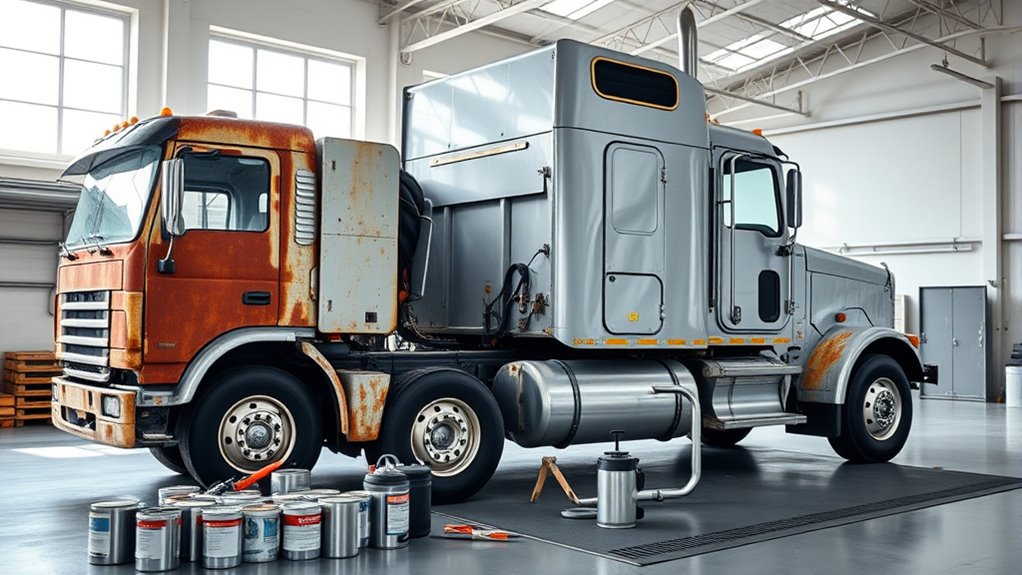
When you decide to paint your truck, several factors will influence the final cost. First, the paint quality you choose plays a big role. Standard synthetic enamel is more affordable, while premium metallic or specialty finishes increase costs.
Prep work is another key element—if your vehicle has damage like rust, dents, or scratches, repairing these issues will add to the price. Custom colors and complex paint jobs, including multi-coat finishes or effects like pearl and matte, also raise costs.
Additionally, regional labor rates impact what you’ll pay; shops in high-demand areas often charge more for their expertise. While size affects cost, it’s a separate topic, so focusing on these aspects helps you understand why paint costs vary.
How Truck Size Affects Truck Painting Costs
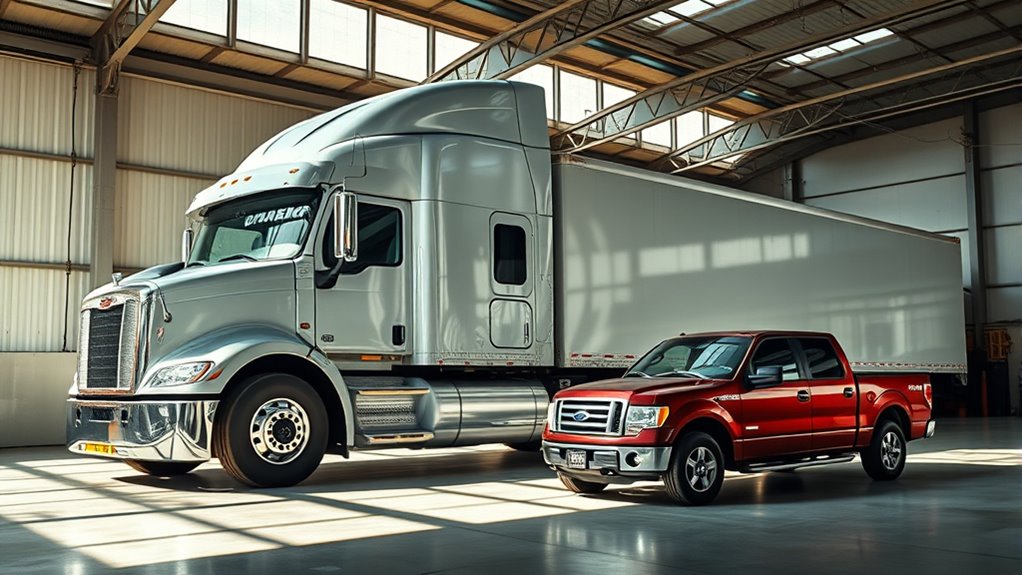
Because larger trucks have more surface area, you’ll pay considerably more to paint them compared to smaller models. Truck size plays a vital role in determining painting costs since bigger vehicles like full-sized trucks or semi-trucks require more paint quantity to cover their expansive surface area.
This directly impacts both material expenses and labor costs, as the time needed to prep and paint grows with the vehicle dimensions.
For example, repainting a full-sized truck can cost between $5,000 and $10,000 or more, while a compact pickup’s repainting expense typically stays within the $2,000 to $4,000 range. The greater surface area on larger trucks means more labor hours and paint are necessary, pushing costs higher.
How Surface Condition Influences Prep Work and Costs
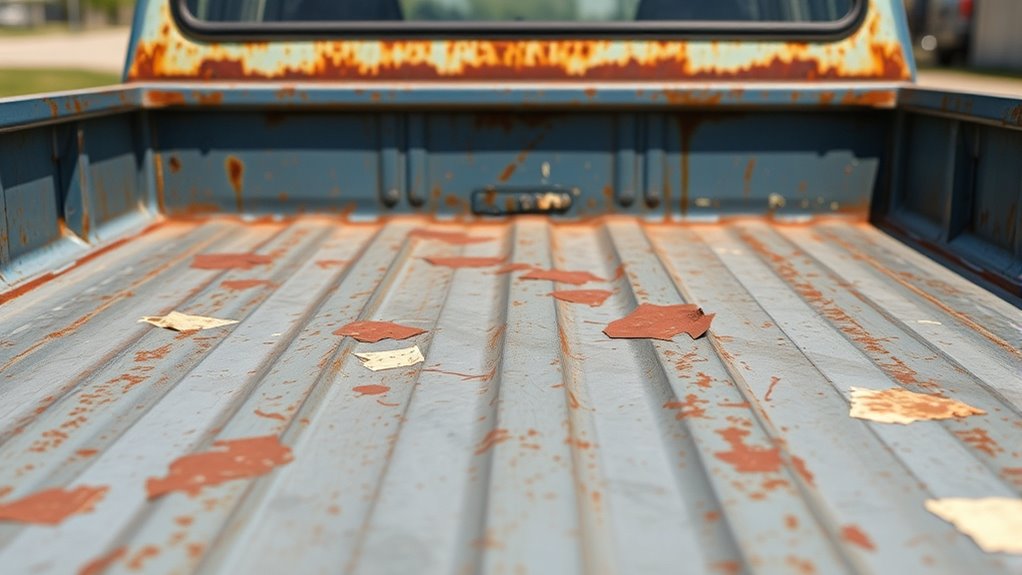
Although surface condition may seem like a minor detail, it has a major impact on the prep work and overall cost of painting your truck. If your truck has rust or surface damage like dents and deep scratches, expect more extensive prep work.
You’ll likely need sanding, filling, and applying primer to fix surface imperfections, which raises labor costs and materials. In severe cases, stripping the paint down to bare metal becomes necessary, potentially doubling or tripling the price of repainting.
Poor surface conditions don’t just increase initial expenses—they also affect the durability and finish quality of the paint job. By addressing rust and damage properly before painting, you guarantee a smoother, longer-lasting coat.
Ultimately, the worse your truck’s surface condition, the more prep work you’ll need, which directly influences your total repainting costs. Paying attention to surface condition helps you budget accurately and avoid surprises.
What Truck Painting Labor Costs Look Like
You’ll notice that labor costs vary depending on where you live and the size of your truck. Bigger vehicles take more time to paint, which naturally raises the price.
Understanding these factors helps you anticipate the total labor expense for your truck painting project. It’s always good to keep this in mind before getting started.
Labor Rate Variations
When you’re budgeting for truck painting, labor rates play a key role in determining the final cost. Labor rates can vary widely due to regional differences, with shops in metropolitan areas often charging more than those in rural settings.
The shop’s reputation and the technician’s experience also impact labor rates. Highly skilled techs may charge higher hourly rates but often reduce the total labor hours needed.
Vehicle size influences labor hours, as larger trucks or specialty vehicles require more work, increasing labor cost. Overall, labor costs for a paint job typically range from $1,000 to over $5,000.
This range is heavily affected by where you live and the size of your truck. Understanding these variations helps you plan a realistic budget.
Time Required For Painting
Labor rates directly tie into how long a truck painting job takes, which can vary considerably based on the complexity and size of the vehicle. When estimating labor costs, consider these factors:
Vehicle size impacts labor time; larger trucks need more hours and often higher rates. Surface prep, including sanding and repairs, adds time, especially if there’s extensive surface damage or rust.
Skilled technicians require extra time for detailed finishes like metallic or pearlescent paints. Basic paint jobs typically take 1 to 2 days, while complex jobs might stretch to 1 or 2 weeks.
Regional wages affect labor costs, with urban areas generally charging more. Understanding these elements helps you anticipate the time and labor expenses for your truck’s paint job accurately.
Basic, Mid-Range, and High-End Truck Paint Jobs
You’ll find truck paint jobs fall into three main categories: basic, mid-range, and high-end, each varying in cost and quality. Basic jobs keep costs low but offer limited durability.
Mid-range and high-end options provide longer-lasting finishes with better protection and customization. They’re a great choice if you want your truck to stand out and stay looking fresh.
Understanding these differences helps you choose the right balance between budget and the look you want for your truck. It’s all about finding what works best for you.
Paint Job Categories
Although truck painting costs vary widely, understanding the different paint job categories can help you choose the best option for your budget and needs. Paint job categories typically include basic, mid-range, and high-end options. Each differs in cost, quality, finish, and prep work.
Basic jobs cost $1,000 or less and use synthetic enamel paint with minimal prep. It’s a straightforward option if you’re looking to save some money.
Mid-range jobs involve thorough prep, multiple coats, and a clearcoat. These usually run between $2,000 and $5,000 and offer a noticeable step up in quality.
High-end jobs exceed $10,000 and feature premium materials with multistage finishes. If you want top-notch results, this is the way to go.
Custom options like metallic or pearlescent paints can add to the cost across all categories. So, keep that in mind if you want something unique.
The quality of paint and finish type impacts the overall cost and appearance. Knowing these categories helps you find the right balance of quality and price for your truck.
Cost Versus Quality
When deciding on a truck paint job, understanding the balance between cost and quality is essential. Basic painting services cost $1,000 or less but offer minimal prep and synthetic enamel paint quality. This affects paint durability and finish.
Mid-grade paint jobs, ranging from $2,000 to $5,000, include better surface preparation and multiple coats. This improves durability and appearance.
High-end paint jobs, costing over $10,000, use premium paints with multistage finishes and extensive surface preparation. They deliver superior paint finish and longevity.
Custom designs like stripes or specialty finishes usually increase the cost of painting. These are more common in mid-range and high-end services.
If you want a long-lasting, flawless finish, investing in higher-quality paint and preparation really pays off in the long run.
Custom Colors and Special Finishes: Cost Impact
Since custom colors and special finishes require specialty paints and techniques, they can substantially raise your truck painting costs. When you opt for a custom hue or specialty finish, expect higher expenses due to the use of specialty coatings and more extensive prep work.
These factors directly affect both materials and labor costs.
Here’s what influences the cost impact:
- Custom colors like metallic or pearlescent finishes increase costs by 20-50% because of higher-priced specialty paints.
- Specialty finishes such as candy paints or matte coatings need specialized equipment, raising the price compared to standard gloss.
- Achieving a unique specialty finish demands additional coats and precise application, increasing labor time.
- Switching from a factory color to a custom hue can add $1,000 to $5,000+ depending on complexity.
- More prep work guarantees proper adhesion and quality, further adding to the overall cost.
Choosing custom colors and specialty finishes means investing in quality and uniqueness. But just be ready for a notable cost increase.
Additional Costs From Repairs, Masking, and Disassembly
Because repairing damage, masking off areas, and disassembling parts require extra work and materials, they add noticeable costs to your truck painting project. Rust repair, dents, and scratches must be fixed first, adding $150 to $500 or more in repair costs.
Masking windows, trim, and emblems protects surfaces but increases labor costs. Disassembly of bumpers, lights, or panels ensures better paint adhesion but further raises expenses. Surface preparation like sanding and cleaning is also essential to avoid paint failure.
These steps often cause a timeline extension, which impacts scheduling and costs. So, it’s good to plan ahead and expect some extra time and money for these important tasks.
| Task | Impact on Cost | Effect on Project |
|---|---|---|
| Rust Repair | $150 – $500+ | Essential for durability |
| Masking | Moderate labor costs | Protects non-painted areas |
| Disassembly | High labor costs | Improves paint quality |
| Surface Prep | Included in repairs | Ensures paint adhesion |
| Timeline Extension | Adds labor costs | Delays project completion |
DIY vs. Professional Truck Painting Services
Although tackling a truck painting project yourself can save on labor costs, it demands a proper workspace, quality supplies, and skill to achieve a durable finish. Going the DIY route typically costs between $100 and $1,000 for equipment and paint.
But without professional expertise, you might face uneven coats or lower quality. On the other hand, professional painting services cost considerably more—often $5,000 to over $10,000. They bring advanced equipment, controlled environments, and warranties for peace of mind.
Consider these factors when choosing between DIY and professional options:
- Your budget and how much you’re willing to spend
- The quality and durability you expect from the paint job
- Access to proper painting equipment and workspace
- Your experience and willingness to learn painting techniques
- The value of professional labor, expertise, and warranty coverage
Ultimately, balancing costs with desired results helps decide the best approach for your truck.
How Regional Costs Affect Truck Painting Prices
When you’re budgeting for a truck paint job, keep in mind that regional factors can considerably impact the final price. Regional costs vary widely due to differences in labor rates, which can add hundreds or even thousands of dollars depending on where you live.
Urban centers generally have higher labor rates because of the increased cost of living, so if you’re in cities like Portland or Salem, expect to pay more. On the other hand, rural regions usually offer lower prices but might have higher transportation costs for materials, which can offset savings.
Market demand and the number of auto body shops in your area also influence pricing; higher competition often means better rates. Don’t forget local taxes, fees, and regulations—they can add to the overall cost.
How Prep and Finishing Impact Paint Longevity and Value
Regional costs can influence the price you pay for painting your truck, but the quality of surface preparation and finishing plays a bigger role in how long that paint job lasts and holds its value.
Proper surface preparation, like sanding and rust removal, is key to strong paint adhesion and paint durability. Applying a high-quality primer and multiple paint layers builds a solid foundation.
Thorough sanding and rust removal ensure strong paint adhesion and lasting durability for your truck’s finish.
Finishing with clear coats and protective sealants shields your truck from UV damage, scratches, and corrosion. Avoid rushing the process, as poor finish quality can cause peeling or fading, which hurts resale value.
To get the most from your investment, focus on:
- Thorough surface preparation for better adhesion
- Use of premium primer and paint layers
- Application of clear coats for protection
- Sealing with protective sealants
- Avoiding a rushed process to maintain finish quality
These steps help your paint job stay vibrant longer and preserve your truck’s value.
Frequently Asked Questions
Why Is Maaco Paint Job Cheap?
Maaco’s paint jobs are cheap because they use simpler materials, limited prep work, and synthetic enamel paints. You’ll get a basic finish without extensive repairs or customization.
This helps keep their prices low, but it does mean you sacrifice some durability. So, it’s a good option if you want something affordable and quick, but not necessarily long-lasting.
Will 1 Gallon of Paint Cover a Truck?
You might think one gallon covers a whole truck, but it won’t. You’ll get a thin coat or touch-up at best.
For a solid, lasting finish, you’ll need multiple gallons and several coats. It’s just how it goes if you want the paint to really stick and look good.
What’s the Cheapest Color to Paint a Truck?
The cheapest color to paint your truck is white. It’s mass-produced and doesn’t require complex mixing, so you’ll save money.
Sticking to common colors like black or gray also helps keep costs low compared to specialty shades. It’s all about going with what’s easy to find and use.
Is It Worth Repainting a Truck?
You’ll find repainting a truck worth it, especially since professional jobs cost $3,500 to $10,000 and boost resale value.
A fresh coat also protects against rust and keeps your vehicle looking sharp and durable.
Conclusion
When it comes to painting your truck, every detail counts—from size and surface condition to labor and location. Don’t bite off more than you can chew by skipping prep or repairs, as they directly impact the final look and durability.
Whether you choose DIY or a pro, understanding these factors helps you get the best bang for your buck. Keep these in mind, and your truck will shine like a diamond for years to come.
Knowing what affects how much to paint a truck ensures you make smart choices that fit your budget and style. From the type of paint to the quality of work, each factor plays a role in the overall cost and finish. So, take your time, plan carefully, and you’ll enjoy a flawless paint job that turns heads everywhere you go.